

 GMA Brandtalk
 Tracking
 Archives

World’s largest artificial sun sheds light on future fuels
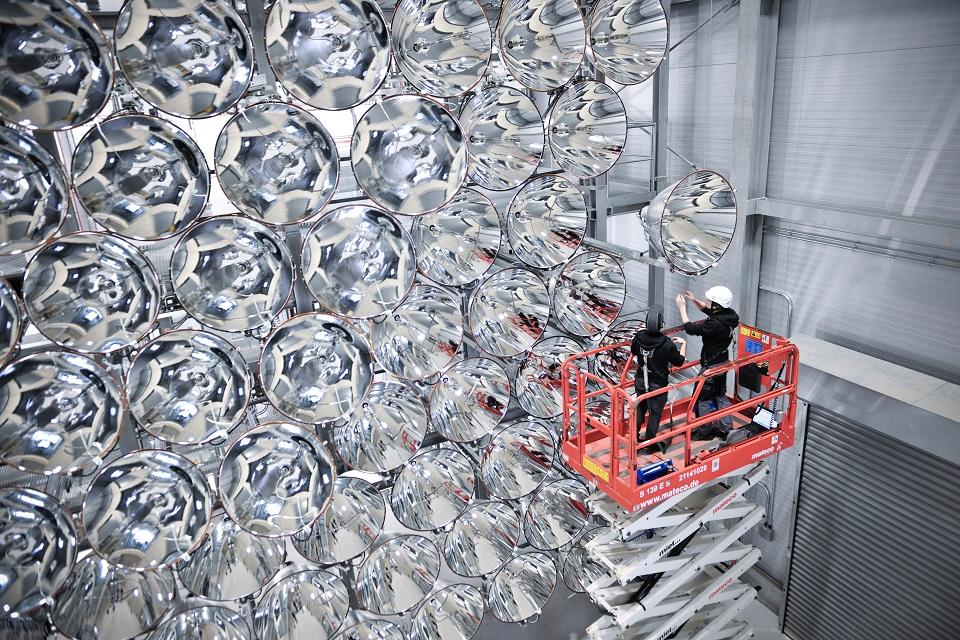
Scientists at a solar thermal power plant in Germany are using the "world's largest artificial sun," as well as a large amount of solar panels, to conduct research into CO2-free production of electricity and fuels.
Researchers at the plant in Juelich, operated by the German Aerospace Center (DLR), are using 149 Xenon short-arc lights, which together make the structure known as "Synlight," to produce a consistent glare that is 10,000 times the intensity of the solar radiation at the Earth's surface.
The scientists focus the generated heat onto an area of 20 by 20 centimeters and temperatures in this target area can reach up to 3,000 degrees Celsius. A receiver absorbs the radiation and then pressurized vapor is created from which a steam turbine can run a generator to produce electricity.
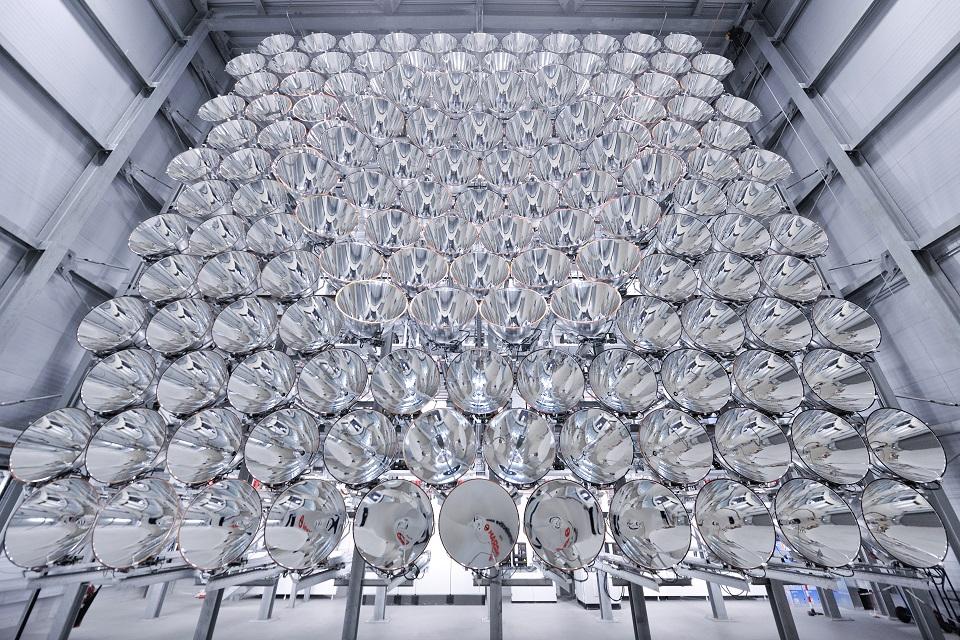
In addition to "Synlight," which became operational earlier this year, the researchers are also conducting similar research using solar panels.
One of the research areas is storage to enable power plants to store electricity during the day and then use it when it is needed more in the evenings. — Reuters

