

 GMA Brandtalk
 Tracking
 Archives

PH scientists push for healthier, climate-resilient rice varieties
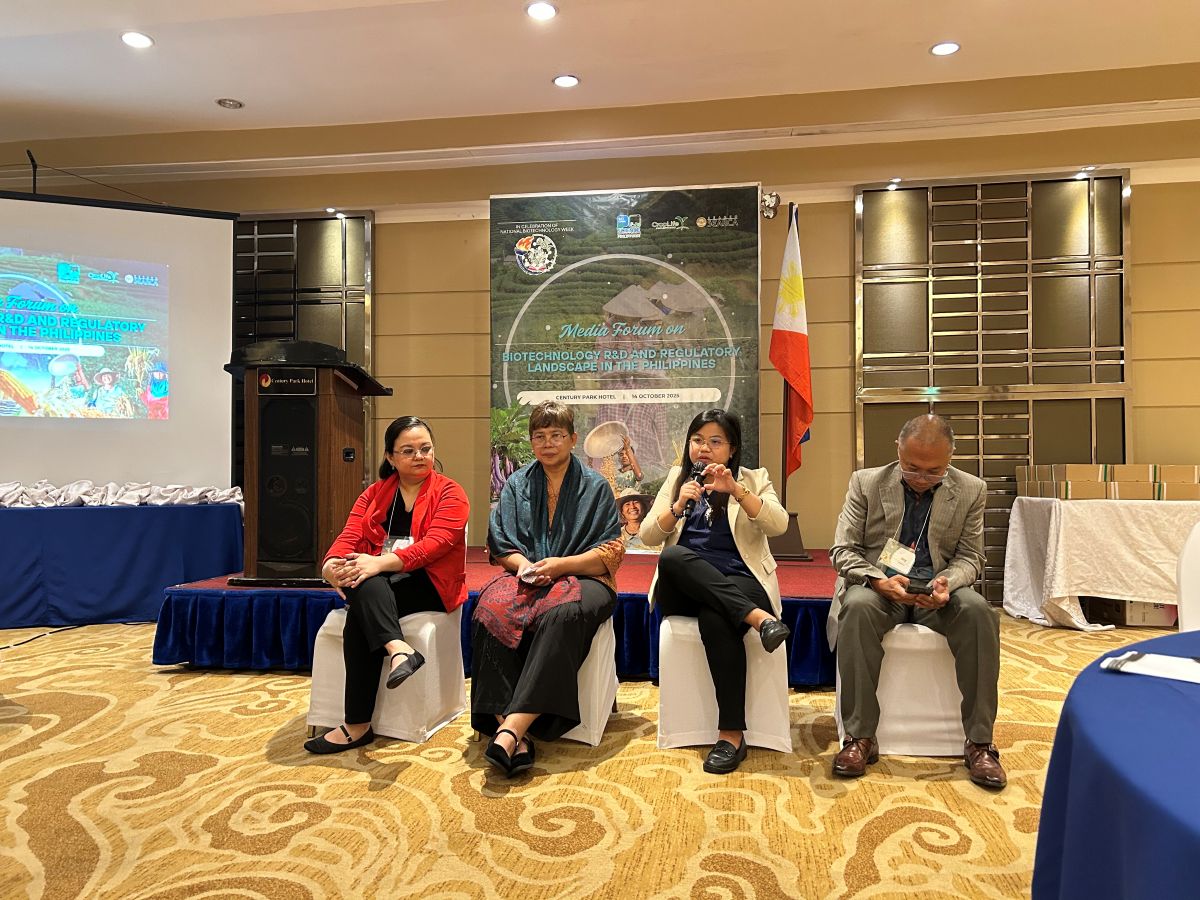
Scientists are reimagining rice, the Philippines' staple food, to withstand floods and droughts while helping build a healthier nation.
Dr. Joy Bartolome Duldulao, branch director of the Philippine Rice Research Institute (PhilRice) in Isabela and co-lead of its Healthier Rice Program, said biotechnology is reshaping how rice is developed—from increasing yield and resilience to boosting its nutritional value.
“Science has helped develop new varieties that can survive drought, floods, and even salty soils, allowing our farmers to harvest more, even in tough times,” Duldulao said during a media forum on biotechnology research and regulation held on Tuesday in Manila.
“But science has not stopped at making rice stronger. It’s now making rice healthier, too, with varieties rich in vitamin A, zinc, and iron being developed so every grain not only fills our stomachs but also nourishes our bodies and helps build a better nation.”
The Philippines continues to face what experts call the “triple burden of malnutrition”: undernutrition, micronutrient deficiency, and obesity. Citing national data, Duldulao said 14 percent of Filipino children under five years of age suffer from vitamin A deficiency, 22 percent of pregnant women are anemic, and one in four children are stunted.
“When this happens, malnourished children are more likely to miss school, drop out early, and struggle to learn,” he said. “It is estimated that malnutrition costs our country about P496 billion every year—money lost to poor health, lost productivity, and children who can’t reach their full potential.”
Malusog Rice
For decades, rice research focused mainly on improving yield and eating quality. But with changing diets, erratic weather, and widespread malnutrition, scientists say the next challenge is to make rice that sustains both lives and livelihoods.
“In the past, we were just talking about the yield of rice. Then we moved on to the eating quality of rice. Now we’re talking about healthier rice,” Duldulao said, citing insights from a recent PhilRice policy dialogue with the University of the Philippines Los Baños (UPLB).
Among PhilRice’s most promising innovations is Malusog Rice, also known as Golden Rice, a genetically modified (GM) variety enriched with beta-carotene that converts to vitamin A once consumed. A single serving can provide 30 to 50 percent of the average daily vitamin A requirement, Duldulao said.
However, its propagation was halted in April last year after the Court of Appeals issued a writ of kalikasan against both Malusog Rice and Bt Talong (genetically modified eggplant).
“PhilRice is complying with the Court of Appeals’ cease and desist order, so we have totally stopped production,” Duldulao said.
“However, we have filed an appeal to the Supreme Court, emphasizing the nutritional value and potential health benefits of Malusog Rice.”
Duldulao said PhilRice hopes the case will be resolved soon to allow its research to move forward and help address micronutrient deficiencies among vulnerable sectors.
A focus group conducted by PhilRice in August found that many farmers, rice retailers, and local agricultural officers were unaware of the court ruling or its implications, highlighting the need for stronger public communication about biotechnology and its regulations.
“The prolonged case can slow down the rollout of Malusog Rice, and indeed so,” Duldulao said.
Another innovation is HIZR, or high iron and zinc rice, which uses a gene from apples to boost micronutrient content. The variety contains at least 10 ppm iron and 28 ppm zinc, enough to meet 30 to 50 percent of daily requirements.
Biotechnology tools such as marker-assisted selection, tissue culture, and gene editing also enable faster and more precise crop breeding. What used to take 10 to 12 years can now be achieved in as little as five to seven years, Duldulao explained.
“Biotechnology enables faster targeted breeding,” he said. “It can add beneficial genes from other organisms and make rice stronger, higher-yielding, and more nutritious.”
Among the new rice types developed with biotechnology, Duldulao mentioned varieties like NSIC Rc 572, which can grow in salty or irrigated low areas, and NSIC Rc 732, which does well in dry conditions and grows quickly.
“Before, rice could thrive in only one environment. Now, it can resist pests and grow well in two tough ecosystems,” he added.
Bt Talong
Dr. Lourdes Taylo, lead for regulatory affairs and biotechnology at PhilRice, also underscored the importance of Bt Eggplant (Event EE-1), a biotech crop developed to reduce severe infestation of the eggplant fruit and shoot borer (EFSB)—one of the most destructive pests affecting farmers nationwide.
“Bt Eggplant Event ‘EE-1’ was developed primarily to reduce the severe infestation of EFSB and farmers’ dependence on chemical sprays,” Taylo explained.
She said that it took the UPLB around two decades to secure commercial approval for propagation, reflecting the rigorous and science-based standards of the Philippine regulatory system.
Taylo emphasized that the crop aims to provide an alternative solution to a chronic agricultural problem while protecting the welfare of both producers and consumers.
“This alternative solution to the chronic problem aims to increase farmers’ productivity while protecting the health of farmers, consumers, and the environment,” she said.
"The benefits of Bt Eggplant, including its promise to farmers, consumers, and the environment, far outweigh the perceived risks.” —VBL, GMA Integrated News

