

 GMA Brandtalk
 Tracking
 Archives

University of Perpetual Help launches nanosatellite into space
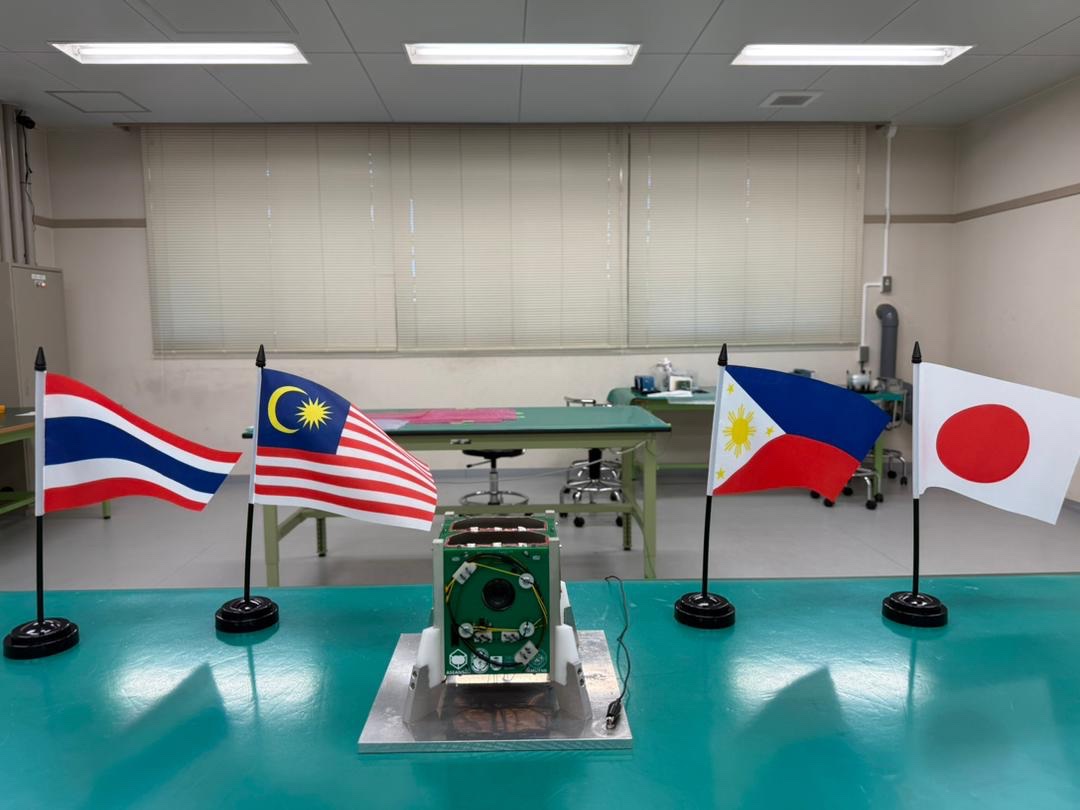
The University of Perpetual Help System DALTA (UPHSD) launched a nanosatellite into space on Sunday, October 26, with the goal of gathering imaging data to support applications for marine traffic, greenhouse gas detection, and storm surge and tsunami monitoring.
Perpetual Satellite-1 was launched from the Tanegashima Space Center on board the Japan Aerospace Exploration Agency's (JAXA) unmanned cargo spacecraft HTV-X1, which was carried by the H3 F7 rocket.
After the HTV-X1 docks with the International Space Station, Perpetual Satellite-1 will then be released into a low earth orbit around January 19, 2026, for its store-and-forward mission.
“Perpetual Satellite-1 will collect data on Earth imaging for various applications such as marine traffic, greenhouse gases, and data for UPHSD’s recently launched Project DAGAT (Deploying Acoustic Guardians Advanced Tsunami Detection), which helps detect tsunamis and storm surges,” the UPHSD said in a statement.
“Also, part of Perpetual Satellite-1’s mission is to test equipment like commercial off-the-shelf global positioning systems (COTS GPS) and an Anisotropic Magneto Resistance Magnetometer (AMR-MM) that helps navigation systems. The data collected will be transmitted to the PERPSAT-1 Ground Station located at the CITIHM Building of the UPHSD Las Piñas campus.”
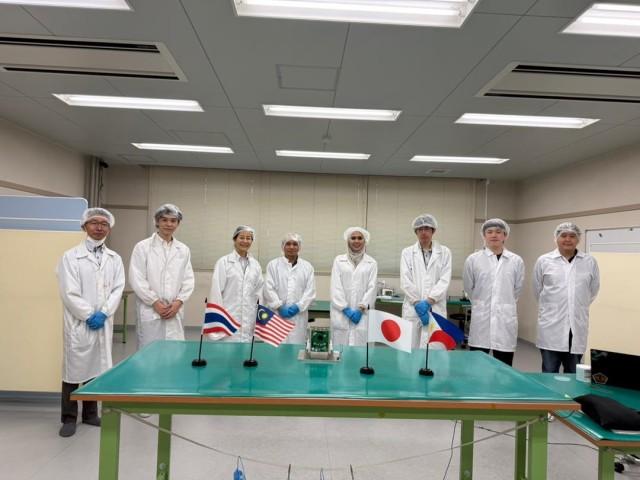
Perpetual Satellite-1 is the first nanosatellite from a private Philippine university under the ASEANSAT consortium. The UPHSD, the Universiti Teknologi MARA (UiTM) in Shah Alam, Malaysia, the King Mongkut University of Technology North Bangkok (KMUTNB) in Thailand, and the Kyushu Institute of Technology in Japan worked together to launch the nanosatellite.
“This is a proud moment for the University of Perpetual Help System DALTA as we reach new heights in space technology. It is our institution’s contribution to the development of science and technology in the country,” said Dr. Anthony Jose Tamayo, UPHSD president. —VBL, GMA Integrated News

