

 GMA Brandtalk
 Tracking
 Archives

Filipino-made air quality monitor offers durability, cost-effectiveness - UP
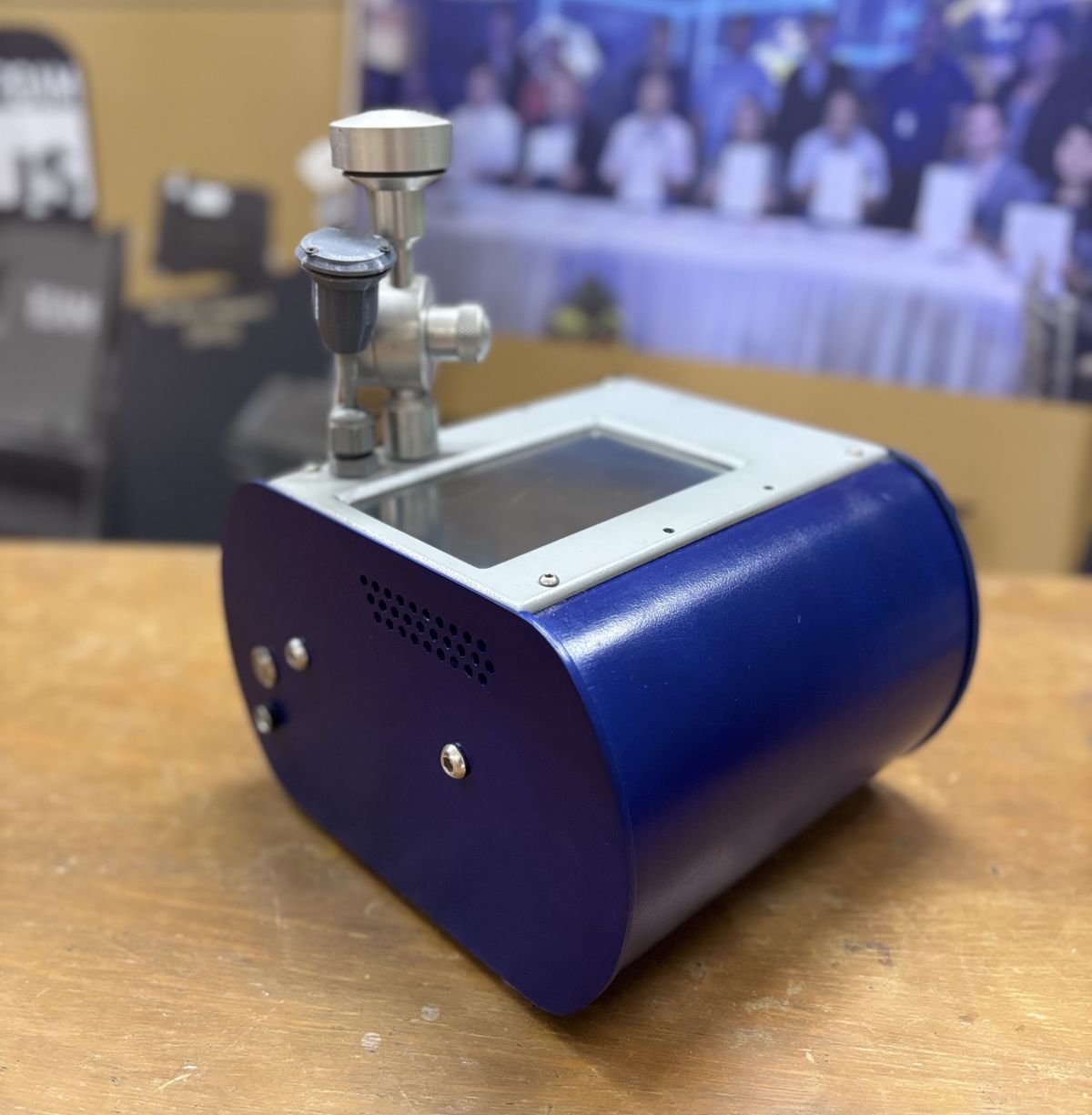
The University of the Philippines highlighted the country’s first Filipino-made air quality monitoring device, saying its durability and low maintenance requirements have made it a practical tool for local government units (LGUs) monitoring air pollution.
During the sixth Innovation Impact Stories webinar, Dr. Len Herald Lim of the University of the Philippines Diliman College of Science's Institute of Chemistry discussed the development of the Robust Optical Aerosol Monitor (ROAM), which he co-developed with Engr. Paul Alexander Darvin of UP Los Baños in 2014.
According to UP, ROAM was the first air quality monitoring device developed in the Philippines and delivers performance comparable to aerosol monitoring equipment used by industries and the Department of Environment and Natural Resources-Environmental Management Bureau (DENR-EMB).
Unlike conventional air monitors that rely on small pinholes and may require frequent maintenance in heavily polluted environments, Lim said ROAM functions like a microscope, allowing it to withstand prolonged exposure to dusty conditions.
“In a sense, ROAM is an air microscope. If you’ve experienced microscopy before, like cell counting under a microscope, this is very similar. The difference is that instead of cells, what we are counting are particles in the air,” Lim said.
The device’s first long-term deployment was in Cauayan, Isabela, where it operated for six to eight months in a dusty environment.
“When the unit came back, I really expected it to be completely clogged. The outside of the unit was so dirty, but it was still working,” Lim said.
“And since it works like a microscope, its saturation limit is much higher than normal air monitoring equipment,” he added.
ROAM was also deployed in South Cotabato, where it remained operational after nearly six months without maintenance, according to UP.
It added that repairs for the locally developed monitor are inexpensive, making it a cost-effective option for users.
“Right now, we’ve found that the best adopters of this technology are local government units (LGUs). That was actually how we positioned and advanced Project ROAM,” Lim said.
The World Health Organization has underscored the importance of air quality monitoring in understanding the health impacts of air pollution and tracking efforts to reduce it.
Innovation Impact Stories is a webinar series organized by the UP Diliman College of Science that showcases research-driven innovations and their real-world applications. —VBL, GMA News

