

 GMA Brandtalk
 Tracking
 Archives

DOST pushes EV manufacturing investments amid high fuel prices
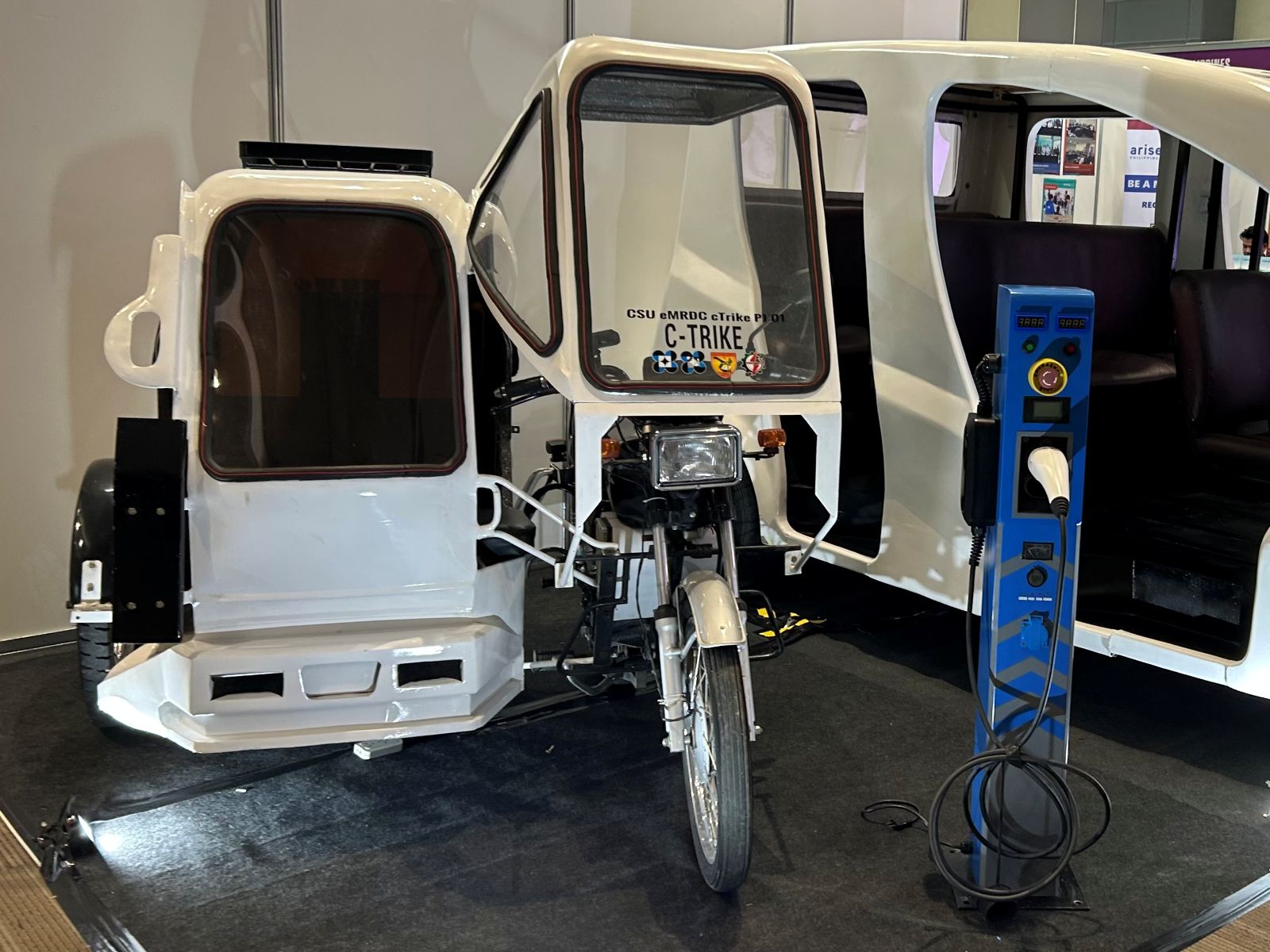
The Department of Science and Technology (DOST) is pushing for investments in electric vehicle (EV) manufacturing amid high petroleum prices.
DOST Secretary Renato Solidum Jr. made the call on Wednesday as he highlighted vehicle innovations showcased at the Sustainability Expo (SUSTEX) 2026 in Taguig City.
"We wanted to help investors scale up production of the technologies that we have," Solidum said during a press conference.
The conflict in the Middle East has disrupted the shipment of petroleum products through the Strait of Hormuz, driving up fuel prices around the world, including in the Philippines.
EV innovations
Among the electric vehicles developed with DOST support is the Converted Electric Tricycle (C-Trike), which can travel up to 70 kilometers on a single charge.
Developed by Cagayan State University, the C-Trike converts conventional tricycles into electric vehicles by replacing their internal combustion engines with batteries.
Also showcased at SUSTEX 2026 was Charging in Minutes (CharM), a fast-charging system for electric vehicles that uses lithium-ion battery technology.
Developed by the University of the Philippines, CharM can fully charge an EV in about 30 minutes, compared with the usual four to six hours.
Despite growing interest in electric mobility, Solidum said many local government units have yet to make it a priority.
"They're very interested. But sometimes it's not the priority. So isa pang entry point namin sa technology to solve their human mobility, yung sa traffic. Kasi ang concept ng traffic karamihan, paano mapabilis ang pagpunta ng isang sasakyan sa isang lugar," Solidum said in an ambush interview.
(They're very interested, but sometimes it's not their priority. Another entry point for us is using technology to address human mobility, particularly traffic. Most people think of traffic as simply getting a vehicle from one place to another as quickly as possible.)
Solidum also said expanding the country's charging infrastructure is essential to making electric mobility more accessible.
"National charging infrastructure is really needed to convince people to transition from fuel to electric motors, and indeed it is recognized," Solidum said.
"We need to make sure that we also have charging systems that can be made available locally," he added.—VBL, GMA News

