

 GMA Brandtalk
 Tracking
 Archives

DepEd's Project LIGTAS+ aims for school-level class suspensions, resumptions
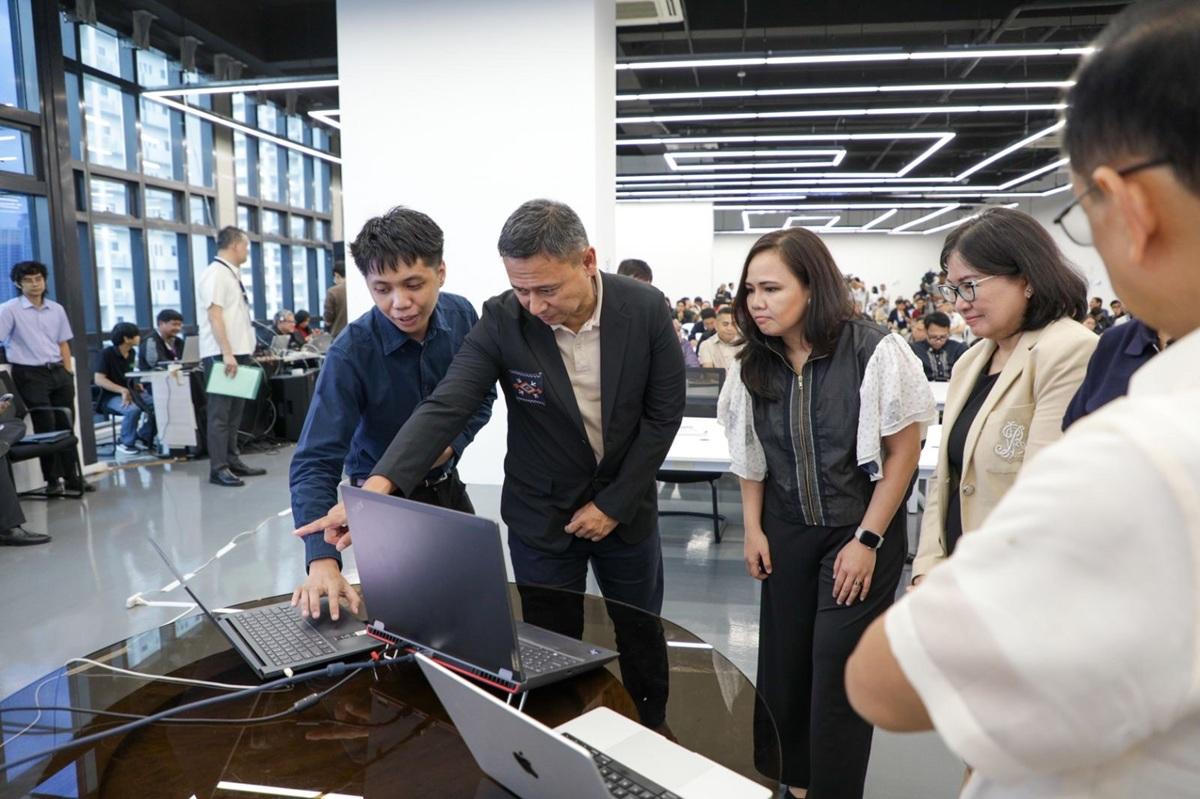
The Department of Education (DepEd) is looking to enable more granular, school-level decisions on class suspensions and resumptions through its newly launched Project LIGTAS+, an official said Wednesday.
DepEd Undersecretary for Governance and Operations Malcolm Garma said the platform is designed to provide more localized, science- and data-based information that can help authorities determine whether classes should be suspended or resumed based on conditions affecting specific schools.
“One of the objectives ng Project LIGTAS+ [is] to be able to provide more granular data, more science-based, more data-based decision-making,” Garma said in an ambush interview during the project’s national launch in Makati City.
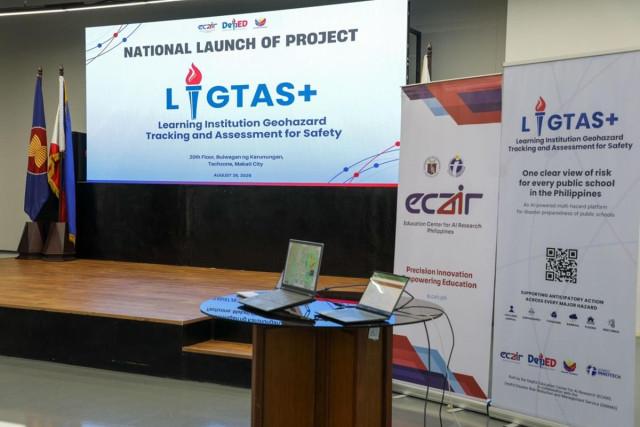
Project LIGTAS+ stands for Learning Institution Geohazard Tracking and Assessment for Safety. It is an AI-enabled multi-hazard analytics and risk management platform developed by DepEd’s Disaster Risk Reduction and Management Service (DRRMS) in partnership with the Education Center for AI Research (ECAIR).
The system is intended to consolidate hazard information and school-level risk data to support faster and more informed disaster response.
Garma noted that DepEd has already drafted recommendations that would allow both class suspensions and resumptions to be made at a more granular level.
“The basic feature of the recommendation is, as much as possible, [that] suspension of classes can be done [more efficiently]. At the same time, ang resumption ng class, pwede ring maging granular,” he said.
(The basic feature of the recommendation is, as much as possible, to make class suspension more efficient. At the same time, class resumption can also be made more granular.)
The recommendations are still being reviewed, however, and Garma did not say when the proposed approach would take effect.
If adopted, the approach could allow education authorities to consider the actual conditions of individual schools instead of relying solely on broader area-wide assessments.
He also cited the heat index as one example of data that could be used in making decisions on class suspensions.
“For example, yung heat index, na sobrang init sa lugar natin, pwede nating gamitin para mag-suspend,” he said.
(For example, the heat index, when it is extremely hot in an area, can be used as a basis for suspension.)
Regional, division offices to support schools
Garma said schools will be able to access the platform, while DepEd’s regional and schools division offices will provide assistance when schools encounter difficulties generating reports or accessing the system.
He noted, however, that the platform’s usefulness will still depend on conditions on the ground and the availability of necessary infrastructure.
“For example, yung division offices natin, regional offices natin, can provide support doon sa mga schools natin. But of course, definitely it will depend sa sitwasyon ng mga lugar natin,” Garma said.
(For example, our division and regional offices can provide support to our schools. But, of course, it will definitely depend on the situation in the different areas.)
He added that this is particularly relevant during hazards such as flooding and earthquakes, where additional infrastructure may still be needed for the platform to be fully utilized.
DepEd said Project LIGTAS+ is part of its broader effort to strengthen disaster preparedness and reduce learning disruptions by giving schools and education officials more localized information for decision-making. — BM, GMA News

