

 GMA Brandtalk
 Tracking
 Archives

Aghon now over Catbalogan, Samar; Signal No. 1 hoisted over 18 areas
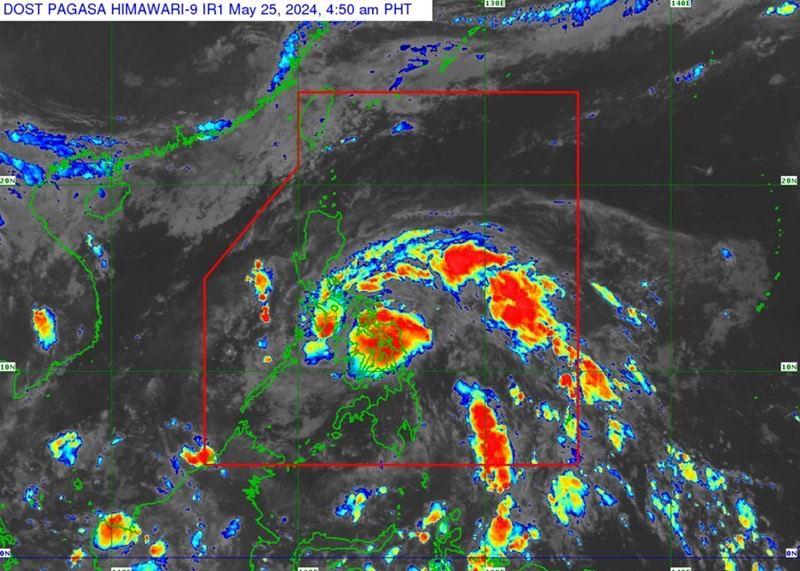
Tropical Depression Aghon maintained its strength while over the coastal waters of Catbalogan City, Samar early Saturday, and 18 areas were placed under Tropical Cyclone Wind Signal (TCWS) No. 1, PAGASA reported.
As of 5 a.m., TCWS No. 1 is in effect over the following areas:
- the northern portion of Aurora (Casiguran, Dilasag);
- Polillo Islands;
- the southern portion of Quezon (Calauag, Guinayangan, Lopez, Buenavista, Catanauan, Mulanay, San Narciso, San Francisco, San Andres, Tagkawayan, Gumaca, Quezon, Alabat, Perez, Plaridel, Pitogo, Macalelon, General Luna, Atimonan, Unisan);
- the eastern portion of Romblon (Cajidiocan, Magdiwang, San Fernando);
- Camarines Norte;
- Camarines Sur;
- Catanduanes;
- Albay;
- Sorsogon;
- Masbate including Burias and Ticao Islands;
- Northern Samar;
- Samar;
- Eastern Samar;
- Biliran;
- Leyte;
- Southern Leyte;
- the extreme northern portion of Cebu (San Remigio, Tabogon, City of Bogo, Medellin, Daanbantayan, Borbon) including Camotes and Bantayan Islands; and
- Dinagat Islands.
As of 4 a.m., the center of Aghon was estimated to be over the coastal waters of Catbalogan City, Samar packing maximum sustained winds of 55 km/h near the center, gustiness of up to 90 km/h, and central pressure of 1004 hPa.
Aghon is moving northwestward at 30 km/h with strong winds extending outwards up to 140 km from the center.
Hazards affecting land areas
Forecast accumulated rainfall on Saturday is 100-200 mm over Albay, Sorsogon, Camarines Sur, Northern Samar, Samar, Eastern Samar, Biliran, and Leyte.
Rainfall amounting to 50-100 mm is expected over Romblon, the southern portion of Quezon, the rest of Bicol Region, and the northern portions of Western Visayas and Cebu on Saturday.
The weather bureau explained that forecast rainfall is generally higher in elevated or mountainous areas.
"Under these conditions, flooding and rain-induced landslides are possible especially in areas that are highly or very highly susceptible to these hazards as identified in hazard maps and in localities that experienced considerable amounts of rainfall for the past several days," PAGASA said.
Severe winds
PAGASA reported that minimal to minor impacts from strong winds are possible within any of the areas under Wind Signal No. 1.
Hazards affecting coastal waters
On Saturday, Aghon will bring moderate to rough seas (1.5 to 3.5 m) over the coastal waters along the seaboards of Bicol Region, the southern seaboard of Quezon, the eastern seaboard of Eastern Visayas, the western seaboard of Samar and Northern Samar, and the eastern seaboard of Caraga Region.
PAGASA advised mariners of motor bancas and similarly-sized vessels to take precautionary measures while venturing out to sea and, if possible, avoid navigating in these conditions, especially if inexperienced or operating ill-equipped vessels.
Track and intensity outlook
Aghon made landfall in the vicinity of Giporlos in Eastern Samar before 2 a.m. on Saturday, PAGASA said.
It is forecasted to generally move northwestward over the Samar Sea and cross the Bicol Peninsula between Saturday afternoon and early Sunday morning.
It will then emerge over the waters north of Camarines Provinces.
During this period, Aghon may reach tropical storm category, PAGASA said.
Preparations
The National Disaster Risk Reduction Council and the Office of Civil Defense said on Friday that the "high-risk" Emergency Preparedness and Response (EPR) protocol was activated in four regions due to Aghon's predicted landfall over Eastern Samar.
OCD spokesperson Director Edgar Posadas explained that a Pre-Disaster Risk Assessment (PDRA) had been made, and the high-risk "Charlie" EPR protocol was raised for the emergency response organizations in:
- National Capital Region;
- Cordillera Autonomous Region;
- Bicol Region, and
- Eastern Visayas Region.
The Charlie or high-risk protocol includes activating emergency operations centers to red alert, recommending class and work suspension, imposing preemptive and forced evacuations, among others. —BAP/KG, GMA Integrated News

