

 GMA Brandtalk
 Tracking
 Archives

Joaquin Phoenix and Jack Black talk about their new film together
Los Angeles — When drama actor Joaquin Phoenix teams up with comedian Jack Black, you just can’t predict the outcome.
Don’t Worry, He Won’t Get Far on Foot, which is based upon the memoir of the same name by John Callahan, stars the two. It is a Gus Van Sant-helmed movie about a Portland slacker, John Callahan (Phoenix), dozing off at the wheel after a wild drinking party with his friend Dexter (Jack Black).
He gets into a car accident and finds himself confined to a wheelchair. Despite his disability, he discovers his talent for drawing edgy and politically incorrect cartoons which develops a national following and gives him a new lease on life.
The movie, with a screenplay by Van Sant, also stars Jonah Hill as Donnie and Rooney Mara as Annu.
Below are excerpts of our conversations with Phoenix and Black at a Beverly Hills hotel:
Joaquin Phoenix

On whether he was familiar with John Callahan’s work and how he came into the project:
I wasn’t familiar with John’s work at all. A couple of years before we ended up making it, Gus had talked about this movie and it was something that he wanted to do very loosely. I found out that it was something that he had wanted to make since the '90s.
I felt like if he has been sticking with this story for 20 years, there’s something that he really wants to explore here and it’s really interesting for me that a filmmaker has that kind of obsession about a subject matter. So we talked loosely about it, and he sent me John’s autobiography. Then he sent me a script that I thought was really good and interesting. But he said that he still wanted to work on it more.
The first draft that I read focused really heavily on his adoption and the relationship, or lack thereof, with his mother. So then a couple of months later, he sent another script, which was really good. It felt more focused.
He started sending me some ideas he had for the animation and different people that he was working with. So we just talked about it a bit, but it seemed like, we actually went to one meeting, to pitch it at one meeting, and Gus thought it went well. I thought it went really bad.
I thought this movie was never going to get made. This was never going to happen. So I ended up doing a few other movies before, and we thought it was going to go. Then it didn’t and it kept stalling. These other movies came up and I went off and did that. While I was making the other films, this got greenlit, and so I came back from Italy where I was working. Eight weeks later, we started.
On how far he went to go see how a paraplegic feels and moves:
There were a few things that were really helpful like John’s book. He’s very honest and really detailed about his experience. There was a lot that I got from that. Then Gus had shot some video footage of him in the '90s as research material. So I got to see John and how he moved. It was him drawing, talking and just living his life. So there was six hours of that footage, which was really helpful.
Then I went to Rancho Los Amigos which is the rehabilitation hospital where John went and did occupational therapy (OT), recreational therapy and worked with the head of the OT there. I learned just about the basics and what is it like to transfer and catheters and all of that.
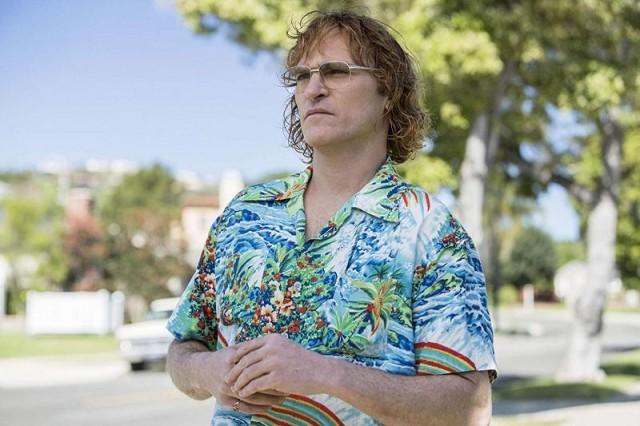
I spent some time with a few guys who were down there who had obviously gone through it and were there as advisors. My assumption was if you have the same injury, your body reacts in the same way. John was a C5, C6, which is between the fifth and sixth vertebrae counting down from your neck that is severed, a complete sever. So it means anything below that, you can’t voluntarily move.
So I assumed that everybody’s body reacted the same way but that wasn’t the case which makes sense to me now. Everybody had a different way of moving. He could use half his diaphragm, half his deltoids and his triceps. John’s increased after time. He didn’t do a lot of PT, obviously at the beginning he did and was in the hospital, but it’s supposed to be something that you maintain — he didn’t really do that. But I had a video of him eating French fries and he was able to have French fries and get them up which I didn’t think that he could do. I think it was most beneficial in seeing how he drew his art, and that’s all I can remember.
On accessing the humility in ourselves:
It’s a key moment for John and it’s all over his book. I wish I could remember what he said. This really funny line, like if you are a quad, you have humility daily. There was something about taking that on, like the courage that he had to really be humble, to humble himself and not to feel like the world had humbled him.
For a long time, he carried this chip on his shoulder and have this victim mentality. There was a point where he decided to change that. That is something that we can all identify with in some ways, not as extreme as what he has experienced, but it’s something that we all tend to do. It was an inspiring, beautiful part of that story and his journey.
On how fast he got around the streets on a wheelchair:
I can’t remember what it was, but it was souped-up. It was much faster than the chair that I had gotten for myself to practice in. We were already shooting and they didn’t get that chair until a week into shooting. We were using it the next day and we were filming something. It showed up and I got on it. It was really fast. It doesn’t sound fast, however many miles per hour it is, but there’s also something about being strapped in it because you have a seat belt on.
Jack Black
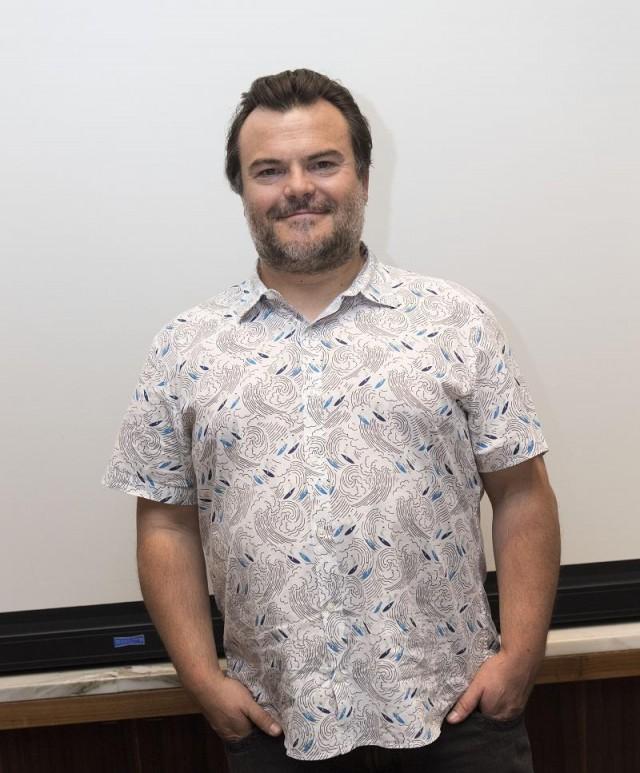
On his journey in making this film:
This started about 10 years ago after I saw Elephant. I was such a huge fan of Gus Van Sant going back to Drugstore Cowboy, Milk, and Elephant. Then I was just for the first time ever, I was going to write a letter. I don't write letters. I'm going to write a letter to Gus Van Sant and tell him what a remarkable filmmaker he is and how his stuff was touching me.
Elephant blew my mind because I felt like I got a secret message in it. Was the elephant in the room the fact that these kids felt like they couldn't express themselves as gay men in this homophobic world and it turned them inward making it into a sickness that led to this horrible event in this school? That's the elephant in the room that no one's talking about, so I was just profoundly moved by his stuff.
I sent him a letter, and told him how amazing I thought he was. Then I heard nothing back for 10 years. Then I get a call from my agent and she says Gus Van Sant wants you to play a part in this upcoming movie.
I read the script and I was like this is an amazing script. It's very different from anything I've played but on the very first line it describes my character as an annoying blowhard. I thought oh, he thought who can I get to play this annoying blowhard. Who really captures this, the essence of an annoying blowhard? I know. It's Jack. So it was a mixed bag for me. There was the joy of getting to work with my hero Gus Van Sant and then the horrifying realization that I'm a perfect annoying blowhard.
On Robin Williams originally to play the role of John Callahan:
I don't know if you talked to Gus or heard anything but originally he was developing this with Robin Williams and then Robin died before they could bring it to fruition. I don't remember how Gus decided on Joaquin but I think it was an excellent choice because he really embodied the heart and soul of that character.
On developing his other talents aside from acting:
What I've been really enjoying are writing and drawing. I've been working on a little animated project for my band Tenacious D so I could definitely see doing some illustrating myself. I am not very good at it but I was going to the kind of Beavis and Butthead School where it doesn't have to be a good drawing to be funny necessarily. You just have to be able to communicate some basic elements. — LA, GMA News

