

 GMA Brandtalk
 Tracking
 Archives

Matthew Libatique on working on 'The Whale' and 'Don't Worry Darling'
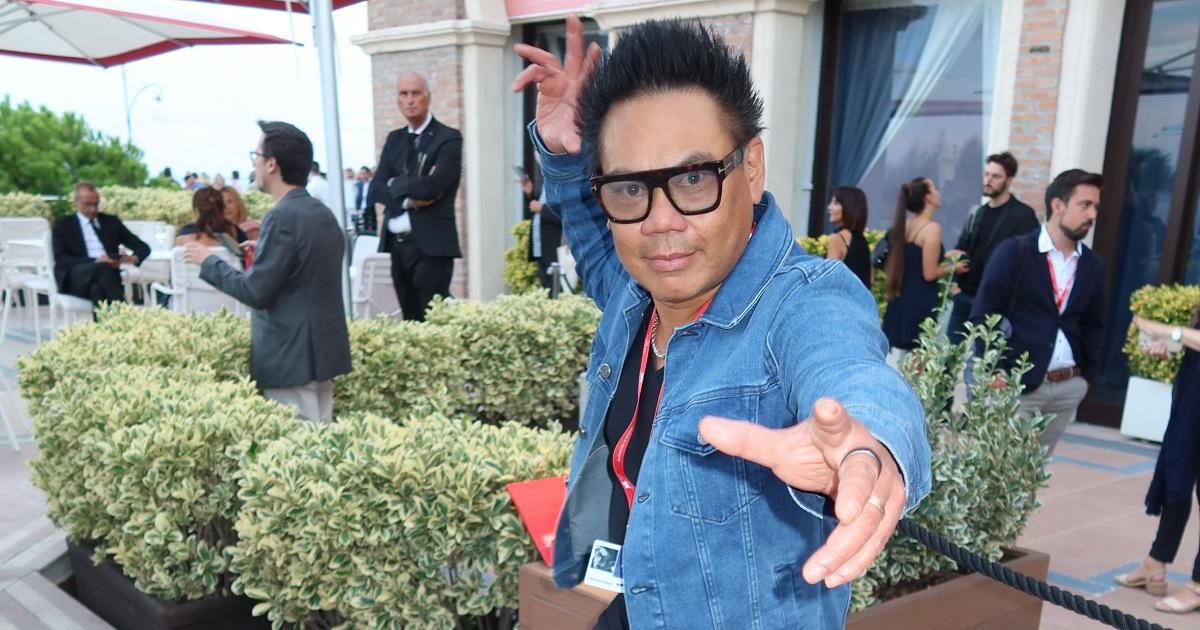
LOS ANGELES — One of the most in demand and talented cinematographers in Hollywood is Filipino American Matthew Libatique.
During this awards season, Libatique has two high profile films that he handled the cinematography—Darren Aronofsky's "The Whale" and Olivia Wilde's "Don't Worry Darling."
"The Whale," which had its world premiere at the 79th Venice International Film Festival, is a psychological drama based on the screenplay written by Samuel D. Hunter, based on Hunter's 2012 play of the same name. The film, which stars Brendan Fraser, Sadie Sink, Hong Chau, Samantha Morton and Ty Simpkins, is about a 600-pound man who tries to connect with his 17-year-old daughter.
"Don't Worry Darling," which also premiered in Venice this year, is a psychological thriller from the screenplay by Katie Silberman, based on a spec script by Carey Van Dyke, Shane Van Dyke and Silberman. Starring Florence Pugh, Harry Styles, Gemma Chan, KiKi Layne, Chris Pine, Nick Kroll and Wilde, the film is about a young wife living in a company town who begins to believe there is a sinister secret being kept from them by the man who runs it.
We were able to interview Libatique via Zoom.
Congratulations on being DP for "The Whale" and "Don't Worry Darling." I know you have worked with Darren Aronofsky before for so many years, but what was challenging in doing the cinematography for "The Whale," and how was it working with Darren in this movie?
The timing was perfect because we were coming off the shutdown, and before the shutdown, Darren said he wanted to make "The Whale," which was based on the Sam Hunter play, but he had no plans and we shut down, so everybody was basically trying to figure out what they were going to do. But then Darren kept talking about maybe doing "The Whale," and how it might be a good project to do in the current times because we were contained into one apartment, and we could isolate it.
We shot it upstate New York in a place called Newburgh. Darren has a house very close to there, and we were able to get together and make a film at a time where it just felt like everything was in doubt. When he told me about it, I jumped at the chance to leave LA because I was stuck there for longer than I've ever been stuck there before. So, I wanted to do anything. I would do anything. And I was actually on "Don't Worry Darling," when he called and said he was going to make it. Then it happened pretty quickly after that. After I found out that it was happening, it happened very quickly. The next thing I knew, I was flying literally on the last day of shooting on "Don't Worry Darling," I was flying to New York. They're so different, the two films. Everybody was appreciative that we had something to do.
I know Brendan Fraser said in the press conference in Venice that "Matty can put a light anywhere. I learned inside of a small room and tell the story of the emotional reality that's happening in that room." Can you please comment on that? How was it filming in a small room with little light?
When somebody says nice things about you, it's a very nice thing to hear. I appreciate Brendan as much as he appreciates me, if not more. But I honestly, I don't think about it too much. Like I can do my job. And the older I've gotten, the more I realize is to say, okay, I could talk about every motivation for me, but it's just that it's giving a partial meal to someone and not feeding them because there's so many things, choices that go into it.
But really, I'm just motivated by the film, the look of it and the camera. It's just like, on one hand, we were given the task of translating something theatrical into cinema, but at the same time, we didn't want to stand in front of the movie because the movie was Charlie, and the film was Brendan and his story and the story of the other characters. Cinematography and everything really had to take a quieter place in the situation. That was my goal—to be as quiet as possible and disappear.
Hong Chau mentioned that it was also tough working in freezing temperatures in upstate New York, in a small intimate film with a small cast. So, talk about that and the challenges of filming in freezing temperature, and working with a small cast.
She had the one scene that was outside and that was the only time you ever saw the outside world was in the very beginning when Thomas arrives into the world on a bus. Then the only other time is when Thomas is being spoken to by Hong's character, Liz. And yeah, it was cold, it was uncomfortable, but I think it was just us not being used to being outside because we'd been inside for three or four weeks. But it wasn't a challenge actually. It wasn't a challenge to everyday filmmaking because we shot on a set.
This is your first time to work with Olivia Wilde in a feature film. How was it working with her for "Don't Worry Darling"? What was the most challenging thing for you doing the cinematography for this film?
I had the best time working with Olivia. Olivia has so much to offer as a filmmaker, and she's growing. From one project to another, her growth is tremendous, and she's got fantastic ideas, and she just has this way of motivating the collaborators that she's working with and inspiring them. She inspired me, and it was inspiring to the crew, and the crew directly working with me. As a team, we couldn't be happier working with Olivia. She would always challenge us in the most interesting cinematic way. She just has a great aesthetic, and it changes from movie moment to moment. I don't think you can pigeonhole Olivia in what she's going to do. She's going to do great things as a filmmaker, but I hope it's not the last one I do.
How was it collaborating with Olivia who is the director and she's also the actor in the film?
I've done it many times before, so it wasn't anything different really. I could speak more generally about it because I have done it before. It wasn't my first time. You pay attention to things that you have to do. They're in command of their craft of acting to the degree where they do things that regular people just don't understand. How they prepare and how they go in and out of a character while they're working with other people who aren't in character, is the tremendous feat. But you have to be ultra-sensitive when you're working with it. Just be tuned to what they need at the time. Any director actor, because there's so many things going on in their head, it's good for you to know what's going on in their head.
Are they concerned about where the shots are? Are they concerned about the performance? Are they concerned about time? The more you can be in tune with the person and what they're thinking about at that given time, becomes a cohesive relationship. The minute when you're thinking about different things, it's amplified. If it's just a normal director-cinematographer relationship because there's no other distraction besides maybe the producing of the movie and the performances. But when somebody's actually acting in the film, you have to give them that space and then just be there when they're ready to return as a director so that there's no confusion. You're still being creative.
"Don't Worry Darling" also got praises for the cinematography and visual style. How is it filming such a visually vibrant film and shooting at the Kaufman House in Palm Springs?
I feel very lucky because there's not that many opportunities to really excel visually. You can force your hand and try to make something visual, but this had so many elements that were, I didn't have to do a lot. Put it that way. The design of it was so well done and crafted, and the costumes were so well and crafted, the hair and makeup.
I give tremendous amount of credit to my collaborators in that regard because it was probably better to know when to do less because there's so much to see. The beautiful people that I had in front of the camera and the beautiful setting in Palm Springs and the Kaufman House, like you said. It was just like a joy to compose and a joy to light. Then you know you're doing something that has the freedom because it's got that element of science fiction and a little bit of thriller aspect to it you could actually create. It was a wonderful experience, but I know that not every experience has that.
How was it working with the cast—Harry Styles, Chris Pine, Gemma Chan, Florence Pugh, and KiKi Lane?
I love KiKi Lane. I worked with her on "Native Son." I find her to be a tremendous actress, and everything she's done always impresses me and I always love watching her.
We're going to be familiar with Florence Pugh for a long, long time. She's a tremendous actress and just a wonderful spirit.
Harry was fantastic. He's probably—I'm not lying and I'm not exaggerating—the coolest person I've ever met. For me, he just has it. More "it" than anybody's allowed to have. But he's tremendous and he's talented, and I think whatever he puts his mind to he can do, and he's going to do it really, really well.
But Gemma Chan is a gorgeous and talented actress. She glows.
Chris Pine's incredible. He embodied the character more so than I ever would've expected. He's just a skilled person as well, and so good looking. He's magnetic on camera.
Olivia, she's fantastic. I can see in the movie, her orchestrating the pace and the cadence of performance while being inside it, is impressive. She could do more and more of that if she chooses to. It was a wonderful cast. I felt very fortunate. I've been fortunate my whole career working with great actors and it's fun. It's really fun to have a front row seat to them.
Actually, both the last films... watching Brendan Fraser, Sadie Sink and Hong Chau. Wow. I think it's important to stop and smell the roses to an extent. Luckily, I've gotten to a place in my career where I can do that, and I can watch and really appreciate what these people are doing. So, I feel appreciative of it.
Do you also see yourself working with some Filipino directors, and can you please mention some that you would love to collaborate with?
I'm friends with Raya Martin, and I'd love to work with him at some point. It would be really interesting to work with Lav Diaz.
I see myself doing it. There's so many. Like this career, this path, this journey is one that you explore, not get caught up into the business of it. What's interesting to me about cinema at this point is its power on the world stage.
Going to film festivals and meeting filmmakers from other countries, and seeing what stories they're telling, it's interesting to see the commonalities in them and through its politics, through its humanism. But then it's also interesting because culturally they're so different. Because it's been a long road as a Filipino American, I feel like I, at some point, want to help tell stories from my culture. It just doesn't necessarily have to be Filipino American, it could actually be Filipino, in general. So, I'm open to anything.
What are your next projects that are coming up?
I'm working on a film now that I'm finishing up in a couple weeks. After that, I'm just reading things. I don't have anything. I'm not going on to anything at the moment.
—MGP, GMA News

