

 GMA Brandtalk
 Tracking
 Archives

Reanne Acasio, Joshua Dela Cruz, Joan Almedilla talk about 'Here Lies Love'
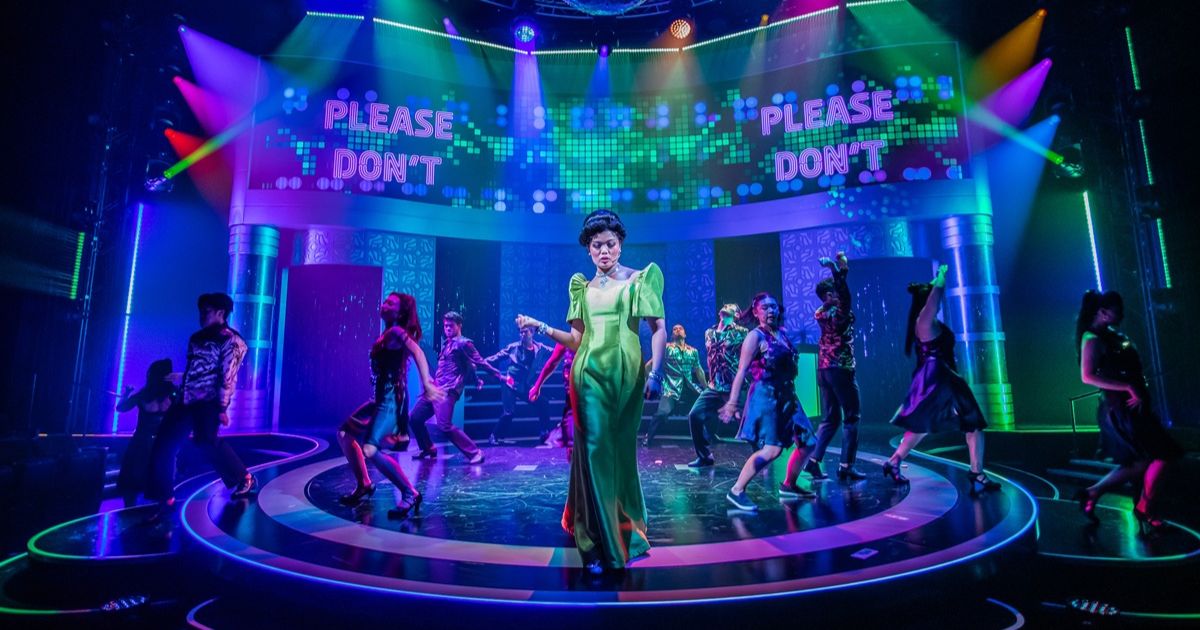
Think all-Filipino cast. Then combine that with the legendary music of award-winning David Byrne and Fatboy Slim. And you have the groundbreaking musical "Here Lies Love."
The musical, which is inspired by the former First Lady of the Philippines, Imelda Marcos, and her rise to power from a simple country girl from Leyte to the glamorous and powerful First Lady.
We watched the original Off-Broadway production at The Public Theater in New York in 2013, which then starred Ruthie Ann Miles as Imelda Marcos, Jose Llana as Ferdinand Marcos, and Conrad Ricamora as Ninoy Aquino. This production garnered five Lucille Lortel Awards in 2014.
Then, it went on Broadway in 2023, and we were there to watch the musical again, but this time with Arielle Jacobs as Imelda, Lea Salonga as Aurora Aquino, Melody Butiu reprising her role as Estrella Cumpas, Ricamora as Ninoy Aquino and Llana as Marcos.
Now in Los Angeles, which has the largest Filipino population in the country, "Here Lies Love" has finally found its home.
Unlike its Off-Broadway and Broadway reiterations, the LA presentation has made it simpler and got rid of the revolving stage to make it look like the audience is simply in a TV studio instead of a club. And instead of a DJ narrating, they have a drag character named "Imeldific," ably portrayed by Aura Mayari of "RuPaul's Drag Race" fame, who does the narration.
This LA production has Reanne Acasio portraying Imelda Marcos. A former understudy for Imelda and Estrella Cumpas in the Broadway musical, Acasio portrayed Aurora Aquino on Broadway. Joshua Dela Cruz, who was part of the cast and ensemble of the original Off-Broadway musical, is performing as Ninoy Aquino. Joan Almedilla, who first performed "Here Lies Love: A Song Cycle" as Imelda Marcos with David Byrne at Carnegie Hall, portrays Aurora Aquino this time. Chris Renfro, who was last seen in Broadway's "Oh, Mary!" and in "The Drowsy Chaperone" at Carnegie Hall, is performing as Ferdinand Marcos. And Carol Angeli portrays Estrella Cumpas.
After watching the LA show on opening night, we were able to interview Acasio, Dela Cruz, and Almedilla. They talk about the challenges they had in portraying their respective roles, their research and preparation, as well as the significance of the show.
Reanne Acasio (Imelda Marcos)
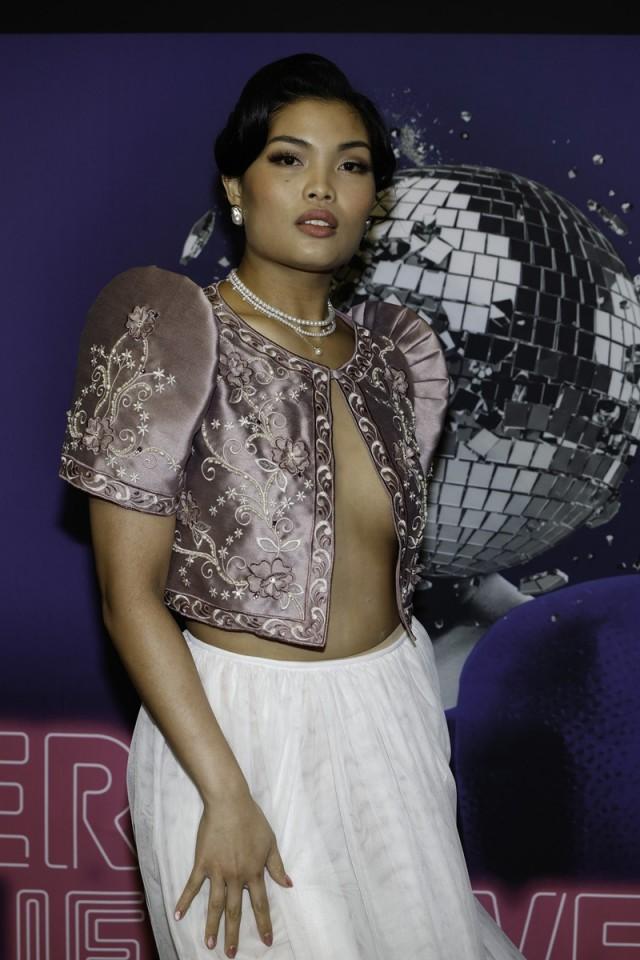
Congratulations on being part of "Here Lies Love" as Imelda Marcos. So, from playing Aurora Aquino in the Broadway production and now as Imelda Marcos in the LA production. Two different women, two very significant roles. Can you talk about that journey of portraying these two powerful women and how you prepared for your current role as Imelda?
Yes. So, I played Aurora Aquino on Broadway, as you said, but I also understudied both Imelda and Estrella Cumpas. And so, I have a very unique perspective in that I got to experience the show from four different female characters. And that was a lovely perspective because the power dynamics in this show were very different between each of the women in the show.
But to be part of the first-ever all-Filipino Broadway cast was such a historic moment for me and a huge honor, especially to play Dona Aurora. As you said, she's such a powerful woman and a pillar of strength at the time. And so, as an inspiring person to me, it was such an honor to step into her character and also share the role with Lea Salonga and Vina Morales.
A lot of really incredible women are stepping into that role, and to walk amongst them was an incredible honor. And then coming to LA, which I'm sure you know, LA has the largest Filipino community outside of the Philippines. It was just the perfect story to bring here, and not only because of the Filipino cultural moment, but also because of what we're seeing happening both here and in the US in politics.
And it's so relevant today, and as relevant as it was every time any production of "Here Lies Love" was ever put on, it has remained relevant throughout history. So, to be able to step into the role of Imelda Marcos full-time in this new LA production, and also the first time that this production has been put on by the team that has been with the production since its birth for over a decade. This is the first time it's been taken on by a new team, and that is so exciting. It was a little scary, especially coming from the Broadway production, but it's been so beautiful building this show again from the ground up.
Did you compare notes with Joan Almedilla, who portrayed Aurora Aquino?
It's really funny because on our first day of rehearsal, Joan said, "I watched the archive of the Broadway production and at Lincoln Center and when it got to the Aurora song, 'Just asked the flowers' I said, that's my Imelda." She saw me because I'm in the archival recording at Lincoln Center. And so, the fact that she got to see me on the archive and is just so cool. Especially because she's such a renowned artist. She's so incredible at what she does. And to know that that's part of the source material she saw is crazy. And she has done such a beautiful job portraying Dona Aurora in this production that I take inspiration from her. I think it's incredible.
There's no comparison. It's apples and oranges. She makes me cry every time, and I'm like, I can't cry. I'm Imelda right now.
I had previous notes from the Broadway production. When Bam Aquino (the grandson of Benigno Aquino, Sr.) came and I got to talk to him about his experience. And he was very close to Lola Aurora. And so, I got to get some kind of second-hand knowledge or firsthand knowledge, actually, because it's his experience with her. I got to jot down a lot of notes that aren't in the history books, which aren't in the newspapers. It was very personal information. And so, I got to save that for myself on the Broadway production. But then I was able to pass that along to Joan when I came here.
That's great. What was the most challenging part for you in doing the Imelda role?
I think the hardest part is that we all know that she's on stage the entire time. It's a full 90 minutes that she is on stage. But that's not actually the hardest challenge for me. It's not even the quick changes in every song. It's not all the hair changes. The hardest part for me was putting aside any of my own judgments about this person.
I can have whatever feelings I have about her and the Marcos regime, but my job isn't to judge her. My job is to help tell this story and explore why this may have happened in the first place, why they even rose to power in the first place, and how that was able to happen in the Philippines. And so, I have very many strong feelings about Imelda Marcos, but I cannot bring that to the stage. That was my biggest challenge.
Have you ever met Imelda?
I have not met Imelda. The funny thing is, I spent a lot of time. I lived in Hawaii for a while as a child and as an adult. And so, there's a lot of Marcos supporters there because that is where they were evacuated to. And so, they spent a lot of time there. But I never actually met Imelda. I don't know what I would do if I met her.
What would be your first question to her?
Oh my gosh, I haven't thought about that. Ooh, that's a meaty question. I think my first question, it would be very meaty for her, would be, do you regret any of it?
Because my first instinct was like, oh, maybe ask her why she did it. This musical explores why she does it. And so, I want to know if she has reflected on any of that or feels any remorse or regret.
How was your experience with the LA cast, especially Chris Renfro, who portrayed Ferdinand Marcos and Josh De la Cruz, who portrayed Ninoy Aquino?
I feel so lucky. I get to be in a little triangle with them because they are both not only so amazing at what they do. Just their resumes alone. Their resumes are stacked.
But the fact that they are also such funny, warm and kind humans, that it makes me excited to go to work every day and work with this all-Filipino cast, which we fall under the stereotype of we are hardworking, we are amazing at what we do, and we are kind and hospitable. We do fit that stereotype. And so, this has been the most drama-free, exciting-to-come-to-work situation ever.
Every night after the show, when we meet audience members at the stage door, even after all the audience has left and taken their pictures and gotten their autographs, we are still there, just hanging out with each other because we enjoy being with each other that much, and I hope that other Filipinos get to experience what that is like. Our culture is very community-based. We are best when we are together. And so, to not only bring that on the stage, but also enjoy them and the LA community off the stage is the best thing I can take away from this experience.
So, there's always Filipino food after the show?
Yes, yes.
The good thing is that I'm on stage all the time, I'm burning so many calories, so I don't have to worry about how much I'm eating because it's the cast bringing food. It's all the Filipino friends who are like, hey, I'm coming to the stage too. And I brought lots of treats for you. I said, oh my God, it's my mom, it's ensaymada. It's sweets and desserts. It's Filipino food. We're not just eating salads.
So, director Snehal Desai must be fond of Filipino food as well by now.
Yes, I think he was very excited to be around so much robust Filipino culture and joy. And we were teaching him some Tagalog words, and he was very inquisitive about our culture and very respectful of our culture, which is so beautiful.
What do you think young Fil-Ams would get after watching the show?
This show rides a very complex line. We briefly talk about the US relationship with the Philippines, which has a very long, complicated history since the 1800s. When the US first established its presence in the Philippines. I feel like Filipino American audiences view this show differently from Filipinos in the Philippines.
I think Filipino Americans have a unique lens when they come here, because they have both the experience of living in the US. And what it's like over in the Philippines. And so, I hope that Filipino Americans come and see this show and not only feel represented on the stage but also feel that their culture is celebrated. There are moments where we have a lot of Tagalog that we don't overexplain to non-Filipino audiences. They just get that little Easter egg like that's for me. I understood that maybe the person next to me doesn't understand, but at the top of the show or Imeldific says, Mabuhay, welcome, welcome Tito's and Tito's. Oh, just kidding. And of course, the Filipinos are all laughing.
We have some swear words in Tagalog, which are like, I'm like, oh my God, no. But it's so fun to see that. But on a deeper level, we just celebrated the 40th anniversary of the People Power Revolution of 1986. Huge milestone. And yes, it was a celebration, but it is also a stark reminder that Bongbong Marcos is in power right now. History does repeat itself. And so, I hope that we have taken on the huge task of continuing to tell this story so that the younger generations of Filipinos, including Filipino Americans, know what happened. And so, they are equipped with that knowledge. And it is up to them to see what we can do to make sure this doesn't happen again. You know that the People Power Revolution was such a miracle, but it was also the culmination of many, many years of struggle, of activism, of organization. And I hope that this generation feels inspired that they can do the same thing.
Joshua Dela Cruz (Ninoy Aquino)
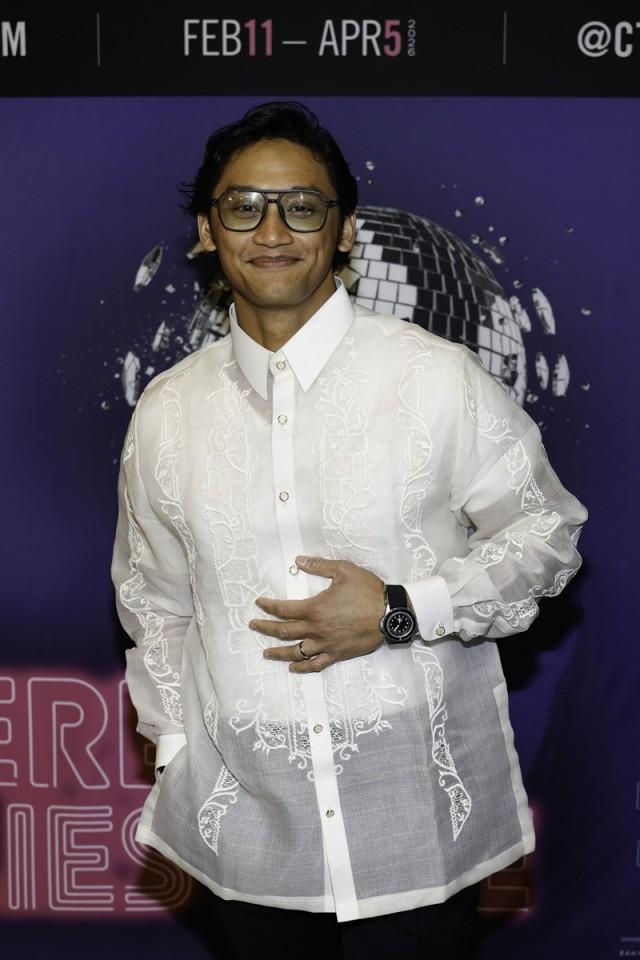
Talk about your journey from a children's show like "Blue's Clues & You" and "Aladdin" on Broadway to a major historical figure like Ninoy Aquino.
It's interesting, this show has been with me for a very long time. Even longer than "Aladdin." I started working on the production all the way back in 2012, when I did the first full workshop production of it at Williamstown Theatre Festival. We were in North Adams. We were at the contemporary of modern art. And it was incredible because we just had wooden moving platforms. We were trying to figure out how it all worked, how the sound would work, being surrounded by and trying to negotiate, how to hear each other, and how to hear the music so that there wouldn't be any hiccups along the way. How to move the crowd.
And so, at that time, it was a completely immersive experience. And then the following year, in 2013, that's when we did the full first production at the Public Theater. And that was an incredible experience, because now we went from theoretical to actually doing it with a paying audience and with full costumes and set and audience wranglers and music. And it was a life-changing experience because at that time, it helped me really come to terms with who I am as a Filipino American performer and being confident in who I am, what I look like, and the kind of stories that I wanted to tell. And so being surrounded by Jose Llana, Conrad Ricamora. Ruthie Ann Miles. Everyone in that cast helped me find who I am.
And it was from that production that I got the opportunity to be in the original cast of "Aladdin." And from "Aladdin," I went on to "Blue's Clues." And when that show ended in 2023, I was looking for that next step. I was looking forward to returning to theater. And so, I had the amazing opportunity to play the lead role in a new Maltby and Shire musical in Thailand. And that was incredible to work in a country where you walk out into the street, and you look out at the audience; everybody looks like you. I've never experienced that before.
And then, fast forward another year. I got the chance to be in to be in the Philippines performing with legends like Lea Salonga. And that incredible cast at Theatre Group Asia to perform a role that I don't think I would ever be considered for in the States just because of the way the casting is. And so, I was looking for that next thing, I was able to go back to "Aladdin" for a little bit to cover my old track, which was wonderful. And then "Here Lies Love" popped up on the radar and I was like, oh, man, I never thought that any theater would be able to. Not that they didn't want to do the show, but I didn't think any theater would be able to do the show, at least in the way that it was done in the past as a completely immersive disco musical. It's just too big especially to be done regionally.
And so, I went to the audition. I got the part which was incredible. Because I didn't know that I would ever be able to do the show ever again specially for the character Ninoy Aquino, who is such an important figure in Philippine history, but also in world history, especially at the end of his life, his devotion to pacifism amidst the violence that is just everywhere. And so being able to play this role with this company, I was so grateful.
But I didn't know what to expect because I didn't know if they were going to do the same exact production. How is it going to work? And when I found out that it was a completely re-envisioned production, I was so excited. And when I found out the concept of how they wanted to present it, I was even more excited, especially since the audience gets to sit down, I love that. That barrier doesn't exist for audience members if they want to experience the show, but they are hesitant to come because they don't know if they can stand the whole show. Now you're sitting through the entire show, and I feel like you're really immersed in the story and really immersed in the history and will hopefully create some larger conversations after.
So, what did you know about Ninoy Aquino before you did this and what resources did you read and watch that were useful to you in evoking the essence of Ninoy and not a caricature?
What's interesting is that no matter what, my goal wasn't to be a Ninoy impersonator. What I wanted to do was to be as true to who that person was, what that person stood for and how they approached these beautiful, long speeches. But then as an artist, like, how do I connect to that person? And whether that be looking at other political figures within the arena today like, what do I connect with them and how can I form a bridge? That's very real for me.
And so, we had an amazing dramaturg who supplied all these materials for us, historical references. And for me, in the show it is really important to track date-wise around where each scene was. This is not historical. This isn't like this. We're not trying to get historically accurate here. We're trying to reference history to evoke a really challenging conversation today. And so, there is artistic license that happens. And so, taking the materials that the dramaturg supplied us, and then thankfully, YouTube exists in a way that it didn't when I first started working on the show. There are so many more speeches by Ninoy, whether it be interviews or his famous speech here in LA.
And I think the thing that I was so impressed by was his sense of humor and how charismatic he was after being imprisoned for over seven years, mostly in isolation. I don't think that I am the kind of person to come back from that. If you see that person, and you'd be like, oh, did you know he was in prison for almost eight years? On and off again, or just complete isolation from anybody. You'd be like that guy. No way. But that just speaks to the strength of his character and how devoted he was to make sure that Filipinos did not suffer.
And I think that is what I was so impressed by learning about him. When he says that the Filipino is worth dying for, yes. It means that he's willing to sacrifice his life, but he's also not willing to sacrifice any Filipino life. And I think that is such an important touchpoint, especially during these really divisive times, where it feels like us versus them. And the only thing that really exists are the private interests that are trying to divide us. And so, I think that it was really inspiring and really helpful in trying to figure out how to approach this character.
How was your experience with the LA cast and doing the production in Los Angeles?
It's the biggest. I don't know how many times people have repeated this, or how many times I will repeat this. But it's the biggest concentration of Filipinos outside the Philippines in a metropolitan area. That's huge.
I remember when I came from the Philippines, when I came to LA for the very first time, and I met the Filipino community here, I was floored because they're so connected to their culture, like there are cast members who weren't born in the Philippines but are so connected to their culture. And I'm so impressed and inspired by that because in the New York, New Jersey area, at least where I grew up, that Filipino culture does exist. But the community building that has been done and that is continuing to be done here in LA is, is unlike anything I've ever experienced.
And so, I was so excited to bring this show to be a part of this cast in LA because so many people weren't able to see the New York production. Whether it be they didn't have the time, they didn't have the money to fly out and then pay for a hotel and then pay for the Broadway ticket and all the extra expenses.
Now, this Filipino community, this historic Filipino community can come watch the show talk to us after the show about their experiences. I think two nights ago, I met someone who attended that was a friend of Ninoy Aquino who attended a lecture while he was at Yale. And because he was one of the only Filipino students at Yale, he was invited to a dinner where he got to sit down with Ninoy.
And I was like, wow, what an incredible story that I don't think I would have gotten otherwise. And so, it's really, really special. I'm so excited. If this is your first time seeing a show, seeing a musical, let alone going to a theater and watching something because it's really special, because we have a full Filipino cast, which is hardly ever, ever done.
What for you was the most challenging - the singing, the dancing, or the break dancing?
Oh my gosh. You know what's so funny? The most challenging part is, there's a song called "The Fabulous One" where Ninoy is addressing the people, and it's like a rally. And for me, that's the most challenging vocally, because I get so excited that I'm like, I can do it once and scream, and that's great, but we have to do the show eight times a week. And we close on April 5th. So, I'm like, well, you can't scream every night. And so, I think I figured it out, but that was the most challenging part of the show. Just making sure that I'm in a vocally healthy place that's still connected to the material, which is impassioned and so much fun to do because the audience really, really gets into it.
What do you hope audiences will get from watching this show, especially the young generation who don't know anything about this?
I hope the audiences can talk to their families about what is happening, what happened then? Especially for those Filipinos who were in the Philippines during that time and then came over, started their own families, or maybe they escaped from the Philippines during that time and came to the United States. I hope that they can start talking about it, because so many people have come up to me and been like, I had no idea. My parents never talked about this. And it's a huge source of trauma for a lot of Filipinos. However you felt about the Marcos administration, it is a huge source of trauma. And what's interesting is that sometimes Filipinos who voted one way in the Philippines, they came here and they voted a completely different way. And no matter how you felt, I think it's really, really important to have these conversations so that we can pick apart and start to heal from that trauma, so that we can start making decisions that help our community as a whole.
I hope that we can realize that we're not, and that violence is not the answer, and that we can look to each other for help and strength. Like, I think it's incredible that during the huge, huge protests in EDSA, like people of faith who were combating these militant blockades with food and with flowers and with prayer. And I think it's so beautiful. Because that's not the way it is right now. We're all "It's us versus them." And you know, you have to do what you have to do in the moment. But I hope that we can have enough conversations because of this, that it starts to spread in our communities, and that we start to look to each other as maybe not enemies, but as misguided or lost, and that we can lend a hand out, and that we could all join together and really make a difference.
Joan Almedilla (Aurora Aquino)
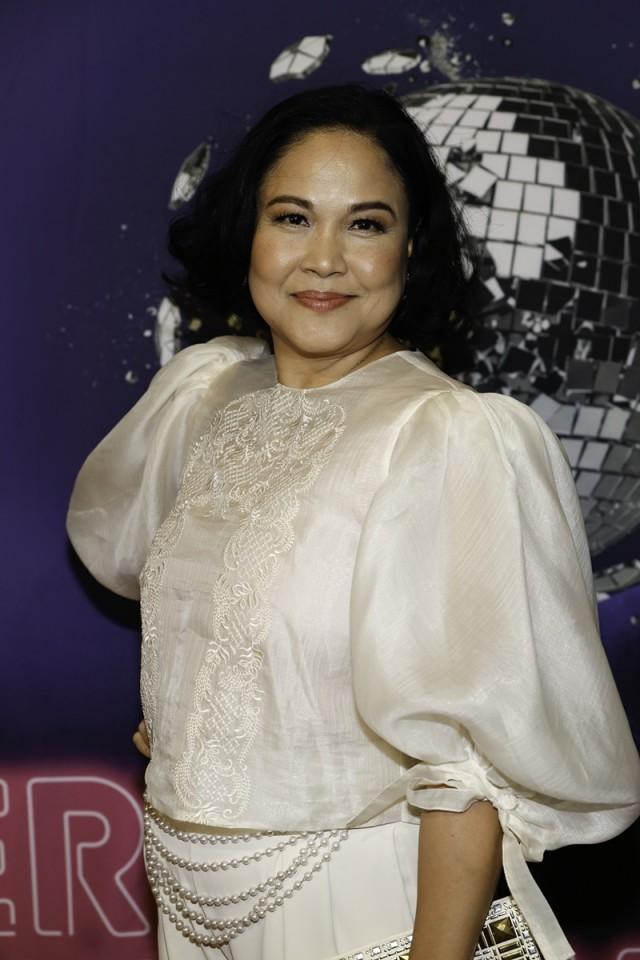
Talk about how you got into the musical, your audition process, and portraying Aurora Aquino.
I actually received an invitation to do the role, and I said yes. I was very excited. I was doing a workshop in New York. And that invitation came and I was so happy. I was just so excited. I think I'm more excited to work with this cast.
Have you worked with any of the cast members before?
Almost half of them, and some of them were babies. And I always tell this joke all the time. I remember when I was the baby in the cast. Not anymore. So yes, I'm excited.
Have you watched any of these versions – the one on Broadway? And I know Lea Salonga also portrayed this role.
The one and only. Yes, of course. And she was so gracious enough to bring us backstage and show us the amazing transformation of the theater. So, thank you, Lea. I actually played the role of Imelda Marcos. I mean, not played, but performed Imelda Marcos at Carnegie Hall in 2007 with this amazing band. To my left was David Byrne, and I was starstruck the whole time. And to my left was the woman who played Estrella. And I just am blanking out her name, but she was great also.
So, in your research, what do you know about Aurora Aquino?
Aurora is a symbol of quiet strength. And it wasn't very difficult for me because my mom is kind of that way. She's very soft spoken, and she's a very prayerful woman. I'll go to my mom and be like, oh, my God, something happened or whatever people or events. And she'll be like, just pray and you'll see. And she will just do that, you know? And then I don't know if that was like revenge or a lesson lbut she would just say, you will see and so Aurora is such a symbol of that quiet force. She is like a beautiful, delicate flower, but with a force inside of her.
When you first saw "Here Lies Love," what were your impressions?
I just had a great time on the dance floor. I had such a great time. Do I remember? I remember everything. I remember moving in a circle, and it was just such a high-energy show. And, yeah, I was just so proud of my friends telling the story up there, you know? And a disco. How perfect is that? I mean, Imelda loved her disco. Her disco shoes and her clothes and her dances and throwing parties.
What do you look forward to most in this production?
I look forward to learning a lot from the cast to delve deeper into Aurora Aquino.
And how important is this show for representation for Filipinos and other ethnic ethnicities?
First of all, I am so proud of this show. The way we tell the story, the way we sing and feel the pain. I think it is important to be shown. It is our contribution to the world.
What do you hope audiences will get after watching "Here Lies Love" in LA?
David Byrne and Fatboy Slim just tell a story. No opinions are given. So, I hope audiences will do their own research and make their own conclusions. I hope the show starts conversations.
Are there plans of bringing the show to the Philippines?
Oh, my, I don't know. Can you imagine if I'm in it? Great. If not, I'm going to watch it. Yeah.
"Here Lies Love" is shown at the Mark Taper Forum in Los Angeles until April 5. —MGP, GMA Integrated News

