

 GMA Brandtalk
 Tracking
 Archives

Autumn Durald Arkapaw and Matty Libatique: Fil-Am cinematographers breaking barriers in Hollywood
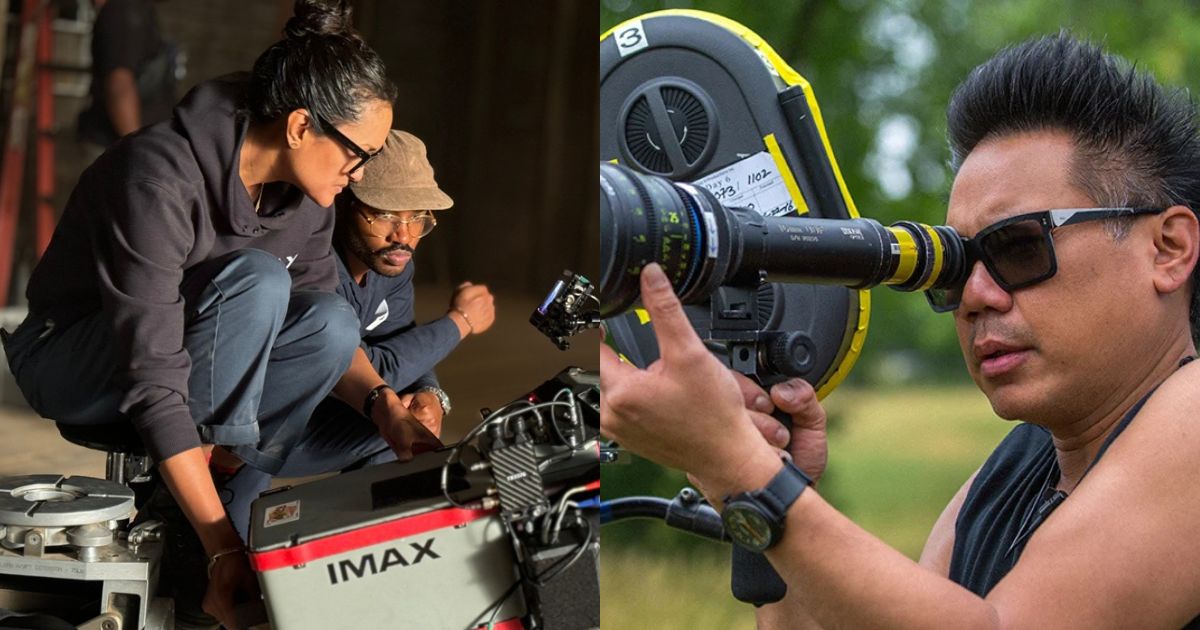
After a director and a writer, probably the next most important person in the making of a film is the cinematographer. He or she is the person in charge of making the vision of the director and the writer a beautiful, moving reality. Cinematography is important to move people, to bring out that breathtaking moment or create that specific emotion that the director/writer wants to emphasize.
Two Fil-Am cinematographers who make us proud are Matty Libatique and Autumn Durald Arkapaw.
Libatique, whose parents Justiniano (from Dagupan) and Georgina (from Lucena), has been nominated for an Oscar three times ("Black Swan," "A Star Is Born," "Maestro"), has won two Independent Spirit Awards ("Requiem for a Dream," "Black Swan") and has won two Satellite Awards ("A Star is Born," "Maestro").
The 57-year-old cinematographer, who studied at California State University and earned an MFA in cinematography at AFI Conservatory, recently worked on Spike Lee's "Highest 2 Lowest," Darren Aronofsky's "Caught Stealing," and Bradley Cooper's "Is This Thing On?"
And then there is 47-year-old cinematographer Autumn Durald Arkapaw, who is of Filipino descent on her mother's side and African American Creole on her father's side.
Recently, she won the NAACP Image Award for Outstanding Cinematography for her work in Ryan Coogler's film "Sinners." She also has already won honors from the National Board of Review, National Society of Film Critics, and New York Film Critics Circle Awards.
She is also nominated for an Academy Award for Best Cinematography for "Sinners" making her the first Filipina and the first woman of color to be nominated in this category. Will she make history again by winning the Oscar and be the first Filipino and the first woman of color to do so? All eyes and prayers are on her right now.
In two separate exclusive virtual interviews, we were able to talk to both Autumn and Matty as they both discussed their respective works, the challenges of working in Hollywood, and the importance of representation.
Autumn Durald Arkapaw
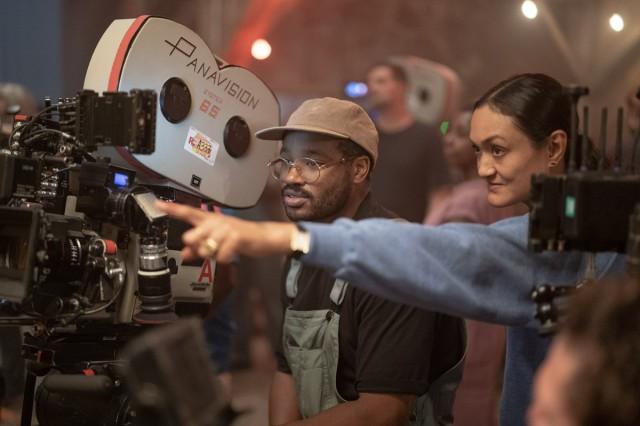
I'm honored just to be recognized for the work. But also, the film itself is super important, culturally, globally, to me, and to my family. So, I think when that happens, when you really, truly believe in something and you're able to make it with people whom you love, and the world responds in a positive way. All the stars are aligning.
Then now to be recognized because it doesn't happen very often. Everyone knows, like being the fourth woman to be nominated. They feel like new things. Even though women have been around a very long time, being photographers and worked in film. So, it's important. I feel the weight of that in a positive way. But to be able to inspire other girls and say, we can do this. It's very nice.
This is your second time working with Ryan Coogler. Talk about the shorthand that you have with him.
He's like a brother to me. I always say he's like my older brother, even though he's younger than me. I really look up to him, and I think it's nice when you find a community that you enjoy working in, where you see yourself reflected on set, and you can really feel like, safe to be creatively expressive, but also like to be brave in your creative choices.
And so, with him, we really do like who we make films with, and it shows in the work. So, my collaboration with him on "Black Panther: Wakanda Forever" was really lovely because it lasted a year long. So, if you spend a whole year with someone making a film, you really get to know them. And Zinzi (Evans, Filipina mother Maria and African American father Zishan Evans), his partner and our producer, who's also Filipina.
Like, she's someone who has a huge heart. And I've gotten to know her really well.
And so, it makes a lot of sense that Ryan makes films with his family and that everyone's able to pour themselves into the work. So, I'm honored to tell this story because the story is inspired by his uncle. So, it comes from a really beautiful place. And when stories start from that place, it's a good thing.
How was it working with Fil-Am Hailee Steinfeld, who is also in the film as Mary?
I love Hailee. I was just talking about her. No, I got to revisit our relationship recently because I shot a commercial with her for the Super Bowl. She has such a beautiful presence and such a unique look. I always told her that she has such a strong beauty, like a very strong face. I really enjoyed lighting her. And when she walked on set, her energy was very beautiful. And so, I knew her background.
Ryan told me her background. So, we talked about it when we met. I'm happy to have her as a friend now. I really care about her. She's a very good actress. But also, she has a lot to offer. And she's also a mother. She's about to be a mother. I'm a mother, so it was really sweet. She's going to be a beautiful mom, and I'm very proud of her.
How was it growing up in a multicultural family? How Filipino are you?
Oh, well, my mom, Peggy Bautista (her maiden name), raised me. So, my mom's side of the family raised me, so I'm obviously like, I spent more time around my Filipino side because my parents split up when I was really young. But my father and I would have visits, and I spent family vacations in New Orleans. And then that side, my father's side of the family, did move to or live in Northern California, so I was able to get to know them.
But yeah, I grew up more in my Filipino side, because my mom was a working mom and I was the only child, and so she would always drop me off at my auntie's house, who I call Mama Lyn. So, she's like my second mom. And her daughters are like my sisters. So, you know, my mom had six brothers. The eldest two were born in the Philippines. My grandfather is from Masantol, Pampanga. My grandmother's from Luzon.
I've not yet been to the Philippines, but it was a big part of my upbringing because my grandparents had six boys and one girl, and my mother was the girl. And so, when you have one girl like my mom, she's the princess. So, I had a very close relationship with my grandfather. His name was Guillermo. He's very special to me. So, it's been really nice to share this success with them because they're very proud of me. And all the Filipinos whom I don't know have also congratulated me as if I were part of their family, too.
So, you've never been to the Philippines. What do you look forward to when you go to the Philippines?
I almost had a chance to go. I was invited to attend the Filipino International Film Festival. I was unable to go schedule-wise. But one day, I would like to go back there. I have a story to tell. I would like to tell the story of my grandfather one day and shoot a movie there. But also, just visit and see the land that he grew up on and go to Pampanga. I've recently done some work with Vogue Philippines and met a lot of new people from that experience. And so, it's nice that this film ("Sinners") has opened a lot of doors for me in the Philippines, so that when I end up going there, I can meet these people because I'm really excited to see that space.
You mentioned you want to make a movie in the Philippines. What kind of movie do you plan to make?
Well, one day I think just because my grandfather's story is so special. In the future, it would be nice to be able to tell that story in that space. So, it's based on his life. He had a very interesting life, and he wrote before he died. He wrote a memoir. So, I have a blueprint of what that would look like.
Have you met Fil-Am cinematographer Matty Libatique?
Yes. Of course. Matty was a huge part of being an inspiration early on because he also went to AFI (American Film Institute) like me. And I remember the day that he came in and "Requiem for a Dream" was one of my favorites. It is one of my favorite films. It has always been an important film for me growing up. And when he came to visit our class, I was so nervous to go up to him and talk to him, and I think I might have gone up and introduced myself and said that I was Filipino, you know?
But now he's a friend. Fast forward many years later, he's a friend, and he came and did a Q & A for me for "Sinners," which I was very honored to have him do that. He's very important to me. And I've always known about his work, and it meant a lot because there aren't very many Filipinos whom I've met in my business, in the film business. But he was the biggest and the most important in my journey.
You are also the first woman to use the Imax format for the film "Sinners." Can you talk about why you decided to use that?
When Ryan wrote the script, he wanted to shoot it in 16 millimeter because he did that for "Fruitvale Station," and he really enjoyed that format. And we workshopped it and prepped it, and we ended up with the studio saying, have you guys considered large format?
So, he immediately called me, and we started talking about what that looked like and had some ideas, and we went and did a test. And when you're able to get your hands on these formats and go out into an open space and shoot them at sundown, it's the most beautiful stuff you'll ever see.
When we did that test, and we went and looked at it projected at the IMAX theater, you don't ever really go back. I knew after he saw those tests and how we felt in the space that day, I knew that he wanted that to be what we would shoot.
I am honored just to be able to shoot it, but also that the studio made prints, and we were able to have screenings where people could go see the original format and look at it in a 70mm print, and in a big theater, and 100-feet screen. It's very special because it's not easy to make, to do these things. The fact that we were supported and we were able to do it was really cool.
Who do you plan to bring to the Oscars?
Well, I'm bringing my husband, my mom, my stepdad, and my son, who's ten years old.
What was the reaction of your mother when you found out you were nominated for the Oscars?
We found out really early, right? It was like five in the morning. I had to wake up. I watched it on TV with my husband, and my parents woke up as well. They don't live that far away. And she sent me a video, and she was crying. She was telling me the story on camera, and it made me emotional. I started crying too because she said that when she heard the news, she remembered when I was a little girl, and she used to take me to the theater. She said, "I remember you with your pigtails, and you had a big bucket of popcorn on your lap. I have that image in my head."
What would you say to your younger self?
I would just say, it's going to be okay. Just trust yourself. It's going to be okay.
Matty Libatique
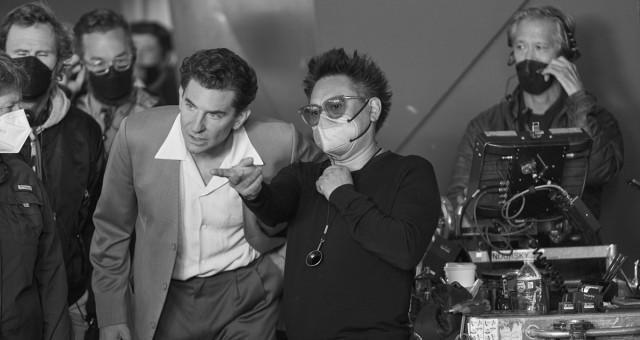
"Is This Thing On?" is a much smaller film. There was a lot of scope to "A Star Is Born" on our first collaboration and our first film together, with the concerts and Lady Gaga and the personality and sort of the world that we were portraying. And "Maestro," of course, is like this epic tale of this very famous person and this icon and titan of pop culture in America.
This is more of a small film about two people. It's regular people. It's a very intimate movie. It was a nice departure from "Maestro." Honestly, it was able to concentrate on something smaller and still make cinema. So, the difference really is the scale and scope of it all. There was a lot less pressure to do this because, as a living person, you could understand a person's plight in this world. And there is less to live up to than when you're dealing with Leonard Bernstein, or you're dealing with a rags-to-riches story in "A Star Is Born." There's so much pomp and circumstance to that, where this is more of a smaller story. So, we were able to be a little freer of all expectations.
You mentioned in one of your speeches that cinematography is not only a style but also empathy. Can you talk more about that?
It's really just about storytelling. That's what I mean by that, especially in "Is This Thing On?" is that the cinematography, meaning the camera and the light and those choices that go into cinematography, should not get in the way of the humanity. So, if you put that first, the cinematography succeeds by virtue of what's in the camera or what's in front of the camera, versus what the camera is doing. So, it's really about connecting with the purpose of the movie, the story, and the characters, and not making what cinematography is distracting.
You're also an actor in this movie. You did your first stand-up comedy act here. I read that you even prepared for it on the set.
Bradley and I like to do a lot of shooting in pre-production. And we test by taking a camera and going out and then doing proof of concepts. It's what we call proof of concept.
Like, okay, we want to do this. And Bradley was searching for a language for the film. So, when you look at the film, it's all handheld. It's all in one lens. It's on a 40-millimeter lens. That was all found in pre-production when we started to develop our framing. Bradley was really interested in a more vertical frame, so he went to a 166 frame versus a 240 frame, and "A Star is Born" and A43. Well, four three is very vertical, but this is a different aspect ratio, different composition, different proscenium for the movie. And that was discovered during our proof-of-concept phase.
One day, we were at Comedy Cellar, and they told us we could go inside. So, Bradley wanted to get the camera inside, and he asked me right then. He's like, would you be willing to be one of the comedians that Will (Arnett) walks up to, and you just say, what do you want me to do? He's like, just pretend like you've seen him before on stage and just start talking to him.
Okay, so he liked it so much that he said that you know what? If we're going to use that footage, we need you to be on stage again. I'm like, what? He's like, you need to just do a little bit of you. You need to be on stage. We'll shoot you on stage so that we can cut to that scene that we shot in prep. And I said, okay, fine, I'll do anything for the film. And they wrote some jokes for me. But what's in the movie? Actually, I wrote it myself. So just an angry, embittered comedian. Very easy for me to do.
So, did you find your inner comedian that day?
Well, I'll be honest with you, making this movie, you can't help but be…like when I did "Black Swan," I was so interested in ballet and the world of choreography. And I was so inspired by Benjamin Millepied. And the same thing here as I was working with some of the comedians that we had, just watching how they prepared and what they talked about when they're preparing to go on stage and talking about their material, writing their material. It's fascinating. So, I just got caught up in it, but when you're able to make a film about a subculture like comedy or ballet or, musicianship, and pop culture, you learn a lot, and you just become a sponge.
How was it bonding with Will Arnett and Laura Dern?
Laura Dern? I can't say enough about her. She's the loveliest actress, and person, and soul that I've ever met. And Will is also a genuinely good person.
I was a big fan of his from "BoJack Horseman," so I just like hearing his voice. It's so warm. It's very warm. It's like there's a microphone in front of him at all times, and he just likes being around people like that. And then, I honestly felt like both of them gave so much of themselves in the performance that they brought such authenticity to the characters and ultimately to the film that the film works based on their performances, not necessarily anybody else did but them.
You're so busy these days. You also have two films that you did in New York - Spike Lee's "Highest 2 Lowest" and Darren Aronofsky's "Caught Stealing." Can you talk about each one of them? How was your experience with Spike Lee's movie and then Darren's movie?
To be quite honest, it's been more than a year ago. It's gone by so fast. They're so far apart. It's like asking me what? How? "Requiem for a Dream" was at this point. So, you know, of course, I'm working with two collaborators whom I love and hold dear to my career and my heart and as friends. So, it's always a pleasure to work with them.
It's Denzel Washington, Spike Lee. It was just an opportunity. You can't help but be very excited about that. And obviously what I love about working with Spike is that no matter what we're doing, he puts Spike Lee and it's a Spike Lee film.
It can't be mistaken for anybody else's film. If you were flipping through Netflix or Apple or any streamer, or if you walk into a theater and happen to sit down and watch "Highest 2 Lowest" and didn't know who the director was, you will know who the director was based on the film. And I love being present for that.
With Darren, I feel the same way. This film is a departure for him because it's a different material, and Darren was trying to make something more popular and fun. Ultimately, it was a fun moviegoing experience. He's one of my oldest friends in this business and one of my oldest friends. Period. So, working with him is an absolute joy. I wish I could do more. And we had a great time doing it. I'm very proud of the craftsmanship of that film, and most of it is because I just love working with him.
You just recently moved to New York, and now you're making two films in New York. So, talk about having New York as a character in your movies.
Well, the story tells you what New York is. Here's the thing about New York City. It's not just a skyline. It's not just pizza. There are many, many, many different stories in the city, just like there are in London, Hong Kong, Rome, and Manila. There are many stories within the city and New York is no different, if not more intensified.
So, when I think about heist, there are locations in high schools and in neighborhoods that we don't see in "Caught Stealing," and there are neighborhoods and people that we don't see in "Highest 2 Lowest."
"Is This Thing On?" as well comes from a different perspective. So, in all three of those films shot in New York, they bring what I love about them as a triptych for me personally, which is that they show a different perspective of a city I love. So, they're indicative of how many different experiences are going on in that city at any given time, every minute.
So how do you manage your time, like one movie after another, and then, moving and doing a lot of stuff, personal stuff?
Yeah, it's not easy. It's very difficult, actually. The life of a cinematographer is not easy in terms of managing personal life. So, anybody who's done this for a living and all the people who've done this for a living, whether you're a cinematographer or costume designer or production designer, director. Even actors. It's a different lifestyle. You're at the carnival. We're in the circus. So, life in between our actual lives is different than everybody else's. So how do I manage? I don't know. I wonder that myself.
Are you planning to take a break and go to the Philippines?
I'd like to go to the Philippines. I'd like to go back with my mother again. And my brother, possibly my kids, but no immediate plans. But I would like to take a break, maybe a little bit. I'm wrapping something next week, and we'll see what happens. Hopefully, I get a few weeks off, maybe a month. —MGP, GMA Integrated News

