

 GMA Brandtalk
 Tracking
 Archives

Liza Soberano, H.E.R. and 'Forgotten Island' filmmakers talk about making the movie
_2026_03_27_11_57_12.jpg)
“Tayo na!” blurted out Jo (voiced by Gabriella “Gabi” Wilson aka H.E.R.) to her friend Raissa (voiced by Liza Soberano) in the animated film “Forgotten Island” as they stumble upon a mysterious portal that transports them to the fantastical island of Nakali (short for Nakalimutan) packed with magical and mythological creatures which they grew up hearing stories about from their Filipino families.
But then they discover that the memories of their entire friendship are the price for returning home. Jo and Raissa will race to find a way to leave the island before they forget each other forever.
“Forgotten Island” is the first Philippine-inspired animated adventure film that a major studio like DreamWorks has produced. It is set in the Philippines, with several talented Filipino actors involved. Aside from H.E.R. and Liza Soberano, the movie also boasts of having Tony-winning icon Lea Salonga as The Dreaded Manananggal (the most dreaded creature in the island), BAFTA and Golden Globe nominee Dolly de Leon, comedian Jo Koy, Manny Jacinto (“The Good Place,” “Top Gun Maverick”), and The Actor awardee Amiellyn Abellera from “The Pitt.”
It also stars Dave Franco as the well-meaning-but-hapless weredog Raww, Jenny Slte (“Marcel the Shell with Shoes On,” “Dying for Sex”) and Emmy winner Ronny Chieng (“The Daily Show,” “M3GAN”).
"Forgotten Island" tells the story of two lifelong best friends, Jo and Raissa, who must come together before they drift apart. The two have been best friends since grade school but are now about to embark on separate paths as they graduate high school. One of them has to go abroad for college.
The film is an original story written and directed by Academy Award nominee Joel Crawford and Januel Mercado, who are best friends themselves since they are the same team behind “Puss in Boots: The Last Wish.”
Crawford is also married to Filipina Kathy. Mercado, on the other hand, born in Stockton, California, is the son of Filipino parents – his mom from Santa Cruz, Zambales and his dad from Manila. “Forgotten Island” is his film feature directorial debut.
“My sister Jo is one of the inspirations of the movie,” the charming Mercado tells us, while Crawford says it is "Kathy, my wife, [who] is my inspiration for this movie.”
“My wife is Filipina, and she was born in the Philippines, and lived there till she was nine. And she actually hadn't been back until this research trip. And it's a wonderful thing. Januel’s all his family out there in the Philippines. They had they throw a big block party for us. There's lots of karaoke, lots of food. And it was so nice. They invited my wife's family from another town to come over to this party. And, for me, all the inspiration from the research trip of seeing the beautiful locations in the Philippines was wonderful. But it was the spirit of that trip that stuck with us. Seeing my wife reunited with family that she hadn't seen in over 30 years — it was so impactful. And I think that's a big thing that has stuck with us about memories and those moments we make.”
Mercado, a graduate of San Jose State University, where he studied animation and illustration, told us in an earlier interview that his being Filipino is “so inherently part of his personality."
"My love and care, and my Filipino culture is very universal as well. It's just like the connection and the closeness that you have with your family. And it's often that the people who you're closest to are the ones that you buttheads and bicker with the most because you have that trust and you have that relationship, and I'm very proud to say that that's that specific experience. And the way I live is tied to the emotion of the film and the character dynamics," he said.
Fil-Am composer Nathan Matthew David also created the musical score for the film, which is produced by award-winning Mark Swift.
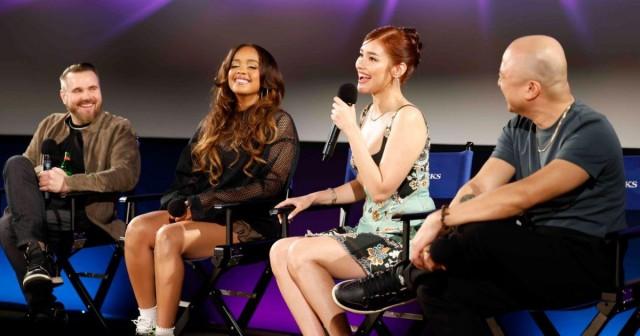
In an exclusive interview, we were able to talk to the filmmakers Crawford and Mercado. We also talked to H.E.R. and Liza Soberano and the filmmakers during the launch of the trailer for the movie at DreamWorks where they were also part of a panel discussion.
Below is our conversation, edited for clarity and length.
_2026_03_27_11_57_44.jpg)
What was it like to get a script that is just a beautiful story about friendship but also so deeply entrenched in Filipino mythology and folklore?
H.E.R.: I was so excited. Like, you have no idea. We were in the Philippines in 2019 and my mom was literally trying to scare us, talking about mananangal and like all these other stories, like I literally grew up on them.
I just thought it was so cool, like, I got to share a piece of my childhood in this work and with the world. That's super rewarding to me.
Liza Soberano: It was super exciting too, because it's been a long-time dream of mine to be able to be in a project that really represented the Philippines in a very accurate way, but at the same time is like universal enough for people outside of Filipinos in the Philippines to be able to relate to.
Just to have Filipino culture displayed or showcased by a major studio is very exciting because we don't really get that often. So, it meant a lot to me. I was very excited and very honored to be part of this project.
What was it like in the trailer when the portal is actually the sun, which is so symbolic of the of the Philippines? What was that like for both of you to see that on screen just now?
Soberano: The first time I saw it, I literally cried because I was just imagining all the children in the Philippines and what they would feel when they see it, and just how proud they would feel to see something that beautiful representing our culture and our country on the big screen. It just felt like such a big moment. And yeah, I'm really excited for all the kids to see it.
H.E.R.: Same, Filipinos are very proud to be Filipino. And I think that, like you said, we haven't gotten, many big platforms to show our culture. People have always asked me, and I'm from the Bay area, so I grew up around a lot of Filipinos, but as soon as I left, like, I moved to New York and I was around the world like, there aren't that many people who know about what we're about.
And, also, don't realize how similar we are to other cultures in our values, like family and friendship. And so to see the sun, which is such a big deal, like it's a big symbol for us, it does something different to see it in a film like, we see it when we see some of our Filipino heroes, but to see it in a film, like you said, for kids, it just hits differently. And it's definitely very emotional, and it's very special.
_2026_03_27_11_56_30.jpg)
In the sizzle reel, we saw a clip of the recording booth. Take us into those recording sessions and tell us, what it was like. How did you bond and what those sessions were actually like for you?
H.E.R.: It was the best part of my day, to be honest, because it didn't feel like work. Like, I can't believe I got to work with you guys, but this was, like, easy. It was fun.
And they pushed me to jump up and down and scream and do all of these crazy things. I just felt like a big kid. These are the best guys to work with. And of course, you're amazing and I feel like we are so much like our characters. So, it was so natural. It didn't feel like we were really acting, to be honest. So, it made it easy, and Joel and Januel just made it so much fun.
Soberano: Honestly same because every day, it just felt like it was too short. Like the amount of time that we were recording, I feel like during these sessions, four hours never feels enough because it does genuinely feel like we're just playing.
Joel and Januel are so much fun to work with because they're just like big kids at heart. Like they've been young forever, right? So, it just feels like we're making make-believe, you know? And getting to record with Gabi was really special, too, because apparently that's like a rare occurrence. You don't always get to record in the same booth together. So that was really a cool experience.
And it actually did draw something special out of those scenes, because we got to react to each other in real time. And so overall, it was very fun. And I wish we had more recording sessions. I lost my voice once because I went all out.
What was it like to speak Tagalog and say “Tayo na!” as you jump into the pool?
H.E.R.: I loved it.
Soberano: I loved it too.
H.E.R.: Being able to speak Tagalog in the movie. That's so cool. I actually put “Tayo na!” (Let’s go!) on my nails today in honor of the film.
Soberano: That is genius.
H.E.R.: It’s usually something my mom would say to me when I was taking too long to get ready for school. Tayo na!
Soberano: I felt so proud, like being able to speak in my mother’s dialect and or language. It's fun because I moved to LA two years ago from the Philippines. And so, I've been speaking a lot of English. And this was like a great, refreshing refresher course. Basically, to be able to speak in Tagalog through this film.
Do you feel that there were times you had to leave friends behind to achieve your dreams? And if so, what did you guys do to maintain that connection?
H.E.R.: Yeah. I started singing when I was really young, so there were moments I definitely missed out on. I definitely had those moments. I had to sacrifice a lot. I ended up moving to LA with my dad from the Bay area, and my best friend was in the Bay Area, and I rarely got to see her, but every time we would see each other, it was like no time ever went by. I think those are the real friends where you can come back, and you just pick up where you left off. But yeah, that was really tough. Honestly, go in and follow my dreams and leave my friends behind in the Bay Area. But they come to every show, and I show up when I can, and we definitely worked to maintain that connection.
Soberano: I was constantly moving around as a child, so it was very hard for me to form best friends, up until I was in the Philippines and I finally stayed put in one place for a while.
I started working when I was 12 so, I did miss out on a lot of things, too, at school, just hanging out after school and everything. But I think the important thing is, I would make the extra effort on special occasions or whenever, like an opportunity would pop up for us to hang out. I would make sure that I gave that time to that person.
But I feel like over time, and as I got older, my views on friendship kind of changed. And I realized that I could have best friends for different elements of my life, if that makes sense. And it's cool when you do have a best friend that you grow up with, because that's the person who ends up seeing different versions of you and gets to rediscover you over and over again. And so, I find that those are like the really special friendships. And I luckily have one of those. She's here today.
_2026_03_27_11_55_56.jpg)
What's the one piece of friendship advice you would want to give your teenage selves?
Soberano: The advice that I would have given my younger self, and this could apply to whoever, I'm very similar to Raissa in the sense that I take things very seriously.
All throughout my childhood, in my early teenage years, because I was going to school and working at the same time, I really had my eye on the prize and what I wanted my future to look like, that I forgot to be present and be in the moment with my friends and just really have fun and be young.
I was like the type of friend who would always be like, 'let's not do that because we have exams tomorrow.' Or, 'I don't want to get in trouble.' And yes, it kept me out of a lot of trouble but now looking back, I'm like, 'they had so much fun at that one swimming outing that they went to.' And I just have memories of feeling sour about it because I didn't get to go. And so, I think it's just important to have fun and just be young but be safe while doing it.
H.E.R.: I really loved what she said earlier about the version of friendship. Accepting and knowing what being a friend means to you and what you were saying about surrounding yourself with people and having a friend who accepts you for who you are and makes you confident who you are. And I think that's the thing that, for me, I would tell my younger self and that I realized now, is that like, everybody's version of what a friend looks like is different. And there are fundamental things like being there for them and those things.
But being okay with not talking for months at a time and then coming back together, not taking it personally or wondering what they think. Like knowing that you have a friend who's like, 'oh, they're doing their thing.' And when we hang out, it's going to be a great reunion and we're going to reminisce on all those memories. And as they say, distance makes the heart grow fonder.
And I do think that's true in friendships. And, even when I'm away from you guys and we come back together, I miss this side of things. But being true to who you are, your authentic self and being present with your friends and appreciating those moments and then letting them do their thing, and that's something I've learned from Jo and Raissa.
Januel Mercado and Joel Crawford (Writers, directors)
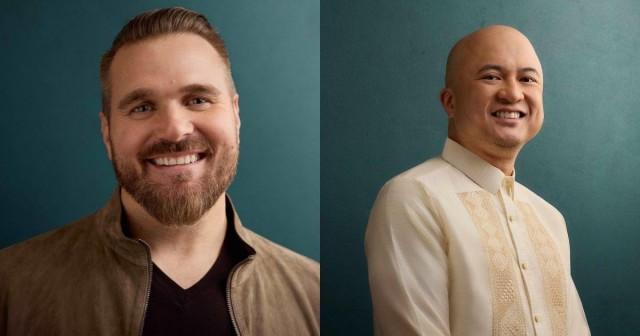
Congratulations on writing and directing the animated adventure “Forgotten Island!” What inspired you to make this movie?
Mercado: One thing was the culture itself that we have experience with, me being Filipino-American.
Crawford: My wife is Filipino, and I had a lot of really good friends growing up who were Filipino.
Mercado: It was a world that we wanted to celebrate, especially through our families. It really is a love letter to the culture and the families, and that being kind of like the setting and then the theme of friendship being inspired by our friendship, and then the connections of our loved ones. That was definitely the kind of beating heart of this.
Crawford: There are multiple kinds of personal ingredients in this story. One of them being like we've been friends for almost two decades here at DreamWorks. We started together on “Kung Fu Panda 2.” And I'm going to embarrass Januel for a second here: We were storyboard artists, and we were put together in the same office. And it was one of those things where Januel has this superpower, which is that he has the ability to make everybody feel safe and feel seen.
I found so quickly a kindred spirit in my stupid humor, in my movie references, and just, more than anything, a great friend who made me feel like I could be myself around him. And that, honestly, is a gem that has gifted me for almost two decades. And when given the opportunity to tell a story of original story, I was like, friendship, man. It's got to be about that.
Mercado: Appreciate that. Thank you. I'm so baffled because it's like, oh, you're listing everything I feel about you. Like, are you going to get a timeshare?
But we all know how hard and challenging it is to make a movie. It's one of the hardest things, and to start from a point where you're making it with your best friend and you're having a good time — suddenly, you forget about all that high pressure and stress because you're in the moment and you're spending it with people you love and trust. It felt like a no-brainer to make a story together and let's be inspired by our friendship and the friendship and connections in our life.
This is the first time I believe that a major studio has produced something like this. Can you talk about the significance of this movie?
Mercado: Oh, it's huge. Right? Because we talk about just seeing stories where the characters look like you, or you see things about like the movie that you see in your life, right? In our movie, we have a big Filipino party with karaoke and food. And not only is that specific to our families and growing up, but surprise, many other cultures also have big family parties and celebrate, your loved ones. So, it's interesting that like these, there are these differences that people see. But Joe and I always like to come from like well, what are the things that unite us? And more often than not, they're pretty easy to find.
You have both collaborated so many times already. Do you have a shorthand already?
Crawford: Oh, yeah, going back to the “Kung Fu Panda” movies. We would always do things to just make each other laugh, writing stuff into the movies we'd work on. There is this kind of shorthand that we have with each other with that from the very beginning of this movie, the style, the look of it, the tone, how it goes, it's very funny.
And then goes to very emotional and is one of the things that we never had to say. It just organically comes from our friendship and from how we work with each other, and it's been really cool to see how bringing on the cast how it's been a continuation of evolving that.
Over five years ago, Januel and I were just finishing up the last two movies, “The Croods: A New Age” and “Puss in Boots Last Wish.” And we were like, what are we going to do next? What are we going to tell? This day has got me in the feels, and it's like, it's to have such a great friend for so many years that together we came up with a story that we have to share with the world. And today, this is the beginning of that.
Mercado: And just to echo the sentiment, I'm pretty emotional because it's been an amazing journey. And this journey is continuing. We have an amazing crew and cast that's just been putting all their love and heart into this movie.
How did you gather all these talents - H.E.R., Liza Soberano, Manny Jacinto, Lea Salonga, Jo Koy and Amiellyn Abellera.
Mercado: Obviously, they are very talented people — rising stars and those who have made a name for themselves. I think it was probably an equation of luck that they're into it. They obviously saw our passion and personal connection to this story.
And, like so many of us, we see the value of representation. The beauty of our culture was an easy thing for them to connect to. It’s so meaningful when we show them things, when we show them the trailer, like Jo Koy or like Liza or Gabi are tearing up just seeing that Filipino sun.
Talk about having composer Nathan Matthew David do the musical score for the film.
Crawford: Oh man, he's such a great partner to work with. So sweet and so talented.
Not just adding talent to the movie, but I'd say he's a friend. He's so warm and really has connected to us. The first time we've heard some of the score, it was like, that is the sonic version of this story that we've always seen.
He has experience in traditional Filipino instrumentation. He studied it for many, many years. And then also is such an amazing composer here in the US that he kind of pulls from contemporary and traditional, and he's fusing it all together, making something quite original for you.
Mercado: I'm glad you brought it up because he actually was telling us about the first kind of recording session with these Filipino musicians who are working with the traditional instruments like the kulintang. And he said that the musicians were so emotional that they, again, for the first time, had never recorded their music for a feature film. And so to have that door open for so many artists, to be a part of this industry is an amazing thing.
_2026_03_27_12_04_47.jpg)
Talk about your trip to the Philippines where you did research.
Crawford: It was so beautiful. I grew up on the Big Island of Hawaii in the '80s, which has nothing on Palawan. It is so gorgeous there.
In terms of research, there's so much visually that influenced our film, but really the spirit of the Philippines was something we carried with us. We've always said, we want this film to feel like how it feels like to be at a Filipino party.
I had these family friends growing up. They had three girls, and I was kind of their adopted son, and they would invite me to every party they had — the karaoke, the dancing, the food. And there was a feeling that if you were there, you're family. And that was something we felt in a huge way in the Philippines. And we have made sure we put that into the movie.
Mercado: My family threw us a big reunion party for us in the heart of Manila. We were on the streets singing karaoke. And it was such an important thing to celebrate this with my family.
They made the banners, like 'the Mercado family welcomes DreamWorks to Manila.' Joel sang a song to his wife in the streets of Manila.
I whispered to Joel to tell her “Mahal kita!” And then my cousins were like, oh, he's speaking to her in Tagalog. They gave him flowers. It was Valentine's. Everyone has flowers there. So, they gave flowers to give to his wife. It was such a beautiful uniting experience.
There were some Tagalog words spoken in the film. Talk about having your father comment to you about the proper way to speak Tagalog.
Mercado: I'm not fluent but I know how complex the language is. There are so many iterations and interpretations of things to say. So, it's so funny that you're talking about things like when I was writing the script with Joel and asking my dad for advice in Tagalog, even asking my mom.
It's so funny that even both of them, Tagalog speakers, are arguing. It was so interesting to hear more about how beautiful and complex this language and this culture are because it's open to so much interpretation, yet there are so many things that we relate to in terms of communicating with each other.
Tell us more about having H.E.R. and Liza Soberano as the lead characters in this movie.
Crawford: We can't picture anyone else for Jo and Raissa. H.E.R. is so perfect for the character of Jo and Liza, so perfect for Raissa. They are so much like their characters, where Raissa was very astute and responsible, and Liza has the same kind of traits, and she's so kind and sweet. And then Gabi is so like Jo; very free, fun, and wild.
There's a fun contrast, but also there's something that’s just how genuine and real they have both been. When you see them on screen, their friendship feels real because there are a lot of friendships that complement each other. You're not the same, but you're there for each other. And they've brought that to the screen.
Did you have Liza and Gabi in mind before you made the film?
Mercado: Yeah, I remember we had an early meeting and Gabi was just coming to visit the studio, and we were like, 'let's just see if it's a good fit.' And even when we were about to meet her, I really wanted to work with her already. And then we met, and, and she was great. And it was so early that we couldn't pitch the project.
Gabi is also a fan of animation — she is a fan of DreamWorks Animation. Like a huge fan, she loves “Madagascar.” She and her sister sing “Madagascar” from front to back. And so, it's like, oh, this has to work just like Jo said, this is fate!
Crawford: Actually. And speaking of fate, it was interesting when Gabi finally came in, for the character of Jo. When she saw the picture of Jo, she said Jo was exactly how she had pictured her.
Januel and I were having that experience of these characters living in our heads, and it was really important for us to go. They need to feel real. Everybody should see themselves or someone they know in them.
And when Liza came in for her audition, she floored us right away with her performance and authenticity. I remember talking to her about these are incredibly complex characters, and she has Raissa. She has an exciting future, and she has a friend she loves, but it's her friend who is pulling her away from that. And I remember she said she was able to identify with that situation (because she had just left the Philippines and moved to LA).
_2026_03_27_12_05_52.jpg)
What were the challenges that you encountered in this movie? I feel like there are no challenges at all and that you're just having fun.
Mercado: You know the production schedule that you have to make this movie in a certain amount of time and length. And that's the thing with such an original story and a huge world and new, deep characters, we always want to tell so much. So, the challenge is, we have a lot of stories to tell, how much can fit in with the time that we're given, and hopefully, if people connect to this, we have more stories to tell.
The is your feature film directorial debut.
Mercado: We talk about how we're just so excited to be here to celebrate it with you. And then again, how surreal is it, right? Just like when we were talking with you and Ruben during the “Puss in Boots,” we're like we became friends, and we're like, hey, we got a Filipino story. We can't talk about it much, but we're working on something. And for now, today, to be here talking to you about it and being excited for it, seeing the trailer. Oh, man. It's a beautiful thing.
What lessons did you learn from this journey in making this movie?
Crawford: Each movie has its own kind of Rubik's cube. It's a challenge. You go; how do you crack this story? I think the lesson I learned is to listen. You think you know what the story is, but in particular with this movie being about the strong women who have inspired us when we're writing, we're thinking about them and listening to how they see the world.
I've been learning a lot about the culture and really just taking the moment to be there. One of the beautiful things about filmmaking animation is that it's a collaboration. And so, everybody has a voice, every artist, every cast member, and being able to bring that into the movie. It's made the movie so much more than just anything we would have come up with alone. It's really special.
Mercado: To trust and rely on the people you know and the community you're making it with. Like, who knows if something is a success, but you have control of the people that you're surrounded by and the things that you do together. And that's something I've learned, is success or no success, that is a gift.
This is set in the 1990s. Why that specific time period? What made you choose that era?
Mercado: The 90s are kind of our formative years, right, Joel?
Crawford: Yeah.
Mercado: There's something again when it comes to storytelling, Joel and I always have our roots and what is authentic to our experience that we could communicate through our storytelling that we trust audiences, no matter where you are from, who you are, where you're from, that you will connect on an authentic human level.
And again, just for us to spend our years growing up in the 90s, where we found the fashion and style, and then the experiences with the friends that we make, the lifelong friends. There's a seed of nostalgia there for us that easily activates relatability, because we always feel that, like, if you feel kind of what we're feeling, you'll connect to that and remember what's nostalgic for you, whether or not it is the 90s. And then, Joel, do you want to talk about even the specific things in the 90s that we loved and even that experience that kind of caters even to the storytelling of our movie?
Crawford: I think Januel and I were developing this story, we're like that in a way. The more specific something is, the more universally acceptable and accessible it will be to all audiences. And so, we just kept drawing on what was formative for us and so much of the 90s, especially telling a story about friends growing apart, and it felt like it's going to be final when a friend is going off to college, will you see them again? Will they forget you?
Mercado: Can’t just FaceTime.
Crawford: You can't FaceTime. And that was the thing about setting it up in the 90s, in our experience, where there was something temporal and temporary. But in that, temporal things become special. And even though you think about photos like Polaroids, they are a big part of this movie. And, for us, you think about a Polaroid pack, and you've got 12 pictures, and you're going to be very specific about how you use them, versus now we have phones, and how you take a bunch of pictures. And do you never look at them again? And for developing films. And so, a lot of those things in the 90s for us are really about tapping into nostalgia, but also, reinforcing the stakes of this movie, which are about moments and memories.
This movie is also about friendship. How about your friendship? Did it get deeper 100%?
Crawford: I mean, we've been working at DreamWorks for over a decade.
Mercado: We've worked on movies together. We've drawn pandas fighting kung fu. We've drawn singing trolls. We've drawn up a cat having a panic attack. We've been through it together. And to continue telling stories together is what I'm living the dream right now.
I did find myself recently thinking, do I tell Joel enough that I love him and appreciate him? And I don't think I do. I mean, I know, you know, and we know, but even just hearing you say nice things, it's like, we should say this more to our friends.
We've talked how Jo and Raissa share the strong traits with the women in Joel and Januel’s families and extended families. What conversations did you have together about that? And shout out to the strong women on stage and in their families who helped inspire the story. Talk about the importance of that, too, because that's such a huge theme in this movie.
Crawford: There's that old adage of, write what you know. But for us, we were writing who we know. This movie is about connections. And sometimes the people in our lives bring so much good, so much light, and we don't take time to acknowledge that. And my wife is one of the people who just being, has been through so much and brings so much joy. And to me, I wanted to bring that into this script. And Januel, you've pulled from a lot of inspiration as well.
Mercado: Yeah. As I mentioned, my sister Jo, who inspired the character of Jo, played by her, and not only her, but like, my mom, my grandma, my nieces and my cousins who I grew up with. And again, and I'm sure you can speak to this, Joel, where Jo and Raissa are a culmination of these powerful women in our family who have helped shape us. And I think the amazing thing is, with her and Liza, I don't think we need. We definitely talked about the characters, but it was on the page, and we talked about their personalities and their headspace and kind of their point of view.
But the amazing thing is, Joe and I could talk in detail about the experience of our families, but there was like a trust that we didn't even have to tell you about, like my sister or Joe's wife, because I knew that you would connect, just being, like powerful, women yourselves and being warm personalities. We just show you the personality or the characters, the story. And we knew that you'd find something and already just from meeting you, it's like, oh, yeah, but this is Joe and this is Raissa. So that's the beautiful thing about filmmaking, too.
And I'm sure in all your art forms you've seen, once you get into the zone, it just creates itself. And I felt that was the same way with how you develop the characters. It's like we planted the seed together, and you just watched it grow beautifully.
What's the one piece of friendship advice you would want to give your teenage selves?
Crawford: What Januel meant to me when I first met him, I think that was something I always dealt with. Like being insecure as a kid and when you find a friend who helps you be confident in who you are, who celebrates who you are, that's when you know it's a friend worth keeping.
It makes you want to return that and be able to celebrate them. And finding those friends, those people who see you, is really important.
Mercado: Be a better listener. I think that's why we're good friends. We're always genuinely interested. When people talk to us, even if we're not interested in the topics, we are interested in the person being stoked about the topics. And so, the advice of just listening, and it's something I'm still trying to do.
We have this tendency to keep talking but just being quiet and listening to the person. This is related to being in the moment and taking in, as I've really seen the value and power of just, even with friends, right? When someone you know has to dump like a bad day on you, a lot of times, they're not really looking for your advice. They just want someone to hear them out, and they just want to feel heard. It's such an important lesson now. You don't have to say anything that's wiser than just letting them know that you hear them. And you're absolutely one of those friends for me, Joel, and I appreciate that.
— LA, GMA Integrated News

