

 GMA Brandtalk
 Tracking
 Archives

'The Pitt' stars Kristin Villanueva, Amielynn Abellera on playing Filipina nurses in hit series
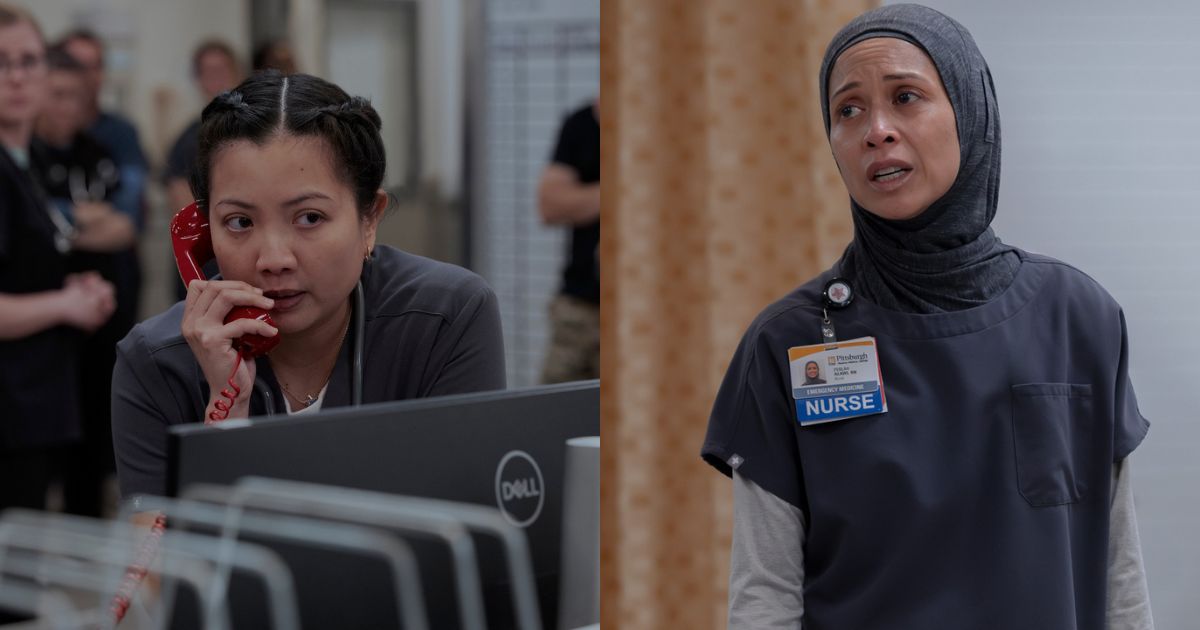
Leave it to the Filipina actresses to bring home the bacon…or should we say, bring home the lumpia!
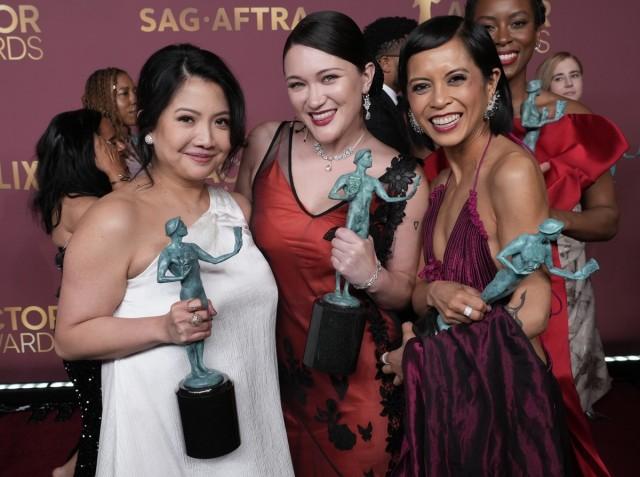
Kristin Villanueva, Amielynn Abellera, and Isa Briones—all Filipina actresses portraying Filipina nurses and a doctor, respectively, in the award-winning series "The Pitt"—recently bagged The Actor awards for Best Ensemble and continue to get critical acclaim for their performances.
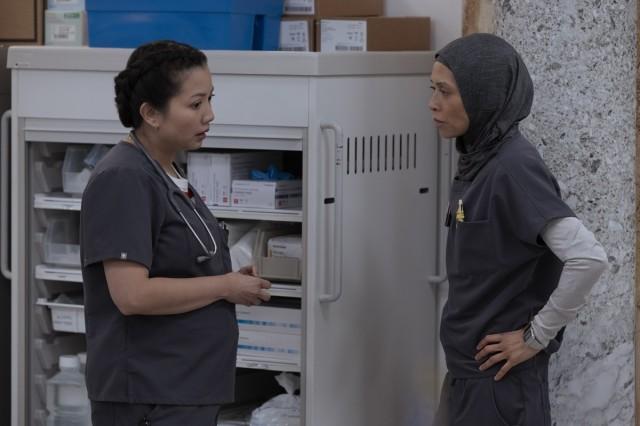
We recently talked to Kristin, who portrays nurse Princess Dela Cruz, and Amielynn, who portrays nurse Perlah Alawi. They share with us their experiences, challenges and dreams for the series, like being able to bring Filipino food like lumpia, pancit, lechon and even balut, in a potluck or birthday scene in the series.
Viewers can stream "The Pitt" seasons one and two on HBO Max.
Kristin Villanueva (Princess Dela Cruz)
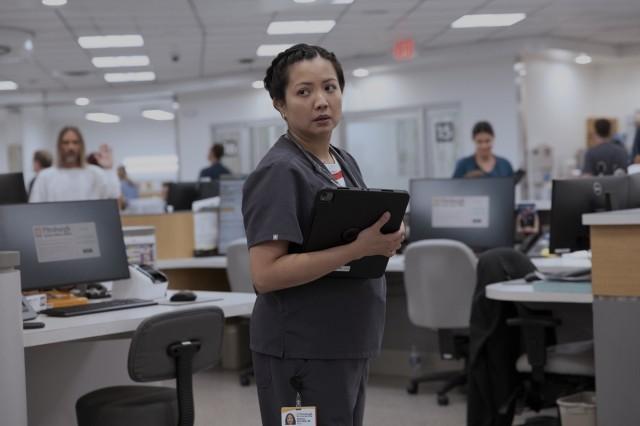
Oh, thank you so much, Janet. So, we won the Outstanding Performance by an Ensemble in a drama series. It's pretty significant for various reasons. It feels very good to be recognized in the category in which we've been actively working. The culture of our film set is rooted in ensemble work, and the people that we portray are true ensembles.
So, nurses will be nothing without doctors and vice versa. The medical staff will be nothing without the patients and their families and friends visiting them in the hospital. So yes, it's a very, for lack of better phrasing, it's a very ensemble play or a show. And this particular award also means a lot because it's the SAG-AFTRA award.
So, you are voted for by members of the union. So, for those who don't know, SAG-AFTRA is the Screen Actors Guild and American Federation of Television and Radio Artists. So, these are your peers. These are the people who work in the business, and you win by their votes. So that's pretty special.
You've been a theater actress for a long time and then transitioned into television. What does being part of "The Pitt" mean to you?
Oh, it means a lot. It's the kind of break for which you've been hoping. I've been a struggling actor for 17 years in New York. And you don't always have an acting gig. So, the in-between times could be very, very difficult. Unless I guess you're a trust fund baby and don't have to work two to three jobs at a time just to live in one of the most expensive cities in the world.
So, it's a big break for me. It means a lot, but I will always be a theater girl. I haven't permanently transitioned to television.
How does it feel to represent a Filipina nurse in a mainstream TV show and to be able to speak Tagalog words?
It's awesome. It's playing real-life superheroes, right? It's a long time coming. It's been decades of just people needing realistic portrayals of hospitals. So, it means a lot. And speaking Tagalog is very exciting.
Do you have any part in suggesting what to say in Tagalog?
I do. Yes. And kudos to our writing team. So, they would write the dialogues in English, and then they would just say, "Say it in Tagalog." But they would always defer to me on how I would translate it. Meaning like if it's a joke in English and if I translate it word for word in Tagalog and it doesn't land the same way, they'd much rather have me say it or say a version or a flavor of the joke that would make much more sense to Tagalog speakers.
How is it working with your Filipino colleagues, Isa Briones and Amielynn Abellera?
Oh, it's fun. We have a shorthand. We know all the Filipino quirks. So, we'll make each other laugh by pointing at things with our pursed lips and not having to explain it. Saying, oh, you know, so yes, that, that kind of teasing and doing Filipino quirks that only we can understand is pretty fun to do.
How is it working with Noah Wyle?
Oh man. He's great. He's the kind of boss that you want to be led by. He leads by example. He leads with the heart. He is so intentional and generous with his craft that it makes you want to be better. And even though he's done this kind of show for a very long time, he would still give us the space to learn it on our own. But he is always there for any questions. He's wonderful.
Did you go to a nursing camp or medical camp with all the actors before you started filming? How was that experience?
Yes, we did. We did it before the first season; we did two weeks of that. There was a doctor group, and then there was a nurse group. It was very helpful. We had, I think, four or five nurses teaching us, coaching us, the basics of how to draw blood, what a nursing career looks like, what their specific fields are, what a day in the life of a nurse is. And we also got homework, mostly documentaries, to watch before we started filming.
What episode was the most fun for you to do and the most challenging?
The most fun was the nurse episode. I believe it's episode six of season two. Because the focus was on us, and I got to speak different languages. I got to do ASL. And I got to spend more time with the patients as opposed to being in a trauma room. So that was very fun for me.
I would say it is the most difficult. I can't think of a specific one, but I can say that every time we're filming in the central hub at the central workstation, it's a little difficult for me because there's so much going on.
There are so many characters, and there are so many background people. There are so many entrances and exits for different characters. And I have to stay focused, and I have to look like I'm working as a nurse, but really, I'm trying to listen for my cues so I can say my line at the right time. They're the longest to shoot. And we have to get a lot more coverage than usual. So those are a little bit challenging.
From your experience doing "The Pitt," what have you learned about the life of a nurse?
I learned that they need to know how to emotionally compartmentalize. Not to say that other jobs, you're not emotionally involved, but nurses pretty much spend time with people's worst days of their lives, right? So, imagine when you're surrounded by, or when you're with a loved one who's sick, that takes an emotional toll on you.
So, if you're a nurse, multiply that by eight sick patients. Eight dying patients, plus their loved ones who are around them. It's inevitable to feel that pain and feel the anxiety and the sadness from that. And then to do that, as a career, day in and out.
It's pretty intense. I can say from my relationship with the nurses that with the real nurses who teach us, coach us, they're truly one of the kindest and funniest people.
It's kind of wild that they have this glow and humor and willingness to help in every way, even though their jobs are so taxing. That's the thing that I've learned a lot of.
If you had a chance to introduce something from the Philippine culture or folklore, what would it be and why?
I hope there will be a scene where either my character or Nurse Perlah brings Filipino food to the break room and feeds everyone. I hear that all the time, like nurses bring pancit or the tradition if it's someone's birthday, we eat noodles. The longer the noodles, the better they are because it signifies long life. That would be fun.
Amielynn Abellera (Perlah Alawi)
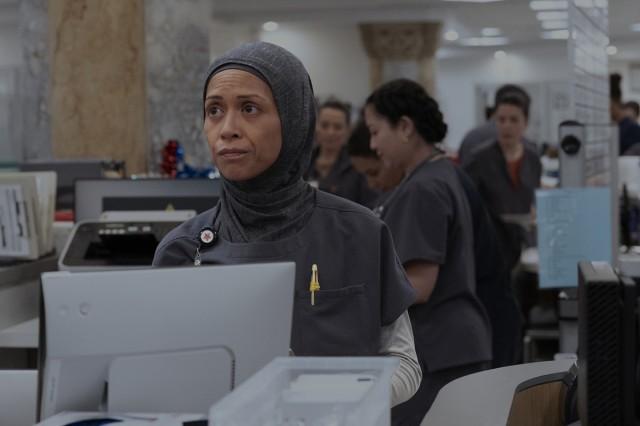
Congratulations on winning The Actor Award for Best Ensemble in your portrayal of Nurse Perlah Alawi. What is the significance of this award for you?
Oh gosh. It is hard even to fathom how wonderful and significant it is for me in my life and in my career as an actor. I'm so overwhelmed by the accolades that the show has been getting, and for all of our performances as an ensemble. It's really so special how resonant the show is. And also, the resonance for the Filipino nurses in the show as well. So, I'm very honored and thrilled.
So, what does being part of "The Pitt" mean to you?
It is truly an ensemble that's working together every single day to really shine a light on these real-life heroes. It's very significant for me as a Filipino and also as a daughter of two health care professionals, a doctor and a nurse practitioner, actually. So, I'm very proud to be a part of this show since the beginning, the pilot.
You're playing a Filipino Muslim nurse in "The Pitt." So how did you prepare for the role?
I had about two weeks before I started shooting and before I got the call that I booked the role, and a big part of me really likes to be so thorough and to learn things as much as I can 100%. But I realized very, very quickly that I would never be able to understand the full scope and experience of someone who practices the Islamic faith. So, I had to kind of abbreviate what I needed to know, which was basically, how does that way of life affect or adjust or influence or impact the way that they care for their patients?
And really, it was just a matter of trying to find Filipino American Muslims in my community here in Pasadena and South Pasadena in LA. I found a couple of Muslim nurses, and a Muslim nurse in New York actually, who loved talking to me. And then also a Filipino American man who converted from Catholicism here in South LA, whose wife is also a nurse. So, I learned a lot from him and her.
So, what were the comments of these Filipino Muslim nurses or people who watch your show?
It's been so wonderful to hear their feedback and mostly just their sheer joy seeing themselves on screen. And because it's such a cultural dimension that is so seldom seen on any sort of mainstream media. So, for them to see a character that is part of the regular ensemble. It's just so new for them and so special. They're very grateful. They're very thankful. They're just having a great time celebrating themselves by seeing themselves on screen.
Did you go to the nursing camp with the other actors?
I did. We did. We had a medical boot camp for two weeks. Then the doctors get two weeks, and the nurses get that second week. I learned quite a bit, but I could still never be a real nurse, of course.
How is it working with Noah Wyle? I'm sure your mother is very overjoyed. She's a fan.
She is. I am a fan, too. I've followed and admired Noah Wyle's career since I was a kid, or ever since I was watching television and movies.
I still remember him from "A Few Good Men," and I remember him being on the stand and answering those questions. So, to work with him now is to be starstruck every day. But also, we are colleagues and now friends. And so, I still get anxious and nervous every time I have to work with him, but he's also such a wonderful, generous leader. I learned a lot from him and he's really the best boss ever.
How does it feel to be a Filipina nurse on mainstream TV and to be able to speak Tagalog?
Wonderful, really wonderful, and something that I had always dreamed about doing and always dreamed of seeing when I was a kid. I consumed so much mainstream media, television, film, books, and theater when I was a kid, and I never really had this type of representation in terms of seeing someone who looks like me, seeing someone who looks like my mother and my father in medical dramas.
Also being a daughter to them, I would follow them around in the hospitals and the clinics, and I would see a vast environment of Filipinos in the nursing and medical fields. Then, when I go to television and mainstream media, I wouldn't see it. So, I grew up with a little bit of confusion.
So now, I just feel like it really is shining a light on how the world really is, encompassing so many Filipino healthcare workers, Filipino and Filipino American, and initiating so much conversation about how. Yes, we do see so many Filipinos in our hospitals and clinics. Everybody just enjoys them, and they give some of the best care, and they are so empathetic.
So what episode was the most fun for you to do, and what was the most challenging?
They're all very fun and they're all very challenging. I really love all the traumas. And they're also the most challenging. They're the most work, they're the most fun, in that we really get to dive into a lot of intricate choreography that we learn on that day and in rehearsal.
Then they're also so challenging because we are really in this small room for hours doing it over and over. And my brain and my body get overwhelmed and exhausted, but it's also just so much fun. This is the type of work that I love doing, and I always love doing intricate choreography in theater, and I am so thrilled to be doing it on television as well.
You shifted from psychology to becoming a doctor to acting. So, what made you change your plans?
I've always loved theater and acting ever since I can remember, and it had always been a hobby for me, but I'd never really considered it a career. And so, as I went along following my career, my first initial vocational career, which was becoming a doctor, I had also on the side been keeping up with this hobby.
As I grew into an adult after college and still do this hobby, the hobby is the one that took priority. I became more overwhelmed with wanting to put more of my energy into it and my passion, my love, my internal mental investment into it, and I was losing sight of the medical field. So, I thought that I really should make the switch if I wanted to give myself a chance.
So how did your parents, who are both in the medical field, feel about you going into acting? Did they encourage you?
They didn't really encourage me. More so in the medical field, only because that was what their careers are. And that's what they knew, what questions to ask. I do think they mostly encouraged me to be myself and do what made me happy. I think in their own way, that's really what they wanted for me.
They were hesitant and shocked when I made the switch, only because I was following a different path for a very long time into my 20s. But they were very supportive. They've come to every show I've ever done. They've watched all the shows that I've been in since I made that switch and even before. And now it's almost like it came full circle and I'm doing a little bit of both. So, they're thrilled.
So, you started with Skylight Theater Company at the Pasadena Playhouse. So how was that experience? What kind of plays did you do there?
I've started not just with Skylight in Pasadena. I've done so many different theaters here in Los Angeles since I came out of grad school in 2011. Maybe up to 15 different theaters across LA and also regionally.
I still love professional theater. I want to keep doing it any chance that I get. And when I have the time, I really like the difference in that type of work. As opposed to television.
It's just two different types of muscles, but also the same. And the switch to it is more like a joining of all my crafts together. And so, I've really enjoyed doing television and theater, and I also do a lot of voice acting.
You have a five-year-old daughter named Sampaguita. So, would you encourage her to go into acting as well?
I'm going to encourage her to do whatever she wants to do for sure. I think she loves acting already. I could see she has a little bit of performance energy in her. But I'm curious as to how she's going to grow up, but by her watching me through it, I'm thrilled that she can see my happiness and joy through it.
Have you been to the Philippines lately? And when was the last time you were there?
I was there in 2007, I believe, to visit some family and to see some cousins getting married. But I haven't been since.
If you had a chance to introduce in "The Pitt" a Filipino culture or something from Filipino folklore, what would it be?
I would really love it if Princess and I could bring in some food. I really want us to bring in some lumpia, pancit, and lechon and feed them to all our co-workers. That was something that I saw all the time in clinics and hospitals, food everywhere, always like bringing treats and everything like that. I would love to bring some of that in.
Including balut?
Including balut and getting all the doctors to try it out and show them how to eat it.
From working in "The Pitt," what have you learned about the life of a nurse?
I watched my mom go through it throughout my entire life, but I never really saw exactly the emotional and mental strain that they had to go through every day. And I think it's such a fine line between being able to really invest emotionally into caring for a patient and then also being able to compartmentalize. And that is what "The Pitt" is trying to explore with the mental health of all our health care professionals, on how they are always trying to find that balance, and how it's very difficult to keep that balance.
What are you looking forward to in the next season of "The Pitt"?
I'm curious as to how the stories are going to unfold. They haven't even started really writing the episodes yet. I think they're just throwing a lot of ideas against the wall. So, I'm looking forward to whatever they're going to write for all of us and to see how we've grown on a different day.
Have you watched Isa Briones in her Broadway "Just in Time" show?
I haven't. I'm here in Los Angeles, and that's in New York, so I'm not going to be able to get there. Unfortunately, before season three starts. But I've seen some YouTube videos of her singing, and she's so talented.
So how do the three of you—Isa, Kristin and you—hang out during break time?
Kristen, Isa, and I love chatting. We are so proud to be three Filipinas on that set, and I feel like the three of us have a very, very special connection in terms of being so honored and so proud and knowing the sort of epic resonance that this strikes with our family, our community, with each other.
We know how we've always yearned and longed for this type of representation in mainstream media. So, I think we're all very overjoyed. All three of us are very, very overjoyed to be there together. —MGP, GMA News

