

 GMA Brandtalk
 Tracking
 Archives

Cone calls for mechanism to release Gilas players abroad to avoid another Asian Games setback
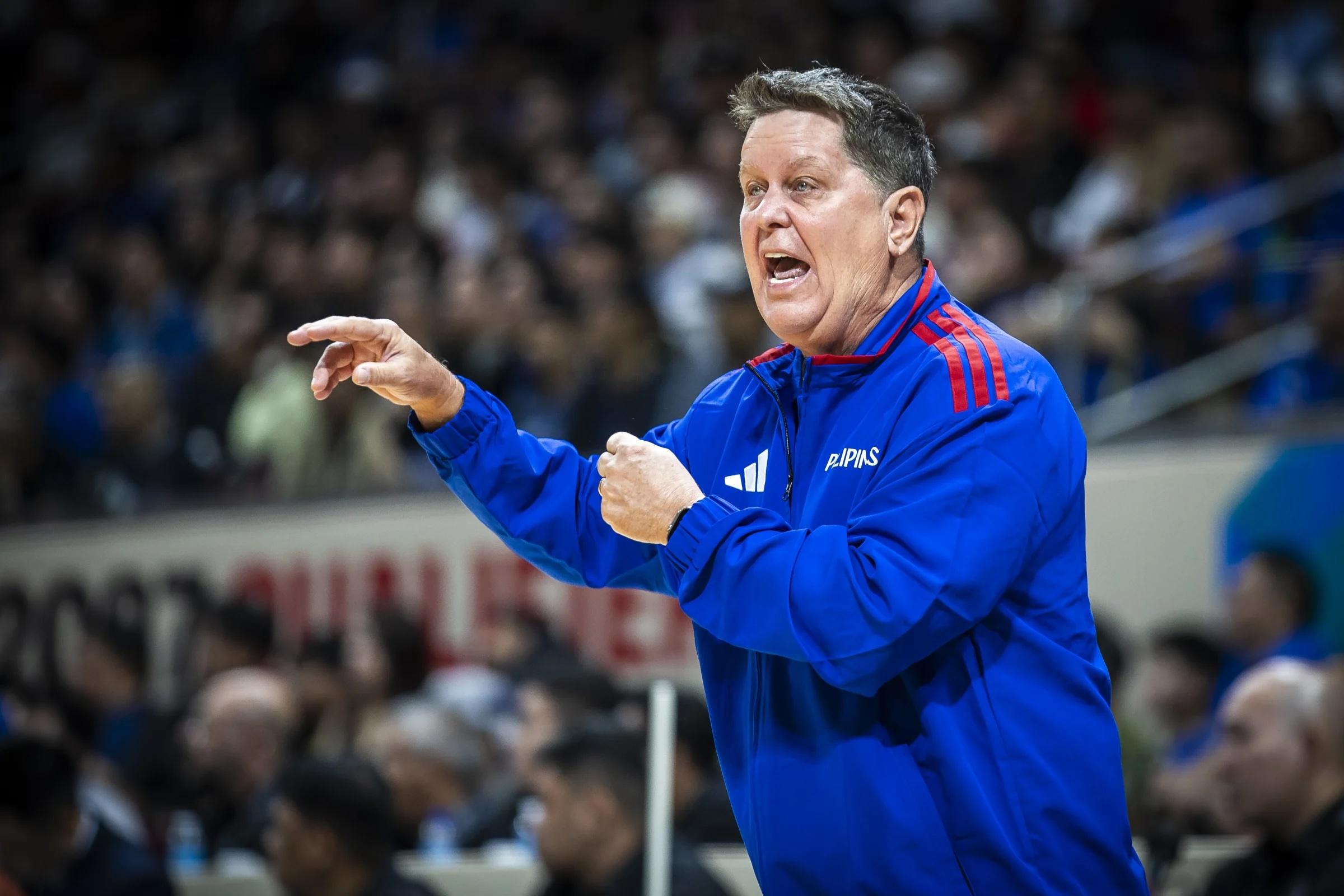
Gilas Pilipinas’ failure to defend its gold medal at the recent Asian Games was partly attributed to the absence of its core players, as the tournament did not coincide with the FIBA window.
The Philippines fielded an all-PBA team at the Asian Games and also played without Justin Brownlee, who had been dealing with heart issues. The team, however, finished ninth in the tournament.
“We actually wanted to bring the same core. What was interesting is that Japan allowed their players to play in the Asian Games and Korea allowed their Korean players to represent their country and play in the Asian Games, but they would not allow our Filipino players playing abroad to represent the country in the Asian Games,” Cone said during the Senate Committee on Sports’ post-evaluation on Thursday.
He added that players such as Mike Phillips, Kai Sotto, Quentin Millora-Brown, AJ Edu, and Dwight Ramos were not allowed to join the national team by their respective clubs in the B.League.
“And then Korea, whose season starts later, they said originally they would allow Kevin Quiambao and Carl Tamayo to play. But then two weeks before the start of our preparation, they said no, they could not play anymore. And we don't have control because they're under contract with those teams. So they could not break those. They all wanted to play in the Asian Games but were disallowed to play.”
Speaking as a club coach himself, Cone said he understood the importance of players joining their respective teams in preparation for the start of their leagues’ seasons.
“There's no mechanism at this point that would allow those players to play or force them to come. Obviously, FIBA has a mechanism in terms of forcing players or allowing players and that's worldwide, that's not just in Asia,” Cone said.
“We have a unique situation because we're one of the few countries that really exports our players. So, we can request to those players that they try to put that into their contract, but there's no mechanism that we have to force those players to do it. Unless we can tell the players or ask the players and then ask their teams, can you please allow us? But in this regard, the teams have their own self-interest. A lot of these tournaments are during season or pre-season. These teams are engaged and to be honest, from a club coach [perspective], I wouldn't want my players suddenly in the middle of my season going off and playing if not all the teams were off.”
However, Cone stressed the need to establish a mechanism that would allow players to join the national team when called up, especially given the growing competitiveness of basketball in the region.
“Again, we have to develop some kind of mechanism to get those players released to come to these games because we can't bring a secondary team and expect to play and beat the best of Korea or the best of China or the best of Japan or Lebanon or any other team. We have to bring our best to be able to compete with them. Just like these athletes here,” Cone said.
“These athletes are the best that we have that are competing. We're not bringing from other lower schools or lower programs. We're bringing the very, very best. And if we're going to compete at this level in the Asian games especially, we need to bring our very, very best. Until we can find a mechanism that forces those teams to allow us to grab our players, we're going to be in the same situation four years from now.”
—JKC, GMA News

