

 GMA Brandtalk
 Tracking
 Archives

Ukrainian Olympian disqualified for helmet depicting war dead
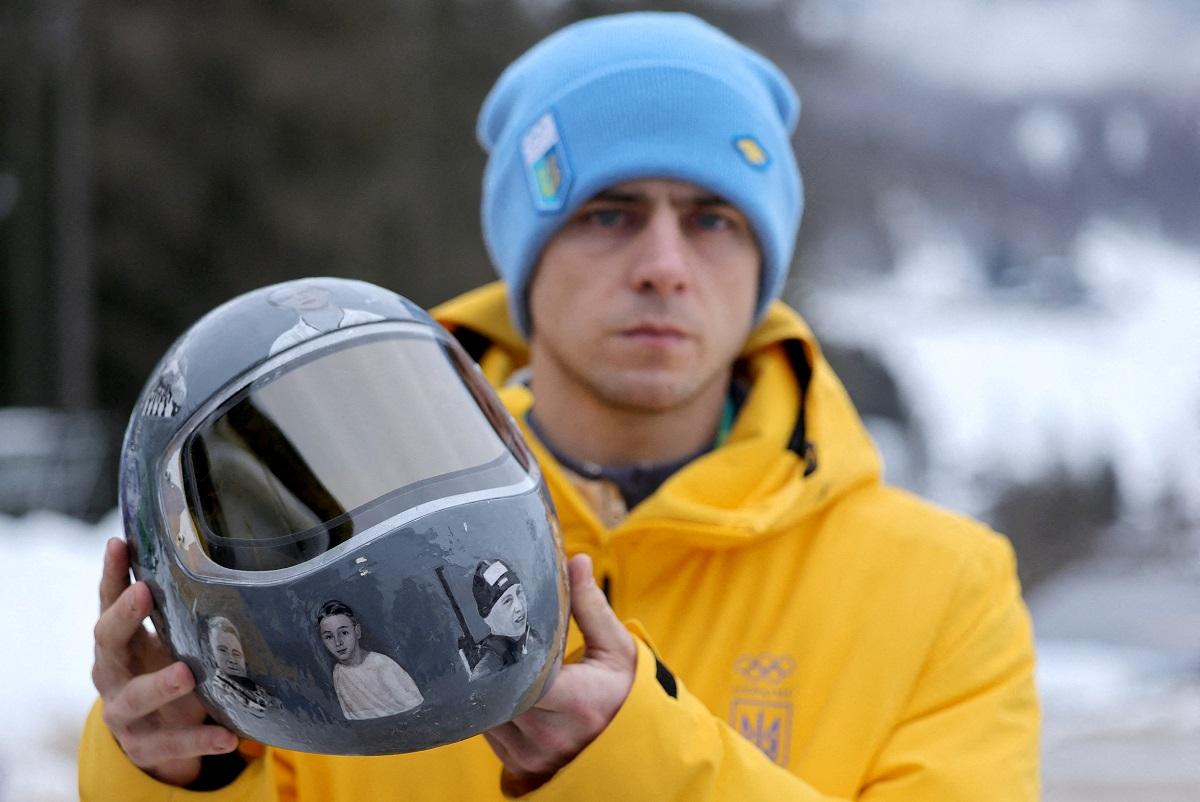
CORTINA D'AMPEZZO, Italy — Ukraine's skeleton racer Vladyslav Heraskevych was kicked off the Winter Games on Thursday over his "helmet of remembrance" depicting athletes killed since Russia's invasion despite a personal appeal from the International Olympic Committee head.
The 27-year-old, who had been training in Italy with the helmet showing two dozen dead compatriots, was barred and stripped of his accreditation minutes before competition was due to start at the sliding venue.
"I am disqualified from the race. I will not get my Olympic moment," said Heraskevych. "They were killed, but their voice is so loud that the IOC is afraid of them."
His team said they would appeal the decision at the Court of Arbitration for Sport.
IOC President Kirsty Coventry met with Heraskevych prior to the decision and choked up with tears when telling reporters how she was unable to broker a solution.
"I thought it was really important to come here and talk to him face-to-face," she said. "No one, especially me, is disagreeing with the messaging, it's a powerful message, it's a message of remembrance, of memory."
However, the IOC ruled that it contravenes the Olympic Charter's rule 50.2 forbidding political, religious and racial propaganda on the fields of play.
It had suggested compromises including wearing a black armband or showing the helmet before and after racing.
"Sadly we've not been able to find that solution. I really wanted to see him race. It's been an emotional morning," Coventry said. "It's literally about the rules and the regulations and that in this case... we have to be able to keep a safe environment for everyone and sadly, that just means no messaging is allowed."
Ukraine plans protest
Ukraine's Olympic Committee said it was planning some sort of protest but would not boycott the Games.
Ukrainian team members were seen in tears after the decision.
Heraskevych said the case played into Russia's narrative about the four-year war in his nation.
"Even though the IOC wants to betray the memory of these athletes, I will not betray them," said the athlete, who also displayed a "No War in Ukraine" sign at the Beijing 2022 Olympics days before Russia's invasion.
"I sincerely believe that it is precisely because of their sacrifice that these Olympic Games can take place at all today."
There has been no comment on the case from Moscow.
Latvian coach Ivo Steinbergs told Reuters he had filed a protest with the International Bobsleigh and Skeleton Federation to reinstate the athlete.
The skeleton started on Thursday morning.
It is not the first time the IOC has sanctioned an athlete for a political message.
The most famous case was at the 1968 Summer Olympics in Mexico City when U.S. sprinters Tommie Smith and John Carlos raised black-gloved fists during the 200m medal ceremony to protest about racial injustice in the United States.
That led to their expulsion from the Games, although Smith kept his gold medal and Carlos his bronze.
At the 2024 Paris Olympics, Afghan breakdancer Manizha Talash, a member of the refugee Olympic team, was disqualified after wearing a cape with the slogan "Free Afghan Women" during a pre-qualifying competition.
Having been stripped of accreditation, Heraskevych now has no access to any competition venues, athletes' villages or media areas. — Reuters

