

 GMA Brandtalk
 Tracking
 Archives

What are the tennis court surfaces? Differences between hard, clay, and grass courts
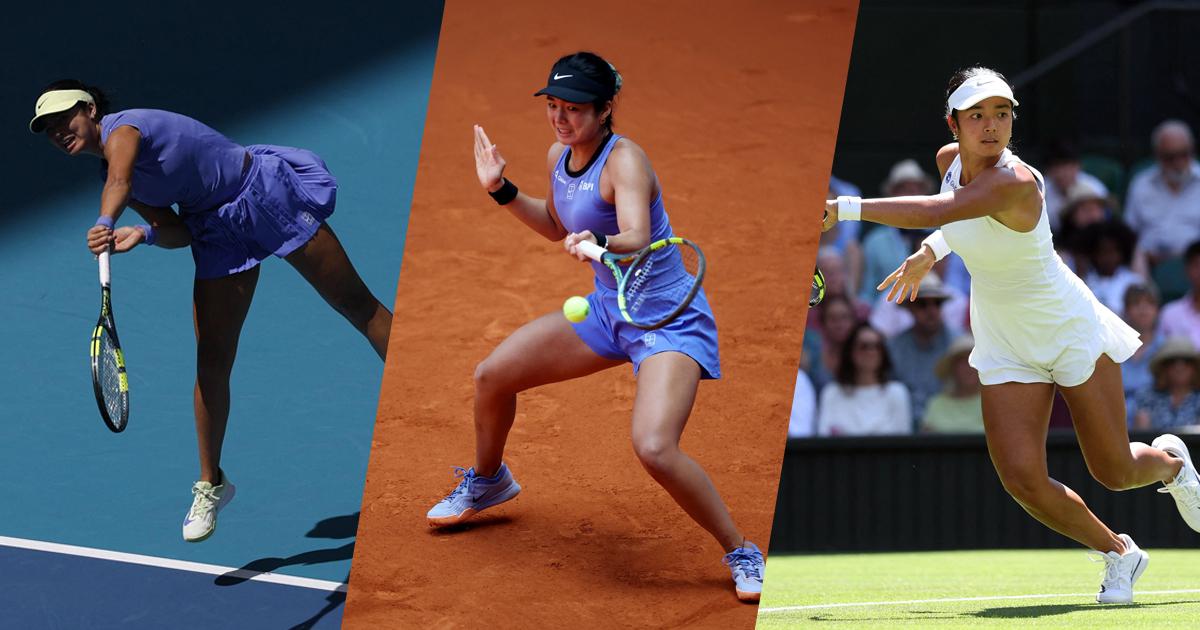
The year’s biggest clay-court tournament, the French Open, begins next week as the famed courts of Roland Garros welcome some of the world’s best tennis players for the Grand Slam event.
Among them will be Filipina tennis star Alex Eala, who will play Iva Jovic in the first round of the French Open expected to start on Sunday.
Its iconic red courts have witnessed greatness from the likes of Rafael Nadal, who has won 14 French Open titles, as well as champions such as Serena Williams and Iga Swiatek in recent years with three each.
But clay is only one of the three primary surfaces used in professional tennis, with Grand Slam tournaments also played on hard courts — the US Open and Australian Open — and grass courts at Wimbledon Championships.
So, what makes each surface different?
Clay court: More physical play, more strategy
Philippine tennis icon and Sports Hall of Famer Cecil Mamiit described clay-court tennis as a true test of patience.
“One thing great about Roland Garros is the clay is very soft powder. Slow playing, easy on the ball, but you can create more strategy. More physical,” Mamiit told GMA News Online.
According to the official Roland Garros website, the red clay surface traces its roots back to 1880, when powdered terra cotta was originally used to cover grass courts. Today, the court consists of five layers: drains, crushed gravel, clinker (coal residue), crushed white limestone, and red brick dust.
The website also noted that the red dirt causes the ball to bounce higher and slows down play, leading to longer rallies and more tactical exchanges.
“Clay a little bit more shows creativity and ability to move your feet,” Mamiit said.
“It is exciting yet long, as they say.”
Grass court: Aggressive play, unpredictable movement
Grass courts, meanwhile, are most famously associated with London, home of the Wimbledon Championships.
According to Great Britain’s Lawn Tennis Association, grass courts favor players with a more aggressive attacking play style.
With the ball also bouncing lower and skidding unpredictably, rallies tend to be faster and shorter compared to clay-court matches.
The official Wimbledon website states that the courts are sown with 100% perennial ryegrass to improve durability and strengthen the playing surface for the modern game. The grass is also maintained at a height of 8 millimeters for optimal performance.
To adjust to the lower bounce, many players often approach the net more frequently on grass courts.
Hard court: Balanced and versatile
Hard courts, meanwhile, are the most commonly available surface and are often recommended for all-around players.
According to Tennis Australia, hard courts offer a more predictable and moderate ball bounce, helping players develop movement, timing, and shot selection.
Their smooth surface also makes them more beginner-friendly compared to clay or grass.
“Hard court is ideally you can be all around,” Mamiit said.
According to the Olympics website, hard courts are typically made of synthetic or acrylic layers installed over concrete or asphalt foundations.
Other surfaces
Aside from the three main surfaces, the Philippines also has shell courts, which Mamiit said produce slower and more physically demanding matches.
The Olympics website also noted that carpet courts were previously used in professional tennis until 2018.
—JMB, GMA News

