

 GMA Brandtalk
 Tracking
 Archives

AFP: No Chinese aggressive actions during Balikatan 2026 exercises
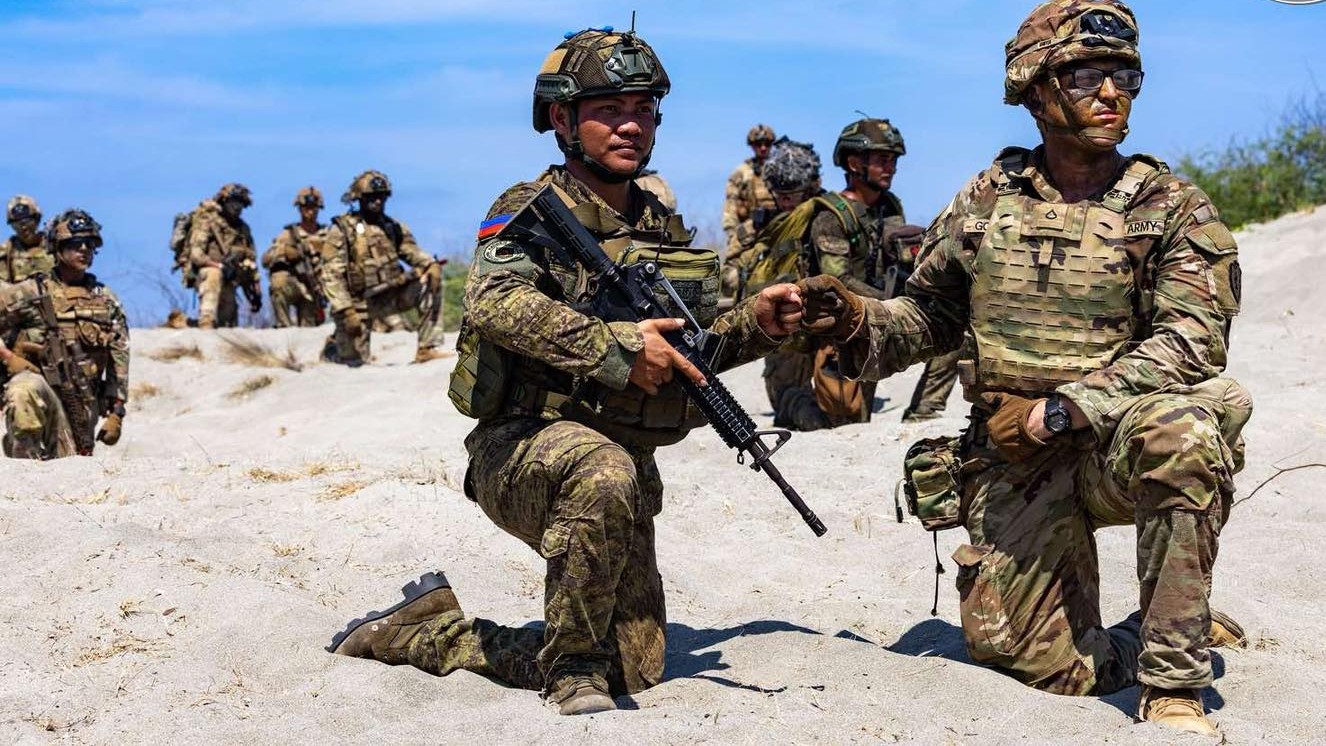
The Armed Forces of the Philippines (AFP) on Tuesday said it did not monitor any aggressive or coercive actions from Chinese forces during the conduct of the Balikatan 2026 exercises in the West Philippine Sea (WPS).
AFP spokesperson for the WPS Rear Admiral Roy Vincent Trinidad said the military observed no coercive incidents involving the People’s Liberation Army Navy, the China Coast Guard, or Chinese maritime militia.
“There were no recorded coercive and aggressive actions,” Trinidad said in a press briefing.
“What we have noticed was the same narrative given out that they performed combat exercises in the vicinity of Bajo de Masinloc. But upon checking, what we noted was the presence of PLA Navy ships and Chinese Coast Guard and the occasional presence of a PLA Air Force. There was no noted synchronized activity,” he added.
This year’s Balikatan, an annual joint military exercises between the Philippines and the United States, started on April 20 and completed on May 8. Several allied nations such as Japan, Australia and Canada also participated in this year's edition.
Among the missile systems used during the recent Balikatan were the US Army's Tomahawk cruise missile and HIMARS, as well as Japan’s Type 88 surface-to-ship missile system.
Earlier, Beijing criticized Tokyo over reports that Japan's Type 88 anti-ship missiles were fired in the Philippines as part of the Balikatan drills.
Tensions continue as Beijing claims almost all of the South China Sea, a conduit for more than $3 trillion of annual shipborne commerce, including parts claimed by the Philippines, Vietnam, Indonesia, Malaysia, and Brunei.
Parts of the South China Sea that fall within Philippine territory have been renamed by the government as West Philippine Sea to reinforce the country’s claim.
The West Philippine Sea refers to the maritime areas on the western side of the Philippine archipelago including Luzon Sea and the waters around, within and adjacent to the Kalayaan Island Group and Bajo de Masinloc.
In 2016, the Permanent Court of Arbitration in the Hague ruled in favor of the Philippines over China's claims in the South China Sea, saying that it had "no legal basis."
China has refused to recognize the decision. —RF, GMA News

