

 GMA Brandtalk
 Tracking
 Archives

MMDA: Violations under NCAP 'manually' reviewed
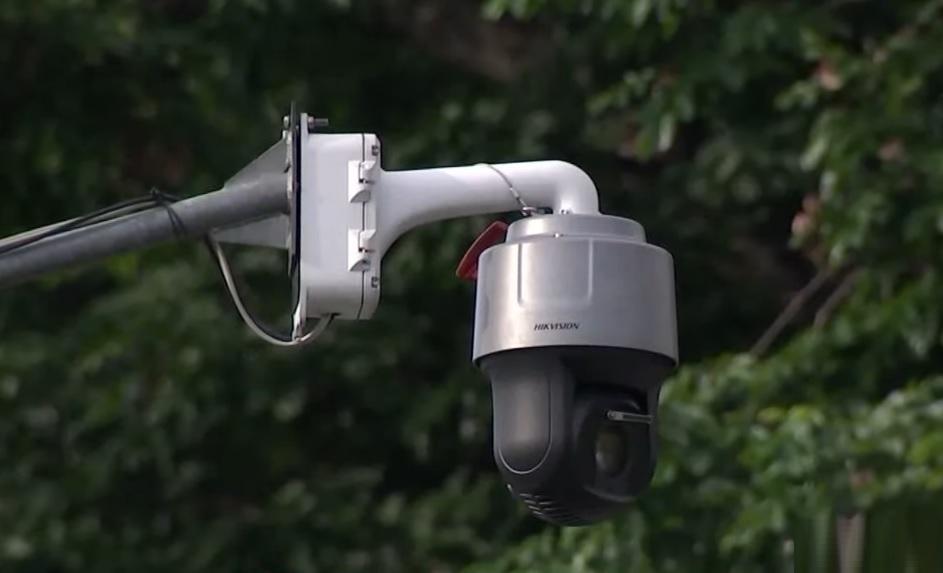
The Metropolitan Manila Development Authority (MMDA) said Wednesday that violations caught under the No Contact Apprehension Policy (NCAP) will be manually reviewed by its personnel before issuing tickets.
MMDA chairperson Romando Artes told Super Radyo dzBB in an interview that their personnel, usually deaf-mutes, are reviewing the violations caught by artificial intelligence (AI).
“Hindi po lahat ng cameras naming may AI, sa EDSA lamang po. Ganunpaman, yung mga may huli ng AI may automatic review po tayo. Mano-mano pong tinitignan yan,” Artes said.
(Not all of our cameras have AI, only on EDSA. However, those that are caught by AI have automatic reviews. We check them manually.)
“Yung mga na-capture supposedly na violations ay tinitignan po ng ating mga tauhan. Kalimitan po dyan mga deaf-mutes na atin pong in-employ na sila po yung tumitingin kung tama yung pagkaka-capture,” he added.
(Those that are captured for supposed violations are checked by our staff. Usually, there are deaf-mutes that we employ who are the ones who check if the apprehension is correct.)
For example, Artes said that AI once flagged an ambulance that used the EDSA busway. Since ambulances are allowed to use the special lane for public utility buses, reviewers invalidated the initially reported violation.
Another example, Artes said, is that if a vehicle switched lanes on a road with yellow marking because a car broke down in front of it, reviewers will also invalidate the violation.
Artes pointed out that the MMDA will be lenient with those kinds of violations, adding that the NCAP implementation is intended for the discipline of motorists and not for income generation of the agency.
A total of 1,112 traffic violations were caught on the first day of the resumption of the NCAP on Monday, the MMDA said.
The total number of traffic violations on Monday is lower compared to the over 3,000 recorded on the same date last year when NCAP was still suspended due to a temporary restraining order (TRO).
NCAP is a policy that uses closed-circuit television, digital cameras and/or other gadgets or technology to capture videos and images to apprehend vehicles violating traffic laws, instead of traffic enforcers on the ground.
The implementation of NCAP resumed after the Supreme Court (SC) partially lifted the TRO against the policy, allowing only the MMDA to implement the program.
In August 2022, the SC issued the TRO against NCAP being implemented by some local government units in Metro Manila.
The order came after transport groups Kapit, Pasang Masda, Altodap, and the Alliance of Concerned Transport Organizations filed a petition against local ordinances related to the NCAP in five cities including Manila, Quezon City, Valenzuela, Muntinlupa, and Parañaque.
One of the contested aspects of the NCAP involves the payment of fines in which the registered owners, not the drivers, of public and private vehicles are the ones who are asked to pay for the penalties.
Transport groups also described the policy as unconstitutional. — RSJ, GMA Integrated News

