

 GMA Brandtalk
 Tracking
 Archives

LTFRB, LTO crack whip vs. PUVs overloading passengers
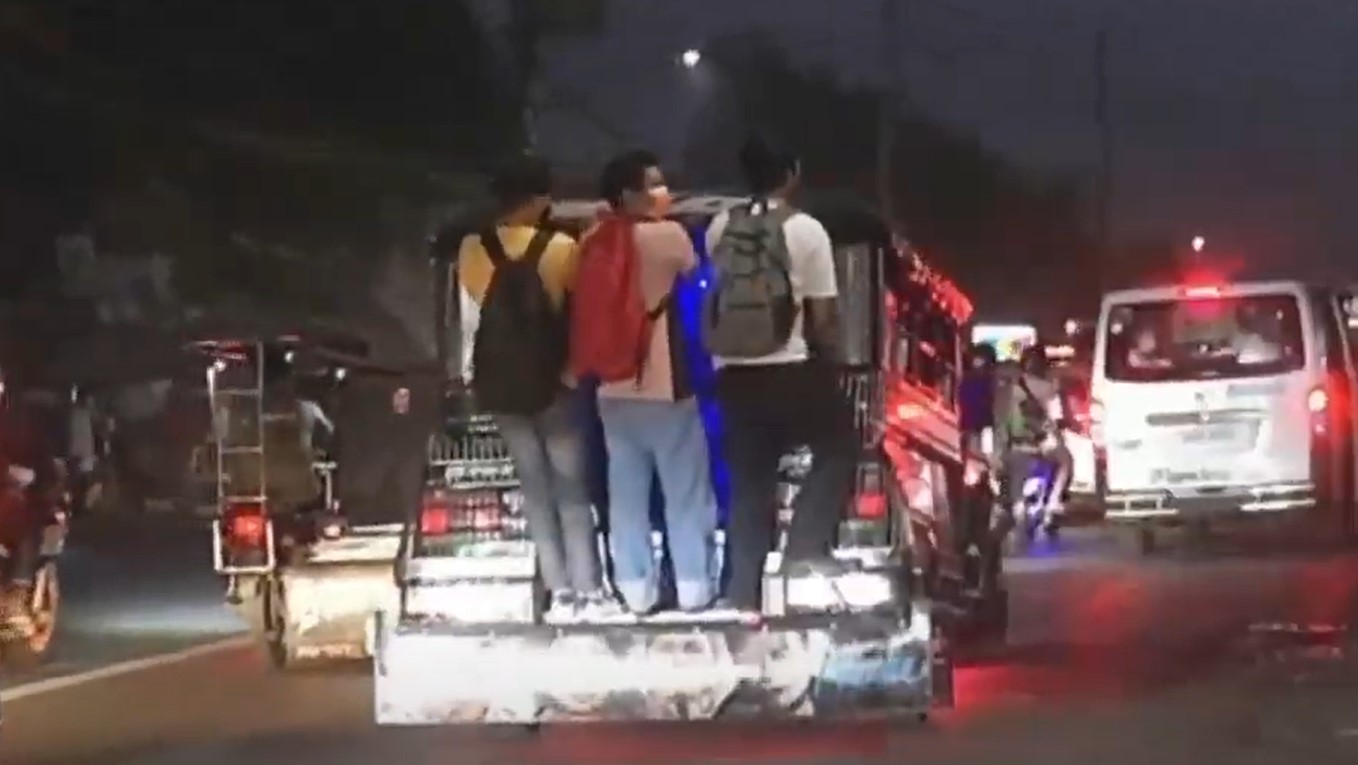
The Land Transportation Franchising and Regulatory Board (LTFRB) warned Tuesday that operators who overload their public utility vehicles (PUVs) with passengers may lose their franchises.
According to Joseph Morong's report in "24 Oras" on Tuesday, the Land Transportation Office (LTO) will join the LTFRB in the crackdown of PUVs that are jampacked, if not overflowing, with passengers.
Traditional and modern jeepneys have a limit of 12 to 32 passengers, depending on their capacities. Modern jeepneys, however, are only allowed to have up to five standing passengers, the LTFRB said.
Meanwhile, Asian utility vehicles (AUVs), regular vans, and extended vans should only have six to 12 passengers.
Up to 50 passengers are allowed on public buses, the report said.
"Kapag nag-overload po tayo, nako-compromise 'yung safety and it's no longer convenient for the passengers," said LTFRB spokesperson Ariel Inton.
(If PUVs are overloaded, the safety and convenience are compromised and it's no longer convenient for the passengers.)
Aside from the possibility of losing their franchises, PUV operators flagged for violating the policy will be fined P5,000.
Passengers who are caught hanging on or standing in full PUVs will not be fined, the report said.
Several commuters interviewed by GMA Integrated News are divided with their views on the new policy. Some said that overloading PUVs is inevitable as many commuters are already in rush.
On the other hand, others said jampacked vehicles on travel can be unsafe.
"Minsan kasi 'pag may ubo, mahirap talagang magsiksikan," said commuter Marissa David.
(It's a very difficult situation when the PUVs are packed, especially when someone coughs.)
Despite the sardine can-like conditions, some drivers told GMA Integrated News that they need to allow passengers to get onboard their PUVs especially during rush hour, even if these are already beyond full capacity.
"Wala po kaming magagawa sir, eh, pasahero, lalo rush hour hindi namin kayang awatin," said jeepney driver Emilio Arino, adding that having more passengers means extra income.
(We cannot do anything to stop the passengers especially when it's rush hour.)
However, the LTFRB said it is now studying if there is a lack of public transportation causing PUVs to be overloaded or if it just happens during rush hours.
"Maaaring isang point of view na kaya ganiyan ay dahil sa kakulangan ng public transport. Pero sa tingin namin, isa ring contributory factor 'yung traffic, kasi 'yung turnaround, lalo na sa kapag kunwari kapag rush hour," said Inton.
(One point of view is that the problem may be due to the lack of public transport. However, we think that traffic is also a contributing factor, because of the turnaround, especially when it happens during rush hour.) — VDV, GMA Integrated News

