

 GMA Brandtalk
 Tracking
 Archives

Russian vlogger arrested over 'HIV' prank tests negative
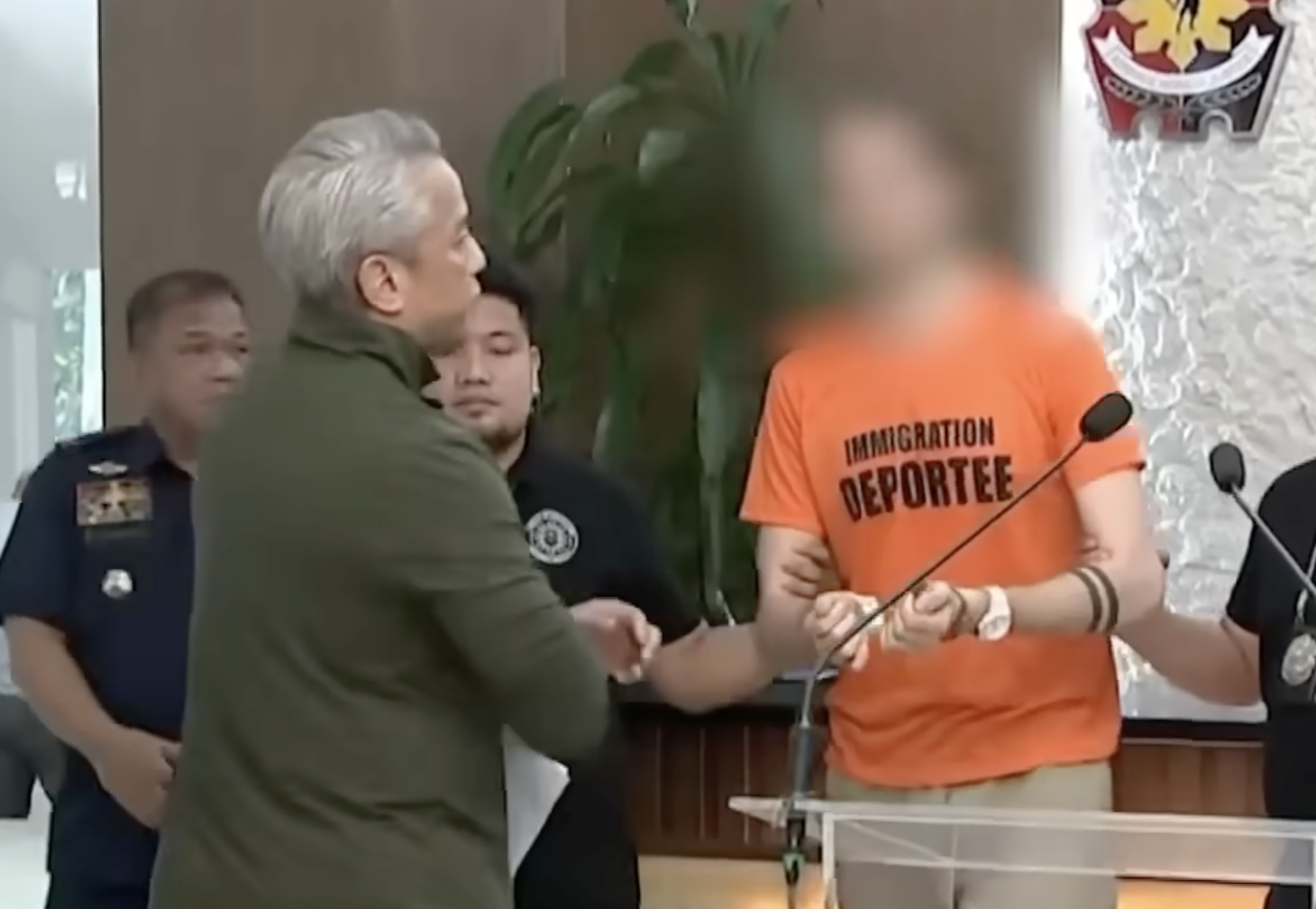
Russian vlogger Nikita Chekhov tested negative for HIV following medical examinations conducted by the Department of Health (DOH) and the Bureau of Immigration (BI) after he made threats to spread HIV across Metro Manila.
In a statement, the BI confirmed that Chekhov tested non-reactive for HIV on Thursday morning, saying his threats amounted to “rage-bait.”
BI spokesperson Dana Sandoval said Chekhov’s actions now classify him as an undesirable alien subject to deportation and blacklisting from the Philippines.
“Nakakabahala po kasi yung ginawa niya, lalo na’t nag-viral siya sa social media giving out threats na siya ay magkakalat ng HIV sa BGC. Nag-cause po ito ng panic sa mga netizens, kaya nakita po natin na this also constitutes undesirability," she said in a radio interview on Saturday.
(What he did was really concerning, especially since he went viral on social media for threatening to spread HIV in BGC.)
"Yung kaniyang ginagawa ay undesirability, meaning yung pananatili niya sa Pilipinas ay detrimental na to public order and public safety,” Sandoval added.
(This caused panic among netizens, which constitutes undesirability—meaning his stay in the Philippines is detrimental to public order and public safety.)
The BI said it would await the decision of the Department of the Interior and Local Government (DILG) on whether local cases would be filed against the vlogger.
Chekhov earlier said he did not have HIV and claimed he only intended to create content that he hoped would become a social media meme.
He added that he did not intend to create content that would negatively affect Filipinos.
“I analyzed it and saw that some Filipinos think of foreigners in a very stereotypical way. I was getting many comments like ‘stop spreading your viruses, foreigner,’ ‘passport bro,’ ‘lbh,’ ‘HIV alert,’ just for being me. I was just doing some dances, silent TikToks, and still getting that hate,” he said.
“And as a content creator, I analyzed and thought, how do I attract attention? That’s how I came up with the ‘spread HIV’ thing. I literally said out loud what Filipinos were saying to me. I was expecting it to become a meme,” he added.
Chekhov clarified that while he does not have HIV and had no intention of spreading it, he was not sorry for creating the video.
“But now I understand more about the standards and rules of living with Filipinos,” he said.
‘Like a bomb threat’
Health Secretary Teodoro Herbosa likened Chekhov’s threats to spread HIV to making a bomb threat at an airport, calling it a serious public health concern.
“Para kang nagsabog ng biological bomb at puwede talagang gawin ‘yan ng isang indibidwal. Kaya kapag sinabi mo ‘yan, nagbibigay ka ng masamang ideya sa ibang tao at baka totoo iyon. Aarestuhin ka talaga,” Herbosa said.
(It’s like spreading a biological bomb—something an individual could actually do. When you say that, you give bad ideas to others and it could be real. You will really be arrested.)
Herbosa said authorities treated Chekhov’s remarks as a credible threat, prompting extensive coordination for his arrest and subsequent testing.
“Yung verbal threat niya sa vlog can be an actual threat, kaya pati safety ng arresting officer pinag-usapan namin. Yung koordinasyon para arestuhin siya ay malaking trabaho, at pati ang pag-test kinabukasan ay isang malaking operation. Dalawang ospital ang kinoordinate ko para matest siya,” he added.
(His verbal threat in the vlog can be an actual threat, so we even discussed the safety of the arresting officer. The coordination for his arrest was a major effort, and testing him the next day was also a large operation. I coordinated with two hospitals for his testing.)
Meanwhile, Herbosa said the DOH and BI are looking into the possibility that foreigners may be among the factors contributing to the rising HIV cases in the country.
“Dapat talaga pag-usapan namin ni Commissioner Viado para mabawasan yung mga pumupunta sa Pilipinas para sa sex tourism at mga posibleng sources of HIV,” he said.
(Commissioner Viado and I really need to discuss how to reduce the number of people coming to the Philippines for sex tourism and the possible sources of HIV.)
According to DOH data, there are now 149,375 HIV cases in the country, with 99,696—or 67 percent—enrolled in antiretroviral therapy (ART).
In June 2025, the DOH said HIV cases among Filipino youth had surged by 500 percent and called for the declaration of a public health emergency.
The DOH earlier warned that if left unchecked, HIV cases could climb to more than 457,000 by 2030.—MCG, GMA Integrated News

