

 GMA Brandtalk
 Tracking
 Archives

Quezon City named 17th member of City Cancer Challenge network
Quezon City has been recognized as the 17th city to join the City Cancer Challenge (C/Can) network, following the implementation of comprehensive cancer programs and ordinances aimed at improving access to cancer care.
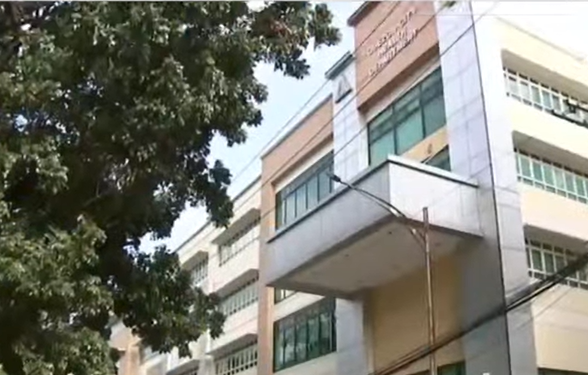
The recognition was conferred during the World Cancer Day event held at the Philippine Medical Association (PMA) on Wednesday.
C/Can Head of Global Public Affairs Harold Cottin said Quezon City’s inclusion in the network reflects its commitment to building a stronger healthcare system and delivering patient care grounded in compassion, dignity, and hope.
“By joining this network, Quezon City becomes part of a community of cities across the world—in Latin America, Asia, Africa, and Eastern Europe—a community committed to strengthening access to quality cancer care by leveraging the power of collective action,” Cottin said.
He described the partnership as the start of a long-term journey, noting that cancer care requires sustained, collaborative efforts.
“Cancer care is very complex, so there are no quick wins. It takes a village. Everyone will be involved, and you will be able to rely on learnings coming from the other cities,” he said.
Cottin highlighted the value of shared knowledge among C/Can’s 17 member cities, allowing local governments to adapt proven strategies to their own healthcare systems.
“We will help you assess your needs, prioritize them, design solutions, and implement those solutions. But you will define the kind of solutions you want to put in place,” he added.
Philippine Cancer Society President Dr. Corazon Ngelangel also commended Quezon City’s cancer-related initiatives, citing local ordinances that focus on prevention, early detection, treatment, palliation, and survivorship across the cancer care continuum.
“These policies, combined with strong public, private, and civil society partnerships, make Quezon City an ideal city for the City Cancer Challenge and a natural nominee of the Philippine Cancer Society for this global initiative,” Ngelangel said.
She added that the organization is confident Quezon City can serve as a model for equitable, quality cancer care in the Philippines and the wider Asia-Pacific region.
“Together, we will work to close the care gap, strengthen cancer registries and navigation, and advance people-centered policies that protect individuals, families, and communities from the devastating impact of cancer,” she said.
Quezon City Health Department (QCHD) head of the Cancer Care Control Program Dr. Karen Gemma See said the city’s cancer initiatives were designed with its 3.1 million residents in mind.
Following Quezon City’s selection into the C/Can network in December 2024, See said the city aims to implement systematic and sustainable programs to continuously improve referral pathways, patient navigation, and access to care.
“As a highly urbanized city, we face the full spectrum of cancer-related challenges—from prevention and early detection to treatment, survivorship, and social protection,” she said. “Cancer care is not a single program or campaign. It is a long-term public health and governance responsibility.”
She said the city’s engagement with C/Can is both timely and strategic, aligning with its data-driven and participatory approach to governance.
“This collaboration is not about creating parallel structures. It is about strengthening the local cancer network and improving coordination among the city government, hospitals, national agencies, medical societies, civil society organizations, and patient groups—from the barangay level to survivorship and palliative care,” See said.
Quezon City was formally admitted into the C/Can network following the signing of a Memorandum of Understanding on Wednesday. It joins Abidjan, Greater Petaling, Phnom Penh, Abuja, Kigali, Porto Alegre, Arequipa, Kumasi, Rosario, Asunción, León, Tbilisi, Cali, Nairobi, Yangon, and Concepción.
C/Can said its network of cities is committed to driving systematic change in cancer care through a 10-year model designed to address gaps in local cancer systems.—MCG, GMA Integrated News

