

 GMA Brandtalk
 Tracking
 Archives

UPIS shuts high school building over structural risks
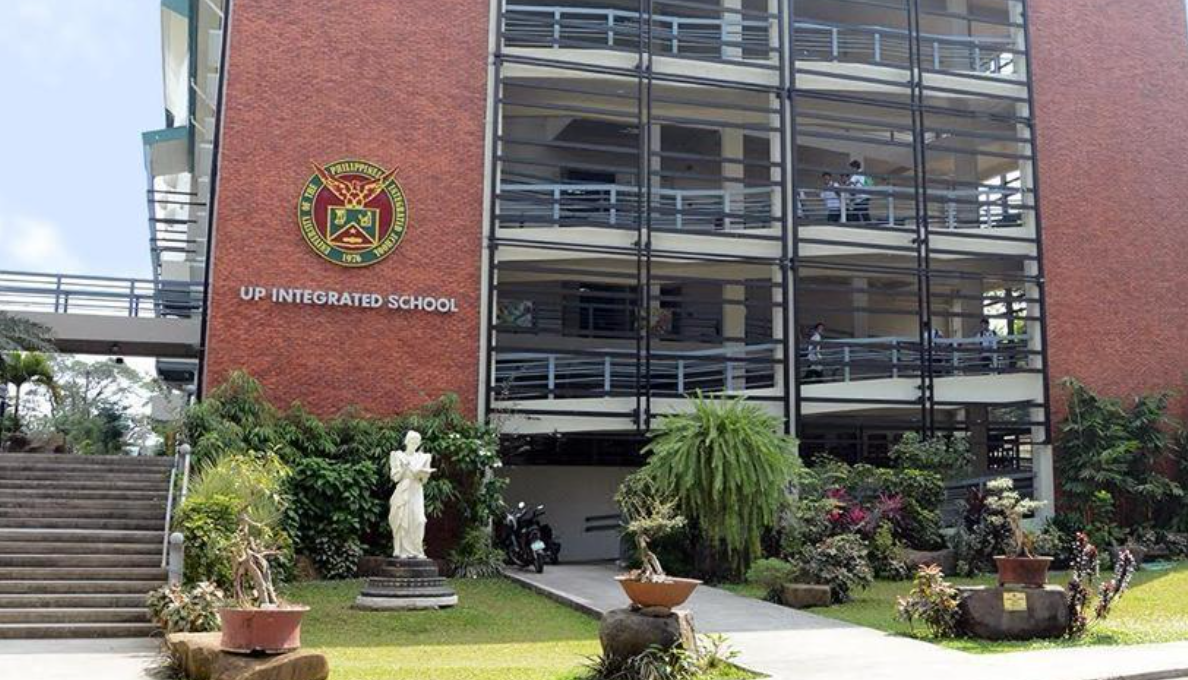
The University of the Philippines Integrated School (UPIS) has indefinitely closed its junior and senior high school academic building due to serious structural concerns, prompting an emergency evacuation and forcing classes to relocate across the University of the Philippines Diliman campus.
The building, which houses UPIS' Grades 7 to 12 classes, was ordered closed on February 17, 2026, after a structural assessment conducted by third-party firm VNR Villasenor and Associates identified issues that could compromise the building’s integrity.
UPIS principal Assoc. Prof. Anthony Joseph Ocampo said the problems were not superficial but rooted in the structure’s design and construction.
“The problem was inherent in the beginning… Rather than risking staying there, waiting for the [seismic] event, we are being proactive,” Ocampo said during a Feb. 21 online meeting with stakeholders.
The shutdown affects junior and senior high school students, who temporarily shifted to remote learning from February 18 to 27 while the school arranged alternative venues.
According to UPIS officials, the academic building—used for only 13 years since its turnover in 2013—was closed after the engineering assessment found structural elements that could pose safety risks.
While construction materials were generally within code standards, the assessment reportedly identified critical structural issues, including undersized columns and improperly positioned beams, which could endanger the building in the event of a seismic activity.
Edgardo Carlo Vistan, chancellor of UP Diliman, said the university would seek further review of the findings and determine responsibility for the problems.
“May kailangan talaga ditong accountability na ma-attribute. Basically sa pag-design at pag-construct ng building. Ang tanong na lang ay kung saang punto nagkamali,” Vistan said.
(There really needs to be accountability attributed here—basically in the design and construction of the building. The question now is at what point the mistake happened.)
A second structural opinion is expected before the university decides whether the building will undergo retrofitting or be replaced entirely.
Building donation
The Grade 7–12 academic building was not funded by UPIS but was donated to the University of the Philippines system by Ayala Land Inc. as part of a long-term lease agreement involving the Katipunan property previously occupied by UPIS, which is now the site of UP Town Center.
Designed as one of the campus’s early “green” buildings, the structure features energy-efficient lighting, natural ventilation systems, skylights, and large windows.
It houses 18 classrooms and several key student facilities, including the library, clinic, guidance office, and the Office of Research, Development and Publication (ORDP).
However, UPIS administrators later said the school was unable to review the building’s punch list—a document identifying unfinished construction work—before it was turned over in 2013 because approval had already been granted at the system level.
Concerns about the building surfaced as early as 2021, when cracks and falling concrete debris were reported in parts of the structure. Engineers recommended temporary safety measures while a full structural evaluation was pursued.
But a comprehensive assessment took several years due to budget approvals, procurement processes, and bidding procedures, UPIS officials said.
Class movements
Following the building’s closure, UPIS adopted a temporary learning arrangement starting March 3.
- Grades 11–12 are holding full face-to-face classes in eight laboratories at the UP National Institute for Science and Mathematics Education Development (NISMED).
- Grades 9–10 are using classrooms and a computer laboratory at the UP College of Education.
- Grades 7–8 are being accommodated in available rooms inside the UPIS Grades 3–6 building, including the Bulwagan hall, where temporary dividers allow two classes to share the space.
Some facilities in the affected building remain operational, including the 7–12 gymnasium, while selected specialized courses are using other safe campus facilities.
Teachers' call
On March 15, UPIS faculty members and research, extension, and professional staff (REPS) issued a joint statement calling for urgent action and accountability over the building’s construction issues.
The group said the loss of the facility has significantly disrupted teaching, counseling services, and student support systems.
“Ang edukasyon ay hindi nararapat na ikahon sa apat na sulok ng silid-aralan, ngunit paano na ang pagkatuto kung wala talagang silid-aralan at ligtas na gusali?”
(Education should not be confined within the four corners of a classroom, but how can learning continue when there are no classrooms and no safe building?)
Faculty members said the building was more than just a structure, describing it as a critical learning environment where students develop their academic skills and values.
“Ang aming gusali ay hindi lamang isang pisikal na istruktura na madaling mapalitan; ito ay isang espasyong nagsisilbing pandayan ng karanasan ng mga mag-aaral upang subukin at paghusayin ang kanilang mga kakayahan,” the statement read.
(Our building is not merely a physical structure that can easily be replaced; it is a space that serves as a forge of students’ experiences where they test and refine their abilities.)
Teachers acknowledged that the temporary arrangements were made possible through the support of partner units such as the College of Education and NISMED but stressed that the current setup is not sustainable in the long term.
They also raised concerns about logistical difficulties faced by teachers moving between buildings, lack of access to teaching resources, and limited spaces for consultations and student counseling.
Call for space, accountability
Despite the disruptions, UPIS faculty said they remain committed to continuing instruction while urging the university administration to provide a safe and adequate academic space for students.
They also called on students, parents, alumni, and university officials to support the demand for immediate action and accountability regarding the building’s structural deficiencies.
“Tungkulin ng ating unibersidad na siguruhing mayroong tiyak, maayos, at ligtas na espasyo ang mga mag-aaral at guro,” the statement said.
(It is the responsibility of our university to ensure that students and teachers have a definite, proper, and safe space.)
For now, UPIS officials said their priority is ensuring the continuity of face-to-face learning while longer-term solutions—including retrofitting the structure or constructing a new building—remain under evaluation.—MCG, GMA Integrated News

