

 GMA Brandtalk
 Tracking
 Archives

MMDA: Carpooling rules to take effect after Holy Week
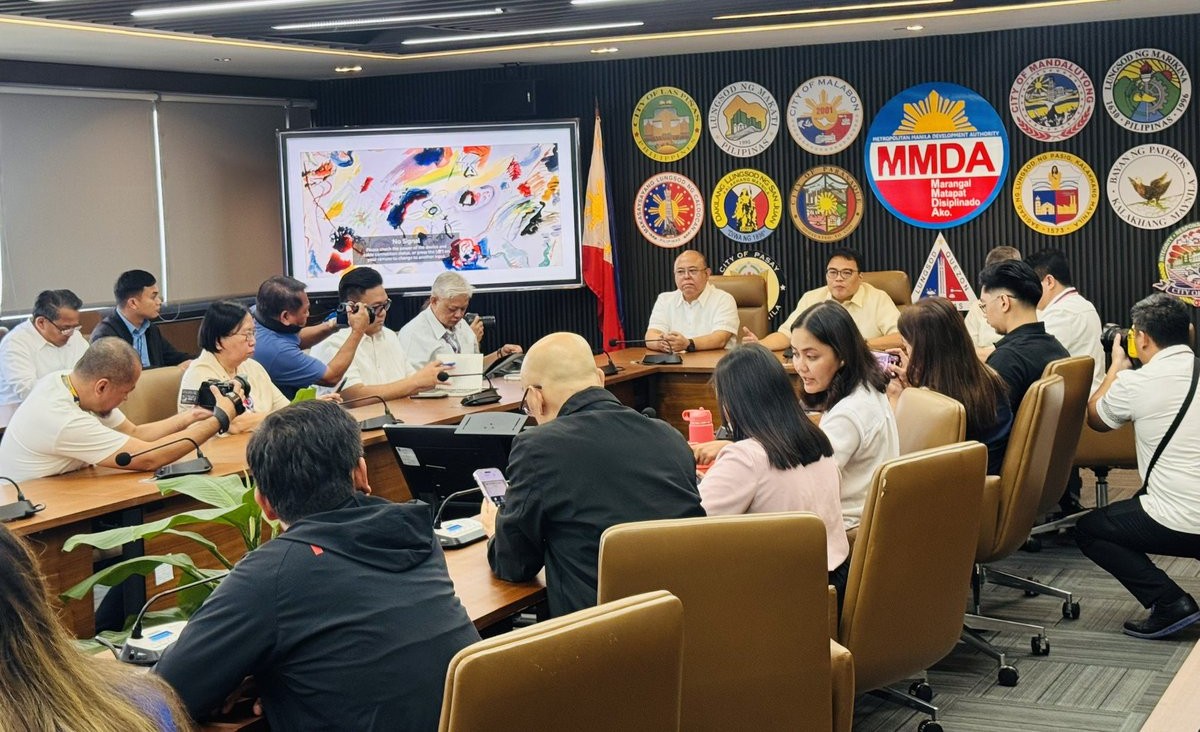
Government transportation agencies are set to implement a carpooling program immediately after Holy Week to help ease the burden on commuters amid rising fuel prices.
“After Holy Week, we want to start the program early next week, early after Holy Week,” Metropolitan Manila Development Authority (MMDA) Chairperson Romando Artes said in a press conference.
He made the statement following a meeting with officials of the Land Transportation Office (LTO), Land Transportation Franchising and Regulatory Board (LTFRB), and the Philippine National Police–Highway Patrol Group (PNP-HPG).
Stakeholders from the private sector and transport groups were also present to discuss the government’s proposed carpooling guidelines.
Artes said the program is intended to assist commuters, not penalize motorists.
“Hindi po ito trap (This is not a trap),” he said.
Proposed guidelines
Under the proposed guidelines, which have yet to be finalized, the carpooling program will be available to companies, factories, offices, and government agencies for employee transport.
The program will not be open to the general public, and only pre-listed passengers included in a manifest will be allowed to ride.
Carpooling operations must follow fixed origin and destination routes, with no roadside pick-up or drop-off and no intermediate stops, and must not function like public transport.
Operating hours are set from 6 a.m. to 9 a.m. and 5 p.m. to 9 p.m., with only one trip allowed per time slot. Walk-in or unauthorized passengers will not be permitted.
The program must operate on a non-profit or cost-recovery basis.
Payments should be arranged through contracts, such as monthly or lump-sum agreements between the employer and the operator. Per-head fare collection is prohibited.
Routes must be pre-approved by the LTFRB in coordination with the MMDA.
Eligible vehicles include employer-owned or directly operated units, while rental vehicles acting as unfranchised public transport are prohibited.
Vehicles must be five years old or newer and must display an LTFRB special permit or QR code, along with company identification markings.
Permits will be temporary and valid only during the declared emergency, and will not serve as a substitute for a regular franchise.
Vehicles and drivers must comply with registration, roadworthiness, licensing, and safety requirements.
For enforcement and coordination, only LTFRB-approved vehicles will be recognized under the No Contact Apprehension Policy (NCAP). The LTFRB will provide the MMDA with a registry of authorized units for monitoring and traffic management.
The MMDA and LTFRB will conduct regular monitoring to ensure compliance, with penalties or permit revocation for violations.
Grounds for revocation include operating like public transport, using unauthorized vehicles, unjustified route deviations, and violating permit conditions.
MMDA-coordinated or company-initiated shuttle programs will be required to submit route plans, fleet and vehicle details, proof of ownership or contract, and passenger lists or company certification.—MCG, GMA Integrated News

