

 GMA Brandtalk
 Tracking
 Archives

Unemployment in NCR slightly rose to 345,000 in 2025 — PSA
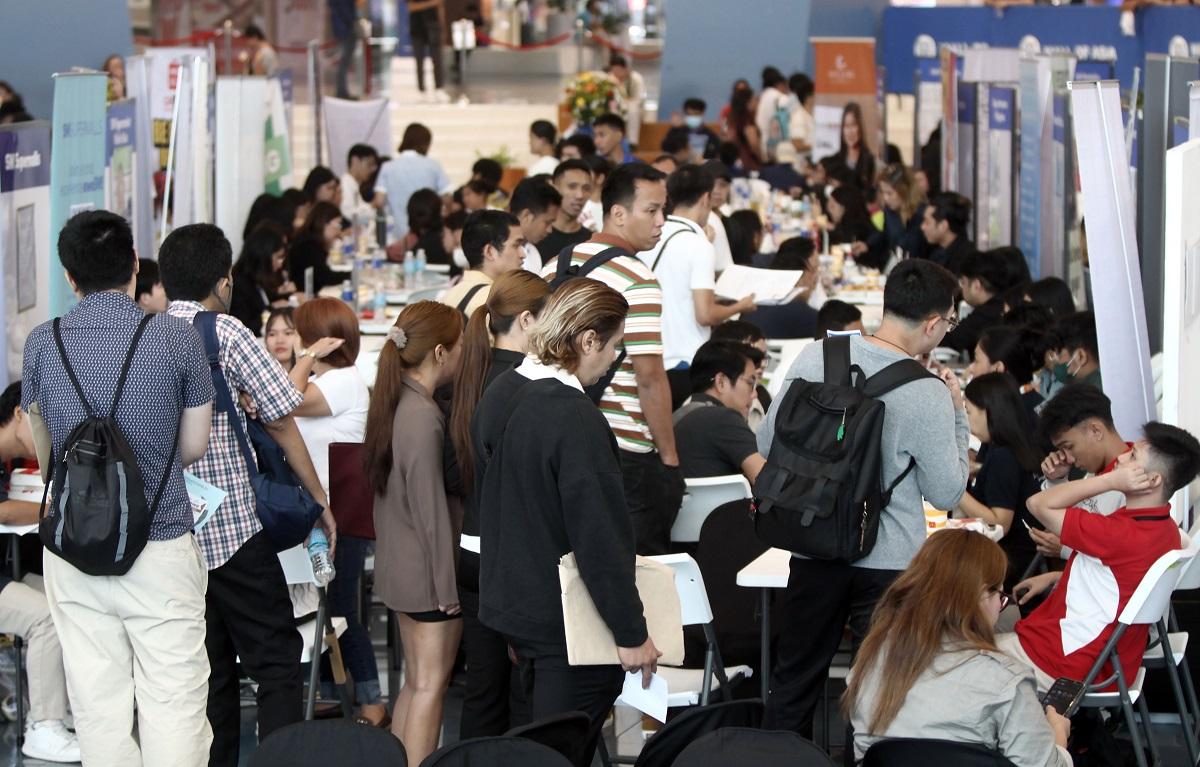
Unemployment in the National Capital Region (NCR) slightly increased to 345,000 in 2025, according to the Philippine Statistics Authority (PSA).
Presenting the latest preliminary results of the Labor Force Survey (LFS) in Manila, PSA-NCR chief statistical specialist Paciano Dizon said this was higher than the 321,000 recorded in 2024, equivalent to a 4.8% unemployment rate.
This means that in 2025, 52 out of every 1,000 individuals in NCR were unemployed, translating to a 5.2% unemployment rate.
The region’s unemployment rate remains higher than the national average of 4.2%, placing NCR among the areas with the highest joblessness, alongside CALABARZON at 5.8%.
Dizon said among the factors contributing to unemployment were job applicants still waiting for employer responses and weather-related disruptions.
“May mga nag-a-apply pero naghihintay ng tawag. Another factor is that in 2025, maraming bagyo ang dumaan, because of bad weather,” he said.
(“There are applicants, but they are still waiting for a response. Another factor is that in 2025, many typhoons occurred, causing more episodes of bad weather.”)
Employment in NCR slightly increased from 6.31 million in 2024 to 6.33 million in 2025.
However, the employment rate slipped to 94.8% from 95.2% in 2024.
More people also joined the labor force, which rose to 6.68 million from 6.63 million in 2024.
Despite this, the labor force participation rate (LFPR) dipped to 63.3% from 63.5% and remained below the national estimate of 64.1%.
Meanwhile, underemployment declined to 384,000 in 2025 from 441,000 in 2024.
The underemployment rate fell to 6.1% from 7.7% in 2024, placing NCR among the regions with the lowest underemployment, alongside the Davao Region and Negros Island Region.
Data by sex, youth
Dizon said the LFPR remained higher among men at 71.7%, compared with 55.3% among women.
However, the employment rate was slightly lower among men at 94.5%, compared with 95.3% among women.
The unemployment rate was higher among men at 5.5%, compared with 4.7% among women.
Underemployment was also higher among men at 6.9%, compared with 5.1% among women.
Among those aged 15 to 24, the youth labor force totaled 617,000, or 27.3%, lower than the 670,000 recorded in 2024.
Of this group, 511,000 or 82.8% were employed or running businesses, down from 570,000 in 2024.
About 106,000 or 17.2% were unemployed, while 35,000 or 6.8% were underemployed, also lower than the previous year.
The Youth Not in Education, Employment, or Training (NEET) accounted for 10% of the youth population, or about 273,000, slightly lower than 278,000 in 2024.
HUCs in NCR
Among NCR cities, Parañaque City posted the highest labor force participation rate (LFPR) at 67.7%, while Malabon City recorded the lowest at 60.5%.
Compared with 2024, Parañaque, Valenzuela, Las Piñas, Muntinlupa, and Pasig posted increases in LFPR.
Pasig City recorded the highest employment rate at 97.6%, while San Juan City posted the lowest at 91.9%.
San Juan also recorded the highest unemployment rate at 8.1%, while Pasig had the lowest at 2.4%.
Muntinlupa posted the highest underemployment rate at 10.9%, while Parañaque recorded the lowest at 2.1%.
Work hours, sectors
Workers who are employed for 40 hours or more accounted for 86.5% of total employment in 2025, unchanged from 2024.
Those working less than 40 hours declined to 12.9% from 13.1%.
Average weekly work hours also slightly decreased to 46.6 hours from 47 hours.
Wage and salary earners made up the largest share of workers at 80.5%, followed by self-employed individuals without employees at 16.8%. Employers in family businesses and unpaid family workers each accounted for 1.6%.
Most workers were employed in private establishments at 83.1%, followed by government and government corporations at 9.5%, and private households at 7%.
Those in own-family operated farms or businesses made up the smallest share at 0.4%.
The services sector remained dominant at 83.4%, followed by industry at 16.3% and agriculture at 0.3%.
Industry, occupation shifts
The top three major industries with the largest increases in employment are:
- Other service activities (31,000)
- Construction (16,000)
- Financial and insurance activities (16,000)
The top three major industries with the largest declines in employment are:
- Public administration and defense; compulsory social security (34,000)
- Wholesale and retail trade; repair of motor vehicles and motorcycles (21,000)
- Administrative and support service activities (12,000)
Occupations with the largest gains included professionals (+31,000), craft and related trades workers (+24,000), and managers (+20,000).
Meanwhile, plant and machine operators and assemblers (–31,000) and clerical support workers (–25,000) recorded the biggest declines.—MCG, GMA News

