

 GMA Brandtalk
 Tracking
 Archives

Nepal flash flood 'unlikely' in PH —weather specialist
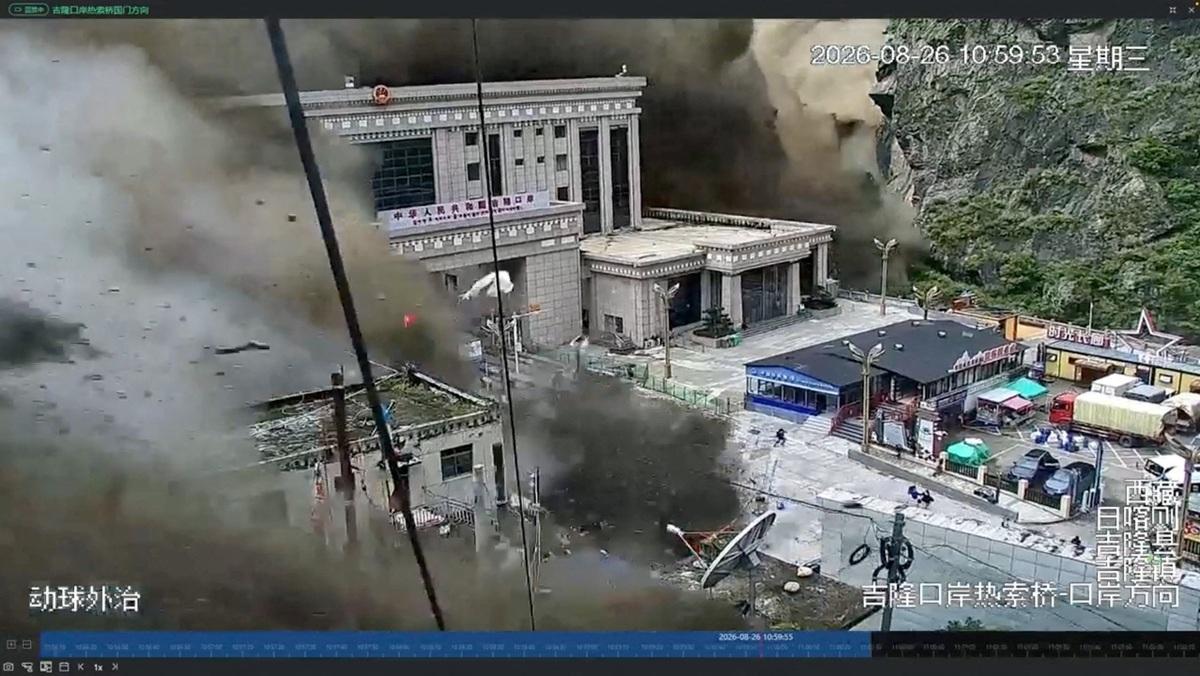
A weather specialist from PAGASA believes that the flash flood that occurred along the Nepal-Tibet border is unlikely to occur in the Philippines.
“Based on ‘yung ating construction ng mga kailugan po sa ngayon is somehow hindi naman ganoon ka-drastic talaga, hindi comparable doon sa nangyari sa may area ng Himalayas kasi sobrang lawak naman po atsaka ang tataas talaga ng mga bundok nila doon,” PAGASA weather specialist Benison Estareja said in an interview on Super Radyo dzBB on Friday.
(Based on the current construction of our rivers, it is somehow not that drastic and is not comparable to what happened in the Himalayan region, which is much more extensive and has much higher mountains.)
“‘Yung potential energy coming from ‘yung pinakamataas papunta sa ibaba, talagang sobra ‘yung impact. Unlike dito na, yes may tendency na talagang dumami ‘yung tubig, pero ‘yung ragasa po hindi naman siya nakikita halos maladelubyo,” he added.
(The potential energy from the highest point moving down to the lower areas has a tremendous impact. Unlike here, where there is a tendency for the volume of water to increase, but we are not really seeing a massive surge that would cause a catastrophe.)
The flash floods and landslides killed at least 165 people and swept away entire villages.
Rivers, dams
When asked about possible landslides from mountains falling into dams, Estareja said that the country has no glaciers.
He also assured that the the government has a warning system in place.
“Kung magkaroon man ng ganoong instance na sobrang lakas ng ulan sa taas and then nagkaroon ng pagkasira ng gates and then nag burst open ‘yung ating mga rivers. At least po meron tayong mga warnings,” he said.
(If such an instance were to occur where there is extremely heavy rainfall in the upper areas, followed by damage to the gates and the rivers suddenly bursting open, at least we have warnings in place.)
According to Maki Pulido’s report on Saksi, though experts are still looking into the cause of the incident, University of the Philippines (UP) Resillience Institute Executive Director Mahar Lagmay said what occured may be a “debris flow.”
“Parang baha pero may laman na mga bato, graba, buhangin na pagka umagos ay parang wet concrete. Debris flow ang tawag diyan. Boulders na tangay-tangay nung baha na more than 50% ang bato,” he said.
(It is like a flood, but it carries rocks, gravel, and sand, and when it flows, it behaves like wet concrete. That is called a debris flow. Boulders are carried along by the flood, with more than 50% of the flow consisting of rocks.)
Lagmay said a debris flow occurred at Compostela Valley in 2012, where more than 500 people died, while several barangays in Oriental Mindoro were burried in 2015 by rocks from a debris flow.
“Marami tayong bundok. Kapag nagkaroon ng landslide because of a storm, thousands of landslides doon sa mountains, meron tayong source material,” he said.
(We have many mountains. When a storm causes landslides, potentially resulting in thousands of landslides in the mountains, we have a source of material.)
He said that the UP Resillience Institute has identified more than 1,000 places that has communities along the river. —Joahna Casilao/ VAL, GMA News

