

 GMA Brandtalk
 Tracking
 Archives

Are K-12 grads ready for work, adult life? DepEd eyes longer OJT
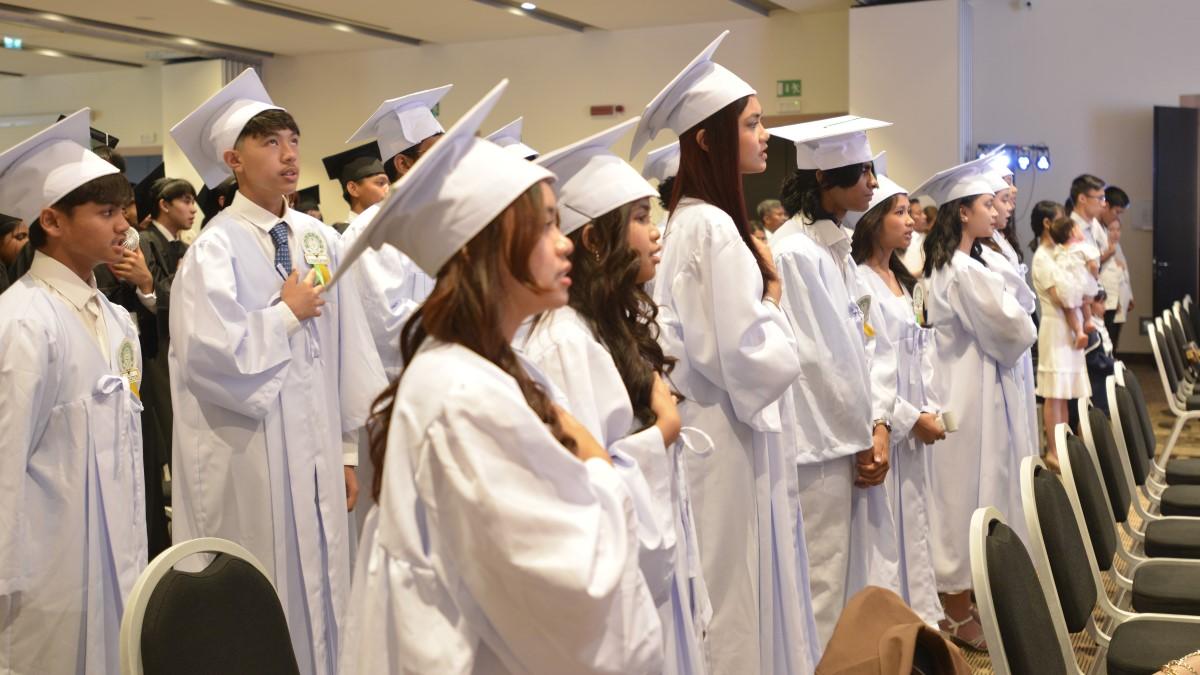
The Department of Education (DepEd) says there is still work to be done, citing feedback from employers who find some senior high school graduates not yet sufficiently prepared for the workplace.
Education Secretary Sonny Angara said DepEd is looking to increase the amount of on-the-job training (OJT) for senior high school students to 640 hours, from the current 80 to 160 hours.
Angara made the statement during the House Committee on Appropriations hearing on DepEd’s proposed 2027 budget after Representative Brian Raymund Yamsuan asked whether K-12 graduates were adequately prepared for adult life.
“Kasi ’yun ang feedback namin from many employers na parang yung attitude ng mga hinahire nilang senior high graduates ay parang hilaw pa at parang hindi sanay sa eight-hour work day yung ating mga graduates.”
(That’s the feedback we’ve received from many employers—that the senior high graduates they hire seem to still be unprepared and are not yet accustomed to an eight-hour workday.)
With this, Angara said one of DepEd’s interventions is to increase the time learners spend in actual workplaces.
“So some of the interventions, aligned also na rin sa instruction ng ating mahal na Pangulo, is to increase the on-the-job training, or the number of hours spent in workplaces," he said.
(So some of the interventions, also aligned with the instruction of our President, are to increase on-the-job training, or the number of hours spent in workplaces.)
“So doon sa mga employers, to any industries to absorb ang learners na po natin, ay ang goal natin is umakyat sa 640 hours of on-the-job training, kumpara doon sa ngayon 80 to 160," Angara added.
(So for employers, for any industries that will absorb our learners, our goal is to increase [the requirement] to 640 hours of on-the-job training, compared with the current 80 to 160.)
Angara noted that some employers already provide as much as 500 hours, but consultations with industry groups showed that employers wanted longer workplace exposure to assess students’ fitness for work and help develop their skills.
He added that longer OJT could also improve graduates’ chances of being hired by the same employers who trained them.
“At ang kagandahan niyan, pag nakilala na ho talaga ng employer, mas malaki na ho yung chance na siya ay ma-hire pagka-graduate niya dahil nag-invest na rin sa training yung employer na nag-employ sa kanya as an on-the-job trainee," he said.
(And the good thing about that is that once the employer really gets to know the student, there is a greater chance that the student will be hired after graduation because the employer has already invested in the training of the person they employed as an on-the-job trainee.)
‘Life skills’ for work, college, entrepreneurship
But DepEd’s response goes beyond workplace exposure. Angara said the curriculum is also being changed to include a new subject on life skills, which he said is intended to prepare students for different paths after senior high school—whether employment, entrepreneurship, or college.
“So it’s not just a purely academic subject, but also anything that we believe would make that person a good employee, or a good entrepreneur, or a good college student, whatever path he chooses to pursue after," he said.
(So it’s not just a purely academic subject, but also anything that we believe would make that person a good employee, a good entrepreneur, or a good college student, whatever path they choose to pursue afterward.)
The subject would include lessons on growth mindset, among other skills that Angara said are not normally taught in the formal curriculum.
He cited a survey of students that, according to him, showed an overwhelming majority did not believe education would make their lives better.
“So wala pong growth mindset sa kanila. So we’re trying to change that because alam naman natin all over the world education is key to a person’s success, di ba?" he said.
(So they don’t have a growth mindset. So we’re trying to change that because we know that all over the world, education is key to a person’s success, right?)
Angara said DepEd also wants to incorporate future skills and some AI-related learning as the workplace continues to change.
“Also a little bit of AI, a little bit of, because that’s the way of the future, a little bit of future skills also, whatever.”
(Also a little bit of AI, because that’s the way of the future, and a little bit of future skills as well.)
He described the curriculum as evolving according to what tomorrow’s workplace will require.
“So it’s a changing curriculum in the sense, or a changing subject, whatever the workplace of tomorrow will demand," he said.
On Monday, DepEd presented a P975.96-billion proposed budget for fiscal year 2027, including allocations for its attached agencies, before the House Committee on Appropriations, according to the department’s press release. It is appealing for an additional P145.19 billion for critical DepEd programs not funded under the 2027 National Expenditure Program.
DepEd’s FY 2027 NEP presentation includes P2.4 billion for 50,337 laptops for teachers, P1.12 billion for internet subscription renewal for 14,261 schools, and P2.25 billion for ICT solutions and capacity building.—LDF, GMA News

