

 GMA Brandtalk
 Tracking
 Archives

From conflict to elections: Bangsamoro's path to self-rule in BARMM
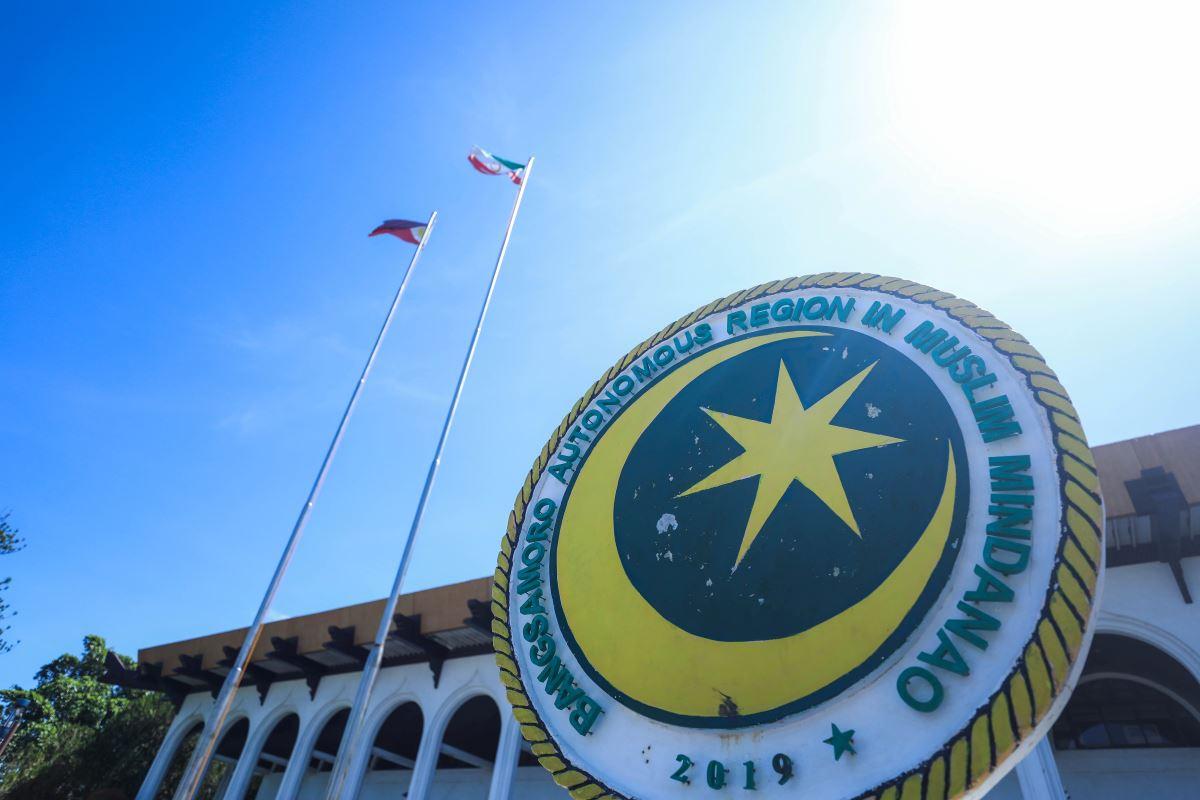
For generations, the story of the Bangsamoro has been shaped by a struggle for self-determination, marked by armed conflict, displacement, peace negotiations, and repeated attempts to establish meaningful autonomy in the southern Philippines.
On September 14, 2026, that long history will enter a new chapter.
The Bangsamoro Autonomous Region in Muslim Mindanao (BARMM) is set to hold its first parliamentary elections, allowing voters to choose the representatives who will form the region’s first elected parliament.
The election marks a major step in the transition from an interim government through the Bangsamoro Transition Authority (BTA) to an elected regional administration.
President Ferdinand “Bongbong” Marcos Jr. described it as the “fruition of an entire peace process that began in 1968, then the Tripoli Agreement, and then the BARMM.”
The elections are also a crucial test of whether the decades of peace efforts can be translated into a stable and democratic self-government.
However, the significance of the election cannot be understood without looking back at the history that led to the establishment of the BARMM.
Decades of struggle
The Bangsamoro homeland has a long history that existed even before the Philippines became an independent country. Muslim communities in Mindanao and the Sulu Archipelago developed their own societies, traditions, systems of leadership, and Islamic identity. They also resisted foreign domination during the Spanish and American periods.
Conflicts and disagreements between the government and various Moro groups continued for decades.
Events such as the Jabidah incident in 1968 contributed to the growth of the Moro struggle for self-determination. The Moro National Liberation Front (MNLF), and later the Moro Islamic Liberation Front (MILF), became important groups in the history of this struggle.
A significant step toward autonomy came in 1989 with the establishment of the Autonomous Region in Muslim Mindanao (ARMM) through Republic Act (RA) 6734.
The ARMM was later strengthened and expanded through RA 9054 in 2001. These laws provided an autonomous government for Muslim-majority areas of Mindanao within the framework of the Philippine Constitution.
On September 2, 1996, the government and the MNLF formally signed a peace agreement that ended a quarter of a century of fratricidal war in Mindanao. It was concluded after four years of tough negotiations held in Libya, Jakarta, Indonesia, and Mindanao.
At the same time, peace talks were ongoing from 1997 to 1999 with the MILF, a breakaway faction of the MNLF. In March 2000, then-president Joseph Estrada declared an all-out war against the group, which prompted it to withdraw from the negotiations.
The talks were formally resumed in 2001 under then-president Gloria Macapagal-Arroyo.
Here’s a timeline of the negotiations with the MILF that paved the way to the establishment of the autonomous region:
March 2001: The government and the MILF signed the Agreement on the General Framework for the Resumption of Peace Talks.
June 2001: The Tripoli Agreement on Peace was signed, with Libya and Malaysia playing important facilitating roles. The agreement centered on security, ancestral domain, and rehabilitation and development.
May 2002: The Joint Communiqué establishing the Ad Hoc Joint Action Group was signed as a form of cooperation against criminal groups in areas associated with the MILF.
2004: Malaysia became more involved with the creation of the International Monitoring Team, which helped oversee the ceasefire and contributed to confidence-building between the government and the MILF.
July 2008: The government and the MILF negotiated a Memorandum of Agreement on Ancestral Domain (MOA-AD) in July 2008. It was supposed to be signed on August 5, 2008, in Kuala Lumpur. However, the Supreme Court issued a temporary restraining order on August 4, 2008, preventing the signing. Violence subsequently erupted involving MILF breakaway elements, which displaced thousands.
July 2009: The government and the MILF agreed to mechanisms for suspending military operations.
June 2010: The government and MILF signed the Declaration of Continuity for the Peace Negotiations ahead of the takeover of the Aquino administration.
October 2012: The government and the MILF signed the Framework Agreement on the Bangsamoro, which set the foundation for creating a new autonomous political entity called the Bangsamoro.
March 2014: The government and the MILF signed the Comprehensive Agreement on the Bangsamoro, described as the culmination of years of negotiations between the two sides.
July 2018: Republic Act 11054, or the Organic Law for the Bangsamoro Autonomous Region in Muslim Mindanao (Bangsamoro Organic Law or BOL), was signed by then President Rodrigo Duterte. The law created the legal framework for the BARMM, replacing the ARMM. It aims to provide the Bangsamoro with a greater degree of self-government while still remaining part of the Philippines.
January 2019: The BOL was ratified through a plebiscite. A second plebiscite was held in February 2019. These enabled the establishment of the BARMM.
The BARMM currently consists of the provinces of Basilan (excluding Isabela City), Lanao del Sur, Maguindanao del Norte, Maguindanao del Sur, and Tawi-Tawi; the cities of Cotabato, Marawi, and Lamitan; and eight municipalities in North Cotabato that voted for inclusion in 2019.
Sulu, although originally included in BARMM after the 2019 plebiscite, was excluded following a 2024 Supreme Court ruling because the province voted against ratifying the Bangsamoro Organic Law.
Commemorating the seventh year of the BARMM's establishment in January 2026, Interim Chief Minister Abdulraof Macacua said the region is solid in moving toward a single direction.
“Seven years ago, BARMM was born not out of comfort but from conviction. It grows from a long and difficult history in which we endured conflict, displacement, and neglect. Yet, we never surrender our faith, our dignity, and our right to decide our own future,” said Macacua.
“BARMM today stands as a symbol of unity. We came from different paths and perspectives, yet we learned that no institution can stand, and no progress can last, if we work against one another,” he added. —LDF, GMA News

