

 GMA Brandtalk
 Tracking
 Archives

Rodrigo Duterte defense team decries huge evidence, asks ICC to order a cap
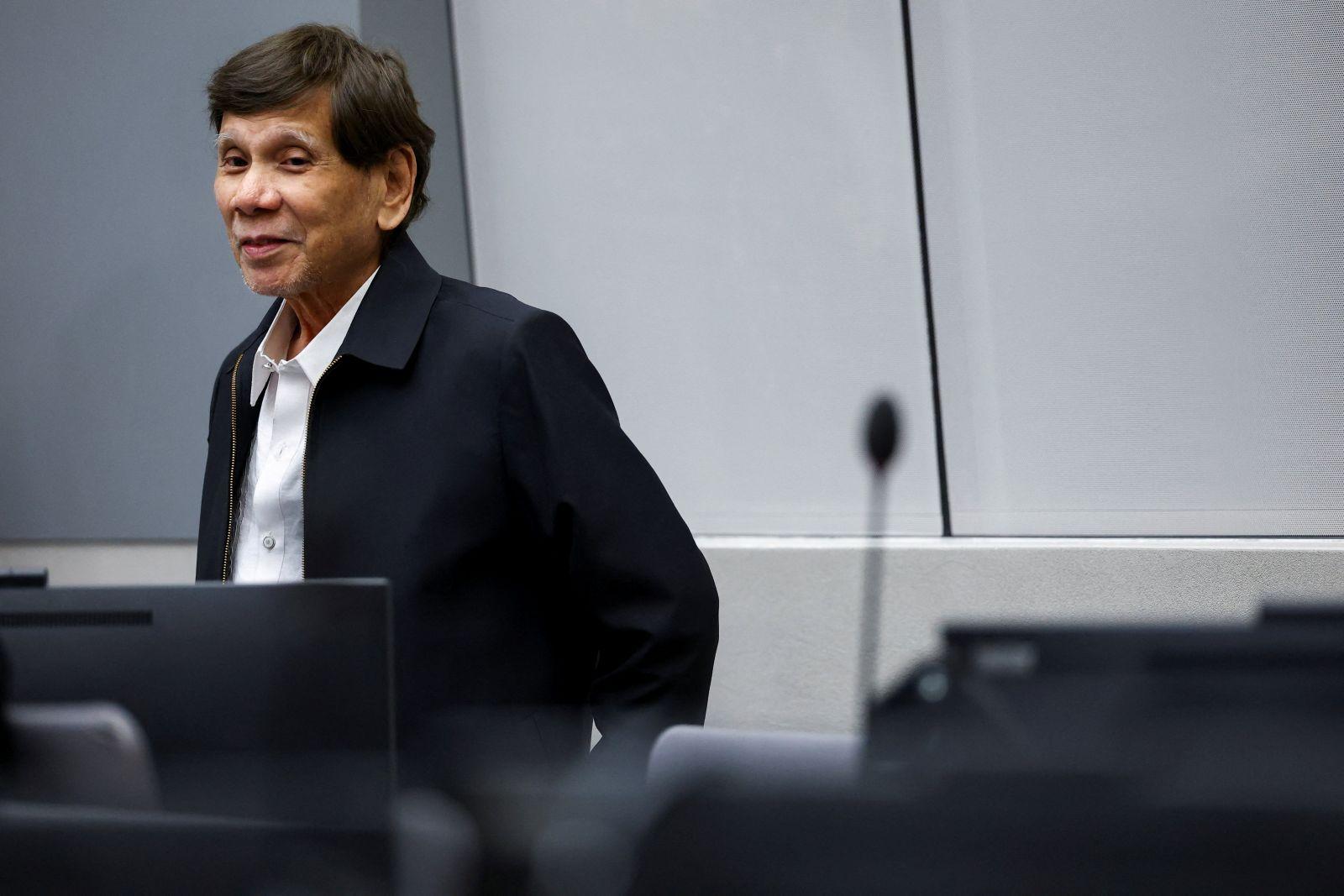
The defense team of former president Rodrigo Duterte has asked the International Criminal Court (ICC) Trial Chamber to order the prosecution to limit the number of evidence in the case as this has ballooned by almost 1,000%.
Defense counsel Peter Haynes filed a motion on Friday, September 25, asking the Trial Chamber to limit the evidence to 10,000 items by October 7 at the latest.
"The Prosecution disclosed 5,275 items of evidence in the confirmation phase. Having heard the Trial Chamber’s request for a tight case record, it then chose to expand this to 62,130 items at the time of writing, being a 978% increase. The Prosecution’s 'massive' List of Evidence currently comprises 19,238 of those items. The Defence has no ability to read this volume of evidence prior to trial. However, even a cursory review demonstrates that much of the disclosed material is of extremely limited or no relevance to the charges in this case," Hanes said.
"The sheer volume of material, disclosed to the Defence three months before the start of trial, undermines Mr Duterte’s right to adequate time for the preparation of his defence pursuant to Article 67(1)(b). Even if the Prosecution were to condense its List of Evidence in advance of the next Status Conference, as suggested by the Chamber, the Defence must still review all 62,130 items disclosed to it, totalling over 320,000 pages of documents and 1,000 items of audio-visual material, in order to prepare for trial. On a conservative estimate of three minutes per page, it would take 16,000 person hours to review every disclosed item of documentary evidence just once," he added.
Haynes also said the quality of the added evidence is "abysmal."
"The Defence has raised systematic and persistent disclosure problems with the Prosecution. These include: tens of thousands of documents with incorrect descriptions, dates and other metadata; thousands of ‘floating’ pages that are detached from the remainder of the documents to which they belong; hundreds of illegible or blank items; thousands of duplicates or repetitive items; hundreds of untranslated and/or untranscribed audio and video files, and material disclosed in unreadable formats. Proceeding to trial on this basis would undermine the efficiency of proceedings and, by consequence, Mr Duterte’s right to trial without undue delay." he said.
"In ordinary circumstances, the obvious remedy would be to vacate the start date of trial to allow the Defence adequate time to review the full record of disclosure and prepare for trial. Herein, the Defence proposes an alternative solution, which is for the Trial Chamber to order the Prosecution to triage and properly organise the documents in its possession and migrate relevant items to a new case record containing all exculpatory evidence and duly-triaged Rule 77 and incriminating evidence, with a maximum number of items that would be manageable within the constraints of these proceedings. This is the only way in which the start date for trial proceedings of 30 November 2026 could fairly be maintained," he added.
Haynes noted that the deadline for the defense team to file its pre-trial brief is October 30, while the start of the trial is on November 30.
"The remedy of a new, reduced case record is not without prejudice to the Defence, which was entitled to receive an organised disclosure of relevant evidence by 31 August 2026, two months prior to filing its brief on 30 October 2026. Even if the remedy suggested herein were adopted, the Defence would only receive the Prosecution disclosure weeks before this date. However, on balance, and given the impenetrability of the current record and the impossibility of meaningful trial preparation, a manageable case record outweighs the prejudice which arises from a truncated disclosure timetable," he said.
"For this reason, the Defence requests the Trial Chamber to: ORDER the Prosecution to liaise with the Registry to create a new case record in these proceedings, to which the Prosecution should migrate all exculpatory evidence, and duly-reviewed and triaged Rule 77 and incriminating evidence, up to an absolute maximum of 10,000 items, by 7 October 2026 at the latest," Haynes added.
Duterte is facing charges of crimes against humanity in connection with the killings in his war on drugs when he was mayor of Davao City and when he was President.
Earlier this month, the ICC Trial Chamber III unanimously decided to keep Duterte detained as it found a likelihood of the former president “absconding and/or obstructing or endangering the investigation or the court proceedings.” —KG, GMA News

