
 GMA Brandtalk
 Tracking
 Archives


DFA summons Chinese Ambassador Jing Quan over remarks
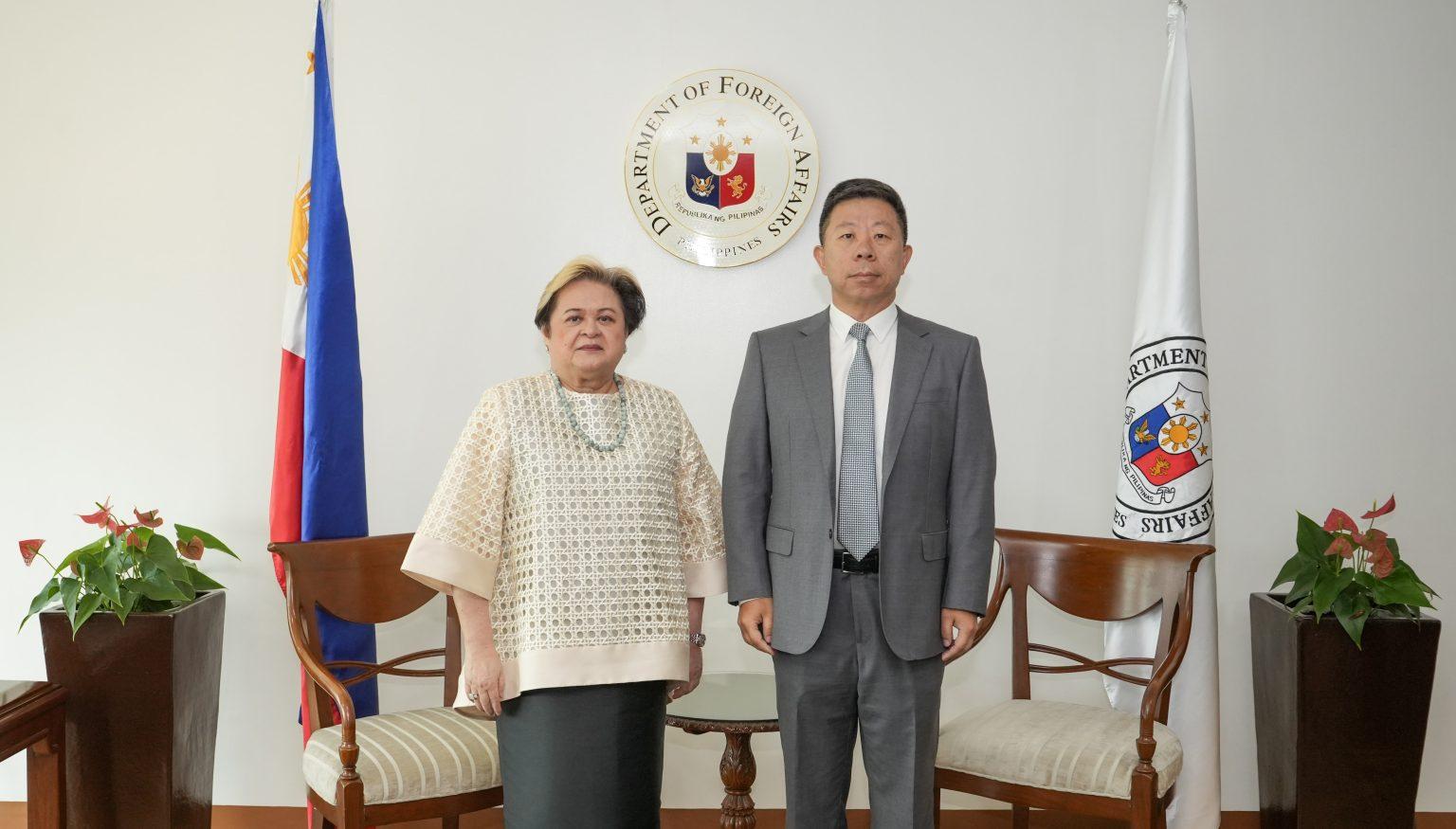
The Department of Foreign Affairs (DFA) on Monday summoned Chinese Ambassador Jing Quan to convey the Philippine's "serious concern and strong objection" to his recent remarks.
"Secretary [Theresa] Lazaro told the Ambassador that the statement was provocative and unacceptable, and does not contribute to creating understanding. She stressed that such language aggravates an already sensitive bilateral atmosphere and undermines the shared efforts of both countries to build mutual understanding and cooperation," DFA said in a statement.
"It is not the place of a foreign mission to publicly criticize or taunt Philippine officials and legislators who are acting within their mandates. As a democracy, the Philippines values freedom of expression and a plurality of voices, and it will not accept attempts by a foreign envoy to intimidate those who exercise them," it added.
Jing Quan earlier claimed that China would "easily win" if it resorts to force in the West Philippine Sea.
On Saturday, the Chinese Embassy released a statement amid talks of possibly declaring Jing Quan persona non grata after his remarks were perceived by some lawmakers as “threats” against the Philippines.
"Some senators and house representatives are talking about declaring the Chinese ambassador persona non grata. Is this threat or coercion?" the Chinese Embassy said in a social media post.
"But anyway, just do it. Otherwise, STOP BLUFFING," it added.
Lazaro noted that sensitive issues are best addressed through established diplomatic channels and bilateral mechanisms that provide space for dialogue and engagement.
"The Department remains committed to candid dialogue and constructive engagement, in line with its mandate and the direction of the President," DFA said.
"It will keep open lines of communication with China and work to stabilize bilateral relations, especially in non-sensitive areas, while firmly upholding the country's consistent positions on important issues," it added.
Meanwhile, Palace Press Officer Undersecretary Claire Castro declined to give a stance on whether the Palace agrees with the calls to declare Jing a persona non grata, adding that the President will leave the handling of the matter to the Foreign Affairs Department.
“Ang patungkol sa mga mensahe ngayon ng kinatawan ng bansang Tsina sa ating bansa at ibang mga salita na sa tingin ng Pangulo ay maaaring hindi na diplomatiko—ang ganitong usapin ay ipapaubaya natin sa DFA.” Castro said.
(Regarding the recent messages from China's representative to our country and other words that the President feels may no longer be diplomatic—we will leave such matters to the DFA.)
“Sila naman ay ang mandato naman nila ay makipag-ugnayan sa liderato ng ibang bansa upang kung meron mang gusto or anumang issue ay matugunan, again, in a diplomatic manner,” she added.
(After all, their mandate is to coordinate with the leadership of other countries so that any desired outcome or issue can be addressed, again, in a diplomatic manner.)
The Palace noted that the President would not favor declaring any foreign leader persona non grata, adding that he respects the opinions of Philippine leaders and will not act in an undiplomatic manner.
“Hindi rin nais ng Pangulo itong mga pangyayaring palitan ng mga maaanghang na salita. Nais ng Pangulo, again, maganda na relasyon,” Castro added.
(The President also does not want these exchanges of harsh words. The President wants, again, good relations.)
Earlier this year, President Ferdinand Marcos Jr. had rejected calls to declare Jing persona non grata amid calls from legislators to expel some Chinese embassy officials over the West Philippine Sea row.
PH-China relations
Malacañang said that in the view of the President and the administration, relations between the Philippines and China remain good.
“Nananatiling maayos sa mata ng Pangulo, sa mata ng administrasyon. At kung meron mang isyung ganito, hayaan natin po ang DFA na tumugon kung ano ang dapat na hakbang para mas maging maayos pa ang pakikipag-usap sa bansang China,” Castro said.
(It remains good in the eyes of the President, in the eyes of the administration. And if there are issues like this, let us allow the DFA to respond with the appropriate steps to foster better dialogue with China.)
The Palace said that at present, the administration is focusing on three things: maintaining diplomacy, asserting territorial rights and interests in the West Philippine Sea without aggression, and investigating reported institutions allegedly funded by foreign countries.
Tensions continue as Beijing claims almost all of the South China Sea, a conduit for more than $3 trillion of annual shipborne commerce, including parts claimed by the Philippines, Vietnam, Indonesia, Malaysia, and Brunei.
The West Philippine Sea refers to the maritime areas on the western side of the Philippine archipelago, including the Luzon Sea and the waters around, within, and adjacent to the Kalayaan Island Group and Bajo de Masinloc.
In 2016, the Permanent Court of Arbitration in The Hague ruled in favor of the Philippines over China's claims in the South China Sea, saying that it had "no legal basis," but China has refused to recognize the decision. — with a report from Lyjah Tiffany Bonzo/RSJ/AOL, GMA News

