

 GMA Brandtalk
 Tracking
 Archives


SC strikes down 2024, 2025 budgets, sets limits for unprogrammed appropriations
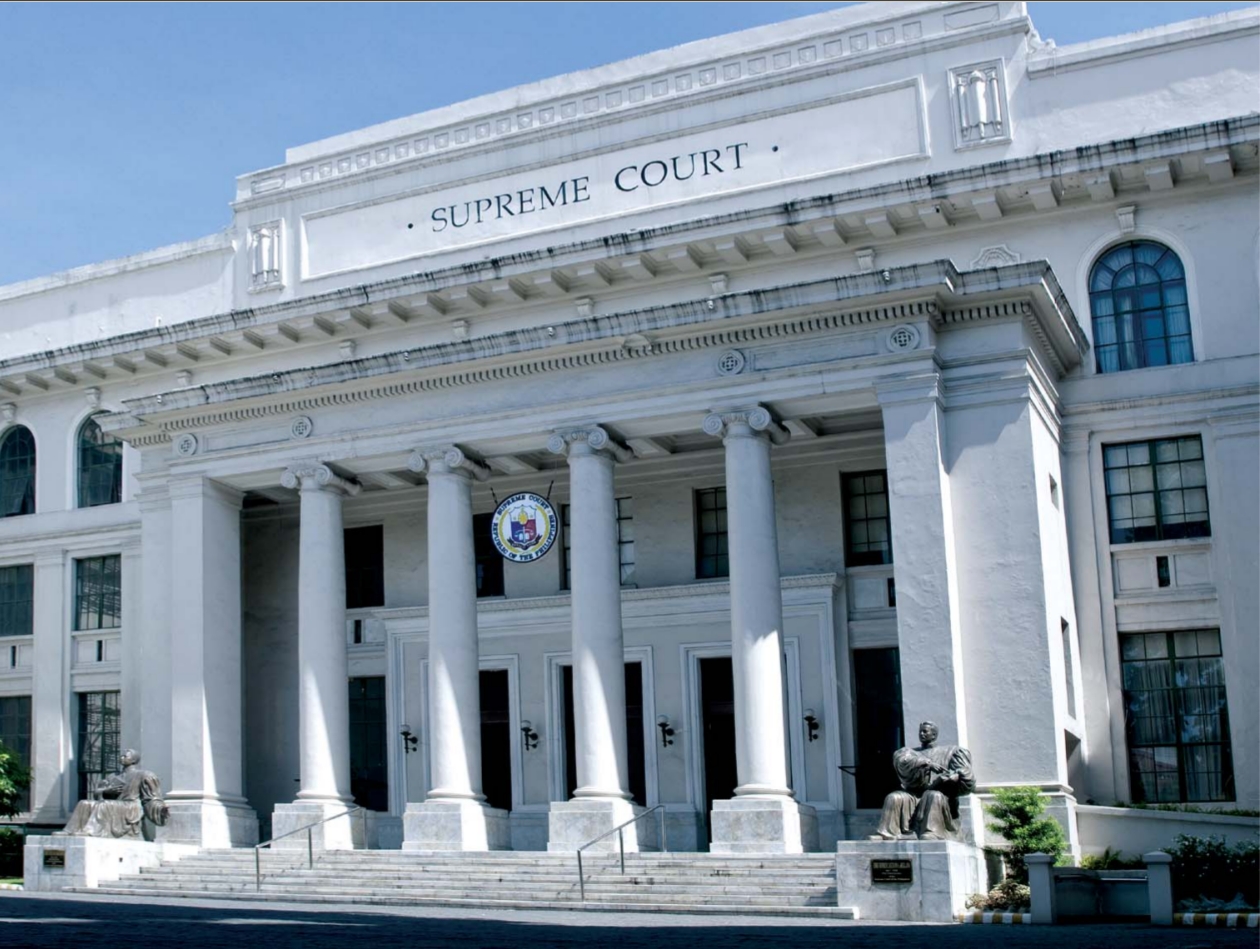
The Supreme Court (SC) has declared as unconstitutional the General Appropriations Acts (GAAs) for 2024 and 2025 due to budget increases made by Congress, as well as provisions allowing unprogrammed appropriations in the 2026 budget, the high tribunal said Tuesday.
In a statement, the SC said the 2024 budget was voided due to P449.5-billion increase in unprogrammed appropriations, while the 2025 GAA was likewise struck down because of the additional P17.99 billion for the Special Road Fund of the Department of Public Works and Highways (DPWH). Both of these adjustments resulted in an increase in the president’s total recommended appropriations, the SC said.
As for the 2026 GAA, the high court deemed as unconstitutional Special Provisions 1(a) and (b), Chapter XLIII authorizing unprogrammed appropriations. It then set conditions that would allow the such appropriations to be constitutional.
Penned by Senior Associate Justice Marvic Leonen, the SC En Banc granted the petition of the late congressman Edcel Lagman, and partly granted the petition of former senator Aquilino "Koko" Pimentel III and others challenging the P449.5-billion increase in unprogrammed appropriations made by Congress in the 2024 budget.
"It declared unconstitutional Republic Act (RA) 11975 or the 2024 GAA because the total appropriations were effectively increased by P449.5 billion," the SC statement read.
For the 2025 GAA, also known as Republic Act 12116, the SC granted the petition by the Filipinos for Peace, Justice and Progress Movement, Inc. and others questioning the increase to the DPWH Special Road Fund.
The SC statement also said the P12.75-billion increase to certain agencies' Special Accounts in the General Fund (SAGF) violated provisions of the the Administrative Code, which prohibits increasing amounts in special provisions beyond those proposed by the President.
Limits, safeguards needed
The high court's decision in relation to the 2026 budget came with the partial granting of the petition of Representatives Edgar Erice and Leila de Lima challenging the constitutionality of Chapter XLIII of the 2026 GAA, which authorizes unprogrammed appropriations.
"The SC ruled that Unprogrammed Appropriations are not unconstitutional per se. However, this budgetary item needs clear limits and safeguards to preserve fiscal discipline, transparency, and accountability. They become constitutionally infirm when they lack sufficient standards, effectively granting the Executive unchecked spending authority that weakens fiscal discipline and undermines funding for programmed projects when estimated government revenues are not realized," the statement read.
In its discussion of the 2024 budget, the SC said the unprogrammed appropriations were made by the Bicameral Conference Committee through transfers of Programs, Activities, and Projects from programmed to unprogrammed and significant increases in the allocation for Strengthening Assistance for Government Infrastructure and Social Programs (SAGIP) and Support to Foreign Assisted Projects.
The Court emphasized that the SAGIP budget item in the 2024 and 2025 unprogrammed funds is an illegal lump-sum allocation, as it gives the Executive branch post-enactment identification/allocative powers, which are constitutionally vested in Congress.
As the SC noted, this became a "covert repository of lump sum allocations for DPWH infrastructure like flood control projects."
"Congress severely distorted the budget creating artificial fiscal space in the programmed appropriations," the SC statement said, which paved the way for increases in allocations for basic infrastructure programs (BIP) of the Department of Public Works and Highways, Sustainable Infrastructure Projects Alleviating Gap (SIPAG), the Department of Health's medical assistance to indigents, Ayuda sa Kapos ang Kita Program (AKAP) of the Department of Social Welfare and Development, and the Tulong Panghanapbuhay sa Ating Disadvantaged or Displaced Workers Program (TUPAD) of the Department of Labor and Employment (DOLE).
Constitutionality of unprogrammed allocations
Finally, the Court deemed that the Special Provisions 1(a) and (b) of Chapter XLIII in the 2026 GAA unconstitutional for granting unchecked executive spending authority, violating constitutional limits on total appropriation, noting that they were “overly broad, lacked prioritization standards, and partly functioned as prohibited lump sum appropriations.”
The Court set the following conditions that must be complied with so unprogrammed allocations may deemed constitutional:
- In no case shall there be lump sums in Unprogrammed Appropriations.
- As part of Congress’s legislative oversight, and given the distinction between spending for the deficit and spending through unprogrammed appropriations, the conditions for the use of new income, as well as additional earnings of the Government from non-tax revenue sources, should be clearly differentiated between programmed and unprogrammed expenditures, with Congress presumptively using these new funds for programmed expenditures, except when there are clear and convincing reasons, such as foreign assisted projects, for including them under Unprogrammed Appropriations.
- Congress should prescribe sufficient standards in terms of prioritization for spending when there is more than one purpose under the Unprogrammed Appropriations.
- The provision for Unprogrammed Appropriations should be within the national fiscal program established in the Budget and consistent with its nature as a narrow contingent appropriation.
No Bicam records
The Court emphasized that the Bicameral Conference Committee only has the power to resolve actual differences between the House and Senate versions of a bill.
It noted that there were no records of the Committee's discussions, and its report "did not explain the increases and decreases in budget items, in violation of the Rules of the House and the Senate. Neither did the Committee submit any documents supporting the changes in the budget."
"The SC permanently prohibited the Senate, House of Representatives, Office of the Executive Secretary, and the Department of Budget and Management Acting Secretary from implementing Special Provision 1(a) and (b), Chapter XLIII of the 2026 GAA," the SC said.
"As to the 2024 and 2025 GAA, the SC held that the doctrine of operative fact applies. However, the doctrine covers only irreversible programs whose beneficiaries acted in good faith. It does not shield authors, proponents, or implementors from criminal, civil, or administrative liability unless the proper tribunals explicitly find that they acted in good faith," it added. — VDV, GMA News

