

 GMA Brandtalk
 Tracking
 Archives


Next UN chief must prove that global cooperation works, says DFA
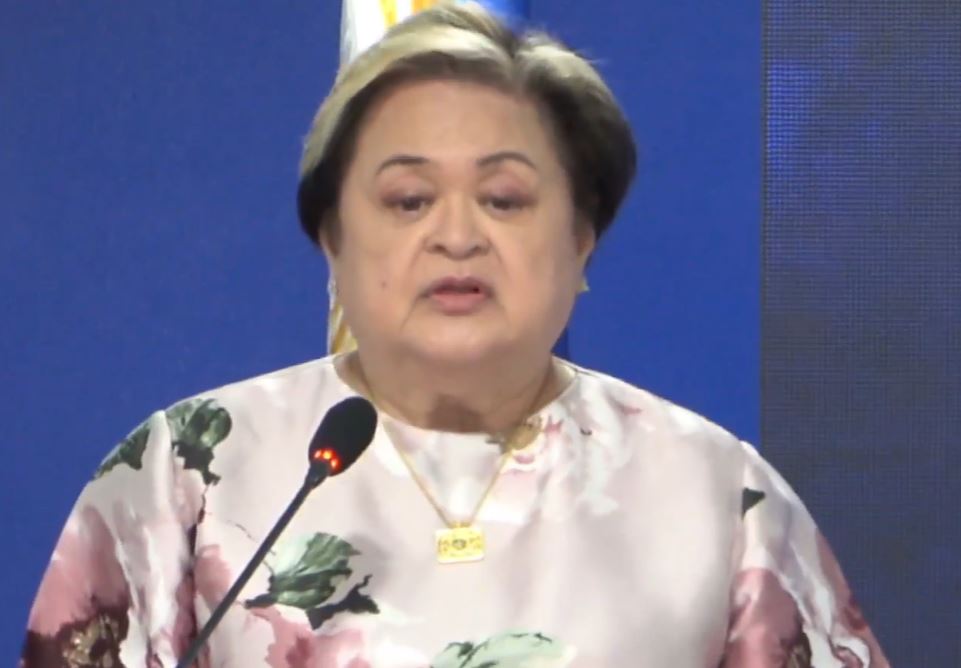
The Department of Foreign Affairs (DFA) on Wednesday said that the next United Nations (UN) Secretary-General must prove that international cooperation still works amid rising geopolitical tensions.
DFA Secretary Ma. Theresa Lazaro said that the UN was founded on a simple and powerful promise: that every nation, regardless of its size and strength, had a voice.
“The next Secretary General must do more than lead an institution. The next Secretary General must help restore faith in multilateralism itself, bridging divisions, defending the UN Charter and demonstrating that international cooperation could still deliver meaningful results,” Lazaro said in the DFA’s commemoration of United Nations Day, which falls on October 24.
“It is our hope to call upon the United Nations to renew its purpose, restore confidence in its institutions and uphold the principles upon which it was founded,” she said.
A new UN Secretary-General will be selected in the remaining months of 2026 and will assume office in 2027, replacing António Guterres of Portugal, whose second five-year term ends on December 31, 2026.
UN Resident Coordinator in the Philippines Arnaud Peral stressed that the next Secretary-General must have the confidence and support of member states to effectively carry out the organization’s mandate.
“In such a complex world, effective collective action requires a Secretary-General empowered to convene, to mediate, and speak with independence,” Peral said.
He also emphasized the importance of collective action among UN member states in addressing global challenges, including armed conflicts, climate change, and sustainable development.
West Philippine Sea
Lazaro also underscored the importance of a strong and effective United Nations for countries like the Philippines, particularly amid the ongoing maritime dispute with China in the West Philippine Sea.
“For the Philippines, the stakes are particularly high. As a nation that has long championed international law in the East and South China Sea, we know that a strong United Nations is not merely desirable; it is indispensable, especially for nations whose security rests not on power but on principle,” she said.
Her remarks comes amidst the Philippines’ continuing efforts to defend its sovereign rights in the West Philippine Sea, as China maintains its sweeping claims over nearly the entire South China Sea despite the 2016 Arbitral Ruling, which invalidated Beijing’s historic rights claims exceeding its maritime entitlements under the United Nations Convention on the Law of the Sea.
China continues to reject the ruling, which is legally binding on both countries.
The statement also comes amid escalating diplomatic tensions, with the Chinese Embassy in Manila issuing strongly worded statements against Philippine officials and lawmakers, describing some as “anti-China politicians” and referring to what it calls “anti-China forces.”
Turning point
Lazaro said the UN stands at a turning point amid geopolitical tensions and challenges to international law.
The very principles of the UN were also being tested, as well as the world’s confidence in its ability to implement them.
“The question is no longer simply whether the United Nations remains relevant, it's whether it can remain effective in a world that increasingly questions the value of multilateralism itself. This is what makes the selection of the next UN Secretary General so consequential,” Lazaro said.
She emphasized that the global organization's next leader must restore international confidence in multilateralism and demonstrate the organization’s ability to uphold peace, justice, and international law.
“The next Secretary-General must do more than lead the institution. The next Secretary-General must help restore faith in multilateralism itself by bridging divisions, defending the UN Charter, and demonstrating that international cooperation can still deliver meaningful results,” she added.
Lazaro said that the Philippines had a high stake in the UN, as it has long championed peaceful resolutions to international disputes.
“We know that a strong United Nations is not merely desirable; it is indispensable. Especially for nations whose security rests not on power, but on principle,” Lazaro said.
The DFA’s commemoration also saw a panel discussion which included Kabataan Partylist Renee Co, The Straits Times journalist Mara Cepeda and People’s Budget Coalition organizer Kenneth Abante.
Various diplomats were also in attendance. — LDF/BM, GMA News

