

 GMA Brandtalk
 Tracking
 Archives


JSCC, Ombudsman team up to intensify fight vs. corruption
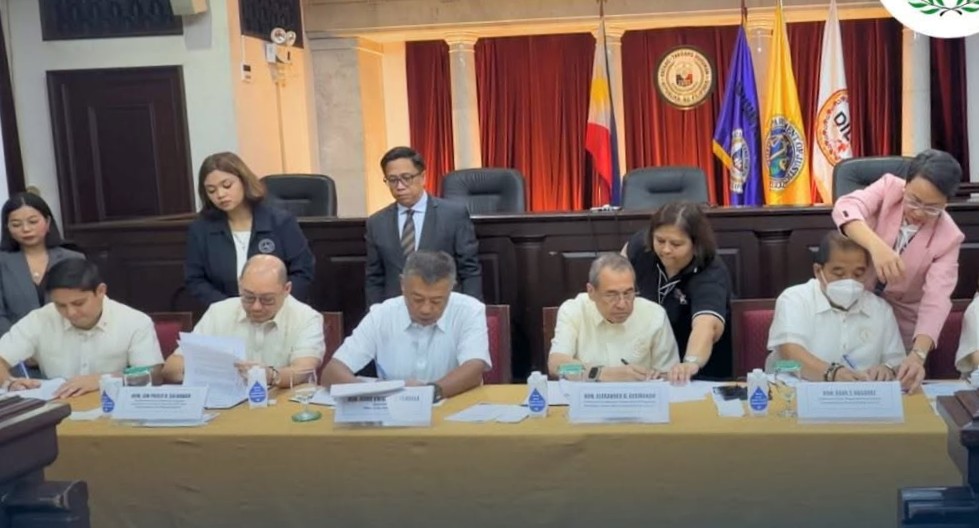
The Justice Sector Coordinating Council (JSCC) and the Office of the Ombudsman on Monday signed a memorandum of understanding (MOU) to strengthen interagency cooperation and address systemic delays in the fight against corruption.
The MOU was signed by Supreme Court Chief Justice Alexander Gesmundo, Ombudsman Jesus Crispin Remulla, SC Associate Justice Maria Filomena Singh and Justice Undersecretary Raul Vasquez.
In a speech, Gesmundo said the partnership would strengthen the justice system’s collective efforts to fight corruption by aligning the Ombudsman’s mandate with those of other justice sector agencies.
“We now enter a new phase, one that brings the fight against corruption more deliberately into our collective efforts to strengthen the criminal justice system,” he said.
“That is why our partnership with the Ombudsman is groundbreaking. The Ombudsman’s constitutional mandate to investigate and prosecute erring public officers complements the respective mandates of the JSCC agencies,” Gesmundo added.
The JSCC is composed of the Supreme Court (SC), the Department of Justice (DOJ) and the Department of the Interior and Local Government (DILG).
According to Gesmundo, the agreement commits the parties to closer coordination, responsible information-sharing, policy development, capacity-building and efforts to address corruption-related cases and systemic challenges.
Meanwhile, Singh stressed that reforming the justice system requires collective action.
“No man or woman can change the system alone,” she said.
“Anyone who promises our people that he can change the system on his own is lying. He will fail. Because it takes an entire sector. And that is why we have the JSCC,” she added.
Remulla said his office sought to join the council's coordination mechanism as an active and contributing partner rather than merely as an observer.
Through the partnership, the Ombudsman sees opportunities to strengthen corruption prevention, address bottlenecks in corruption-related cases, improve secure information-sharing and digital systems, and build institutional capabilities to combat increasingly sophisticated forms of corruption, he said.
“Let me also be clear that cooperation does not diminish institutional independence. The Office of the Ombudsman will continue to exercise its constitutional mandate independently, just as every member of the JSCC must discharge its responsibilities,” Remulla said.
“Institutional independence and meaningful cooperation are not contradictory. They reinforce each other,” he added.—MCG, GMA News
Follow GMA News Online on Facebook for real-time news and developments in the Philippines and around the world.

