

 GMA Brandtalk
 Tracking
 Archives


Bill filed establishing ecozone for Pax Silica ops, other critical industries
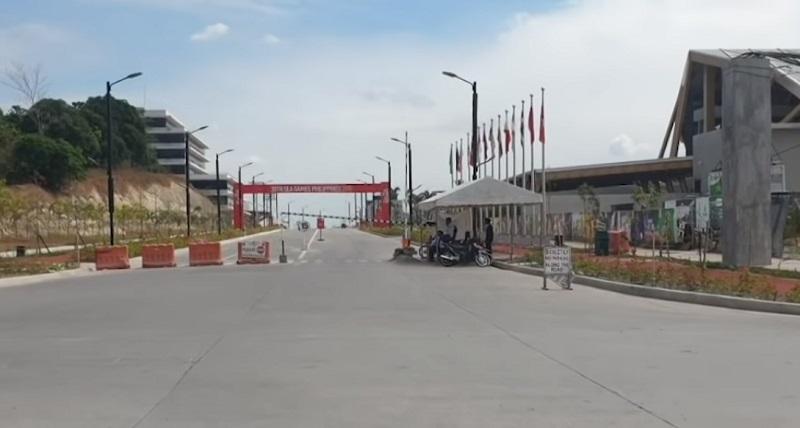
The House of Representatives has proposed establishing an Advanced Industries Zone in New Clark City, Capas, Tarlac, saying it will create jobs and attract investments, including those from the US-led Pax Silica initiative, which involves developing artificial intelligence (AI) systems, critical minerals, and more.
The National Union Party (NUP), led by House Deputy Speaker Ronnie Puno of Antipolo and Bataan Rep. Albert Garcia, made the proposal under House Bill 11758, or the Advanced Industries Development Act (AIDA).
The bill provides that the Advanced Industries Zone will serve as “the country's national platform for strategic technology, advanced manufacturing, and innovation, under a dedicated authority empowered to attract investment and deliver government services efficiently.”
In return for competitive incentives, the bill states that enterprises or locators in the Advanced Industries Zone must create jobs for Filipinos, train Filipino workers, and transfer skills and know-how, so that Filipinos will not only assemble these technologies but ultimately design, build, and manage them later on.
The lawmakers noted that although the Philippines joined the US-led Pax Silica coalition in April 2026 alongside more than 20 other countries to build secure and resilient supply chains for AI technologies, membership alone would not guarantee investments without a clear, institutionalized legal framework that ensures policy continuity beyond the terms of incumbent public officials.
“The 1987 Constitution commands the State to give priority to science and technology and to pursue the industrialization and full employment of the nation. Today, the global technology supply chain is being redrawn, and the decisions being made now will shape where factories, research centers, and high-paying jobs will be located for a generation. Membership in Pax Silica opens the door, but it does not guarantee that the investments will come to us,” the bill read.
“Investors of this magnitude do not commit on promises alone. They look for clear rules, efficient government, and the assurance that the terms they rely on will not change with every administration. Our communities, in turn, deserve the assurance that growth will respect their rights and benefit their families. Only a law passed by Congress can provide both,” the bill added.
The bill sets a minimum investment of P15 billion per locator or qualified enterprise, exclusive of the value of the land.
The AIDA will have the authority to adjust the foregoing amount to reflect the cumulative change in the Consumer Price Index as published by the Philippine Statistics Authority every five years.
Further, it states that no adjustment will reduce the amount below that first prescribed, and no adjustment will affect a project already registered.
An expansion of the registered project of a qualified enterprise involving an additional investment capital of at least P5 billion exclusive of the value of the land may also be registered as a separate registered project but will only be entitled to limited incentives.
A qualified enterprise shall be entitled to the following incentives:
- income tax holiday for seven years from the start of commercial operations of the registered project, but not later than three years from the date of its Certificate of Registration
- a qualified enterprise can avail of either the Special Corporate Income Tax (SCIT) or the Enhanced Deductions Regime for a period not exceeding 20 years upon expiration of the income tax holiday, provided that the aggregate period of availment under subsections will in no case exceed 20 years from the date of the Certificate of Registration of the registered project
- special corporate income tax equivalent to 5 percent of a locator’s gross income earned from the registered project, instead of all national and local taxes, fees, and charges, except real property tax on land, provided, that customs duties and the value-added tax on importation, among others.
Goods brought into the Advance Industries Zone from a foreign country will be subject to customs duties, value-added tax, excise tax, or other national internal revenue taxes upon entry, and will not be deemed imported into the Philippines for so long as they remain within the Zone.
The bill allows such goods to be stored, warehoused, broken up, repacked, assembled, sorted, graded, cleaned, mixed with foreign or domestic goods, processed, manufactured, tested, refurbished, or otherwise manipulated within the Advance Industries Zone without the payment of duties and taxes, and may be exported directly from the Advance Industries Zone free of duties and taxes.
This treatment, however, will only cover goods admitted for storage, processing, manufacturing, testing, research, or use in the operations of a locator or qualified enterprise.
“This is the most meaningful piece of legislation that I think impacts the future of our country that resolves many of the doubts and problems that we face today. If we push this [for passage into law] with all the vigor that we have, we can look forward to a better generation of Filipinos who will live better and be happier,” Puno said.
Garcia said the Philippines has long had the potential of being a manufacturing hub since the first economic zone was established in Mariveles, Bataan in the 70s.
This resurgence, Garcia said, was not sustained due to a lack of permanent policy on such initiatives.
“A lot of big companies, global companies [were] located in Mariveles. There’s Ford, Mattel, which makes Barbie dolls, United Apparel, among others. It created thousands of jobs. In fact, it resulted in migration to Mariveles; that is why we have Ilocano, Bisaya community, even up to now, in Mariveles,” Garcia said.
Likewise, Puno and Camarines Sur Rep. Migz Villafuerte addressed the concerns raised by the indigenous people that the Pax Silica initiative will displace them from their ancestral domain.
“On the matter of the displaced original residents of those areas, we recognize that it's something we have to deal with properly. We recognize that it is a reality that cannot be avoided. And I'm pretty sure that it will get the attention that it deserves. We will stay away from those areas as best we can,” Puno said.
“Hindi tayo mangwawalanghiya ng tao rito,” Puno added. (We will not disrespect the people there.)
Villafuerte said the area of the Advanced Industries Zone will only cover the government’s patrimonial land.
“Only the areas of patrimonial land will be for lease. The ancestral land, those other areas in question, will be under negotiation,” he added. —LDF, GMA News

