

 GMA Brandtalk
 Tracking
 Archives


Defense lawyer brings up Duterte's 'cognitive impairment' anew ahead of ICC trial
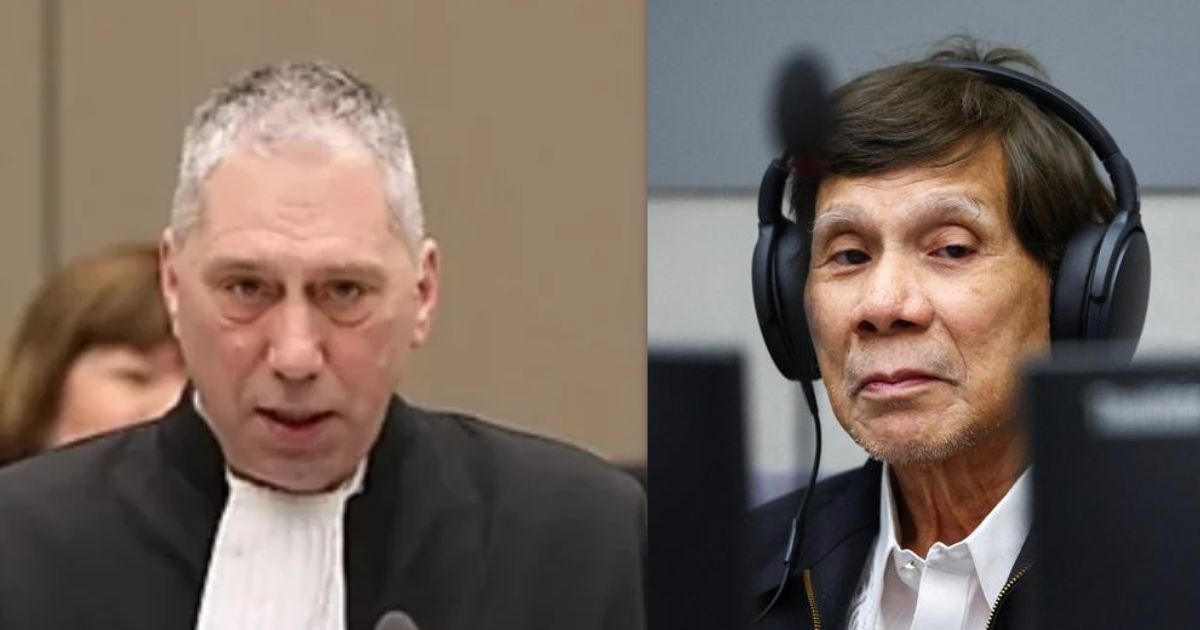
PRAGUE – Rodrigo Duterte has a cognitive impairment that affects his understanding of the crimes against humanity charges for which he would face trial before the International Criminal Court starting on Nov. 30, his defense counsel has told the tribunal.
In the defense's 77-page pre-trial brief released on November 25, Duterte’s counsel, Peter Haynes, said that the former president’s contribution to his defense was “virtually non-existent.”
Haynes said the impairments prevented Duterte from “providing meaningful instructions” and “navigating, together with his defense team,” the voluminous evidence the Office of the Prosecutor has disclosed to them.
The evidentiary record currently stands at over 62,000 items, Haynes stated in the defense’s redacted trial brief released on November 25.
In the brief, Duterte’s defense team also questioned the Office of the Prosecutor’s evidence that links Duterte to the allegations of murder and alleged murder during the charged period.
“Although Mr. Duterte is physically present, his ability to contribute to his defense is virtually non-existent," Haynes said.
"He can no longer reliably remember either events that occurred more than a decade ago, including those falling within the period covered in this case, or events that took place only hours earlier," he added.
Citing findings in the expert panel’s medical report of Duterte in August, the defense claimed the former president’s understanding of the charges against him “remains superficial”.
The defense said a neurologist had acknowledged that Duterte’s ability to “answer the Court and to provide his counsel with a rational, coherent, and sequential account of the alleged criminal events may be reduced.”Duterte’s health has been a central point of his defense team's argument since February. Despite this, Pre-Trial Chamber I confirmed the charges against the former leader in April.
After Pre-Trial Chamber I and the Appeals Chamber rejected the defense's appeal, the ICC presidency referred Duterte's case to Trial Chamber III.
In late May, Haynes requested a comprehensive medical re-examination, and Trial Chamber III approved it by appointing a panel of three experts specializing in forensic psychiatry, geriatric and behavioral neurology, and neuropsychology.
When the expert report was published, Haynes argued that Duterte suffered from “significant memory impairment.”
The prosecution and the Common Legal Representatives of the Victims (CLRV) rejected that claim, saying the expert panel unanimously found no evidence of cognitive decline since pre-trial assessments and attributed poor test results to test underperformance and inconsistent effort.
On September 28, Trial Chamber III ruled that Duterte is fit to stand trial.
In the defense trial brief, Haynes said he “ultimately bears responsibility” for processing the information in the proceedings, but noted the difficulty in discussing the evidence for the case’s temporal and geographic scope.
“None of this is possible,” Haynes said, citing the unnamed neurological expert whom he quoted as saying, "everything discussed at one meeting is forgotten by the next."
“This is the reality in which Mr Duterte and his Defence team are about to embark on this trial," Haynes said.
To ensure his fair participation, the Chamber instructed the Registry to make special courtroom accommodations, including over-ear noise-canceling headphones, flexible sitting schedules to accommodate time-zone differences for Philippine witnesses, options for remote video-link attendance from the ICC Detention Center, and continuous health monitoring by the Court’s Medical Officer.
Duterte’s trial opens on Monday, November 30, and he will face Trial Chamber III Presiding Judge Joanna Korner, Judge Keebong Paek, and Judge Nicolas Guillou. –NB, GMA News

