

 GMA Brandtalk
 Tracking
 Archives


EXPLAINER | Duterte at ICC: Inside the Prosecution's trial brief — Who died, when, and where?
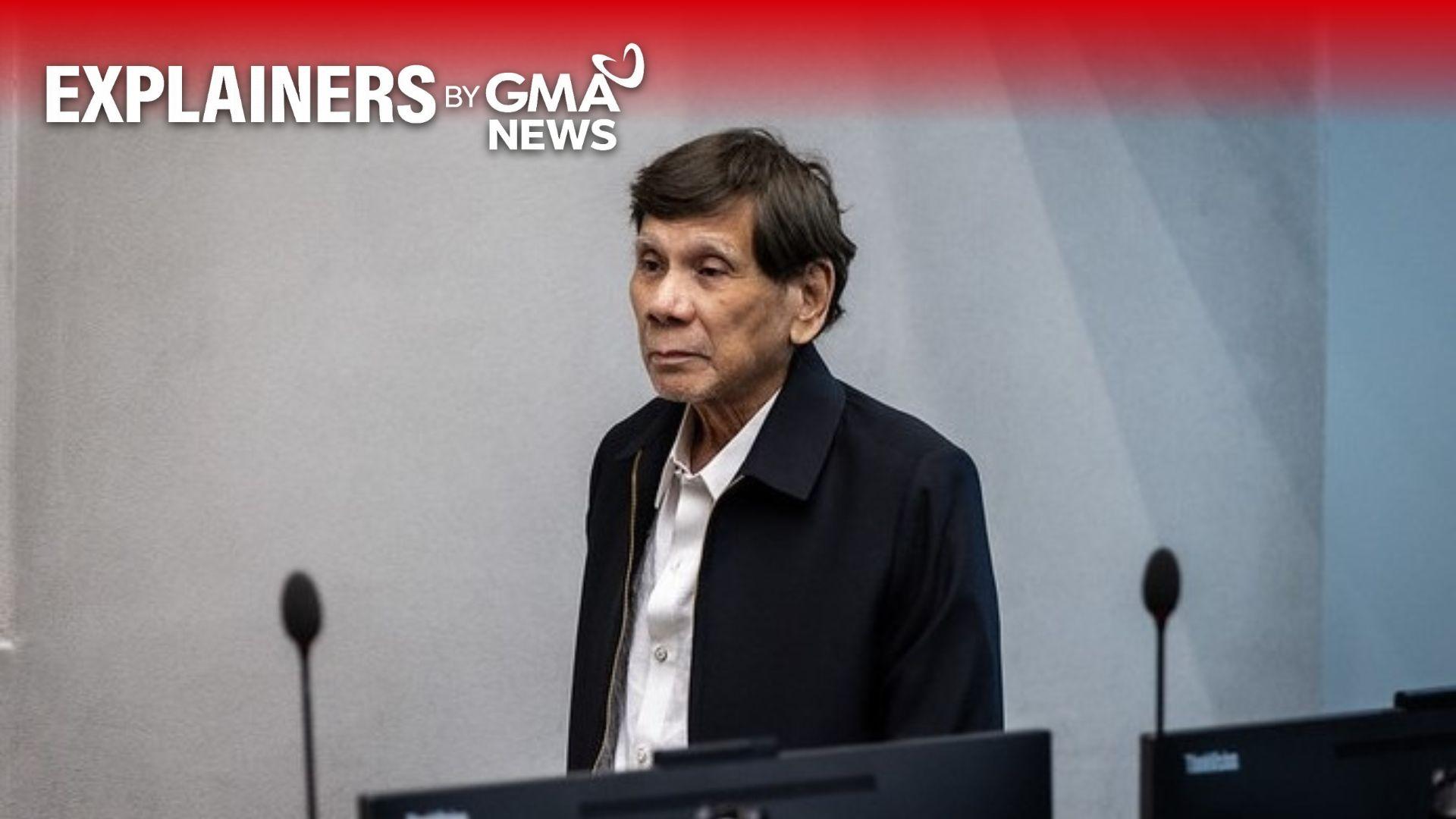
THE HAGUE – In the continuation of this Explainer series, GMA News Online examines the trial briefs of the different parties in the crimes against humanity case confronting former president Rodrigo Duterte before the International Criminal Court (ICC). The second part of the series takes a closer look at the Prosecution's charges against Duterte, particularly the 56 charged incidents during the former president's drug war that will be scrutinized by the ICC judges.
The Office of the Prosecutor’s (OTP) updated trial brief presents 56 charged incidents to illustrate a “widespread and systematic attack” against civilians, tracing how the “Davao Model” of “neutralizing” alleged drug users became a nationwide policy after Duterte took office in June 2016.
Prosecutors allege that the Davao Model was implemented within “formal structures” in the Philippine National Police (PNP) and through appointing key people within Duterte’s circles to strategic leadership posts.
On July 1, 2016 – Duterte’s first day as president – senator and then-newly appointed PNP Chief Ronald “Bato” dela Rosa issued Command Memorandum Circular (CMC) 16-2016, formally launching “Project Double Barrel” nationwide. It established two operational tracks:
- Project Tokhang: House-to-house visits driven by barangay and police station watchlists, requiring local units to conduct neighborhood clearance raids.
- Project High-Value Target (HVT): Directed at upper-tier figures, manufacturers, and public officials listed on the “PRRD List.”
Prosecution witnesses, along with police records cited by lawyers, attempt to establish that operational directives calling for the “neutralization” of targets were widely understood within police ranks as orders to kill. An alleged covert cash reward system further incentivized lethal force, paying bounties for fatalities, which increased depending on the “level of target.”
Why 56 incidents?
The final roster of 56 charged incidents came after heated litigation among the Prosecution, the Defense, and the victims’ representatives in mid-2026.
- April 23: Pre-Trial Chamber I confirms the charges against Duterte based on 49 representative incidents, noting that the “actual scale” of deaths was significantly greater during the charged period.
- August 31: Nearly four months later, the Prosecution notifies the Defense of eight additional incidents, upping the total to 57 incidents supported by over 62,000 items of disclosed evidence.
- August 31: On the same day, Duterte’s Defense counsel, Peter Haynes KC, immediately challenges the filings under Rule 134(1) and files a motion requesting a judicial determination. The Defense argues that adding new incidents without Pre-Trial Chamber authorization violates Duterte’s right to fair notice and forces them to face a “virtually unlimited” landscape of crimes.
- October 9: Trial Chamber III decides that seven additional incidents – Incidents 50 to 56 – fall within the confirmed scope of the charges, but strikes out Incident 57 for exceeding Count 2’s temporal boundary.
- October 16: Six days later, the Prosecution submits its Updated Trial Brief, officially reflecting the deletion of Incident 57 and locking the trial roster at 56 charged incidents across three counts:
- Count 1 (During Duterte’s mayorship in Davao City, 2013 – June 2016): Covers at least 19 murder victims executed by the Davao Death Squad (DDS) across nine incidents (Incidents 1-9) in Davao City, including three children.
- Count 2 (High-value targets killed during Duterte’s presidency, July 2016 – August 2017): Covers at least 16 murder victims killed across six incidents (Incidents 10-14 and Incident 56). High-profile killings include a Chinese known as “Mico Tan” (Incident 12), Albuera Mayor Rolando Espinosa, who was shot inside his jail cell in Leyte (Incident 13), and Ozamiz City Mayor Reynaldo Parojinog Sr., who was killed in a residence raid (Incident 14).
- Count 3 (Barangay tokhang sweeps during Duterte’s presidency, July 2016 – September 2018): Covers at least 52 victims (50 murders, 2 attempted murders) killed during local police station clearance operations across 41 incidents (Incidents 15-55). The heaviest concentrations were recorded in the National Capital Region (22 incidents, including 15 in the City of Manila) and Bulacan Province in Region 3 (18 incidents).
How did Trial Chamber III rule on the contested 56 incidents, and what impact did it have on victims?
On October 9, the ICC Trial Chamber III issued a ruling that resolved the core dispute over the scope of the charges: It confirmed Incidents 50-56, but struck out Incident 57 for exceeding Count 2’s temporal boundary (“between July 2016 and July 2017”). This decision clarified the Prosecution’s legal parameters, but immediately raised concerns among participating victim families.
October 29: The ICC Registry (through the Victims Participation and Reparations Section) reported that applying the Chamber’s tightened temporal cutoff threatens to exclude at least 16 previously authorized victims (across 13 applications out of 539) whose relatives were killed on dates just outside the strictly interpreted window for the counts. It asks the Chamber for urgent guidance on whether their participation status should be revoked.
November 12: The Common Legal Representatives of Victims (CLRV) forcefully oppose the Registry’s proposed exclusions, warning that stripping procedural status from families recognized months earlier causes “profound sadness and anxiety.” The CLRV argue that procedural decisions limiting Prosecution evidence must not artificially narrow victim participation rights, urging Trial Chamber III to affirm that indirect victims retain their right to participate even if specific incident dates fall outside tightened prosecutorial count windows.
As of November 27, Trial Chamber III has yet to release a decision on the CLRV request for clarification.
What else does the Prosecution’s trial brief show about Duterte’s drug war?
The Prosecution’s updated trial brief links presidential speeches directly to surges in fatal police operations.
On August 15–16, 2017, police conducted a simultaneous “One Time Big Time” (OTBT) raid across Bulacan, killing 32 people within 24 hours. Speaking on August 16, Duterte publicly praised the body count:
“They said that 32 died in Bulacan in a massive raid. That’s good. If we could kill another 32 every day, then maybe we can reduce what ails this country.”
On that same night, 17-year-old student Kian Loyd delos Santos was killed in Barangay 160, Caloocan City (Incident 30). While police claimed Delos Santos opened fire, security camera footage and eyewitnesses proved he was unarmed, dragged into an alley, and executed while kneeling.
How did accountability measures fare?
The deaths during anti-drug operations across the country between 2016 and 2019 prompted public outcry, but the Prosecution notes that internal accountability mechanisms failed.
It cites a 2025 congressional panel report stating that 99.17% of administrative complaints filed before the PNP Internal Affairs Service (IAS) resulted in the exoneration of PNP personnel involved, and that only 30 of 32,803 police officers charged during the Duterte administration were dismissed.
The evidence the Prosecution establishes in its brief forms the legal backbone of the charges now pending before ICC Trial Chamber III. — VDV, GMA News

