

 GMA Brandtalk
 Tracking
 Archives

Indonesian anti-graft commission among recipents of 2013 Magsaysay Award
Three days after she engaged the media in an unprecedented, free-wheeling press conference, Chief Justice Maria Lourdes Sereno was back to her vow of “dignified silence” Saturday, choosing her words carefully when she praised an Indonesian anti-corruption commission chosen as one of the 2013 Ramon Magsaysay awardees.
As the guest speaker at the Ramon Magsaysay Awarding Ceremonies at the Cultural Center of the Philippines, Sereno spoke without a prepared speech and asked for understanding as she could not comment on the Komisi Pemberantasan Korupsi (KPK) in detail “for fear of transgressing.”
Amid the audience's laughter at her carefully-worded praise, Sereno said KPK's work was very much admired based on the warm applause the organization received when its citation for the award was being read.
“You hear it from the applause of my people, especially when mention was made of your 100 percent conviction rate [and] of your having sent big fish to jail. And what is so remarkable is that the people rallied around you,” said Sereno.
KPK, which translates to Corruption Eradication Commission in English, is an independent Indonesian government body created in 2002 to run after corrupt politicians and government employees.
The organization's far-reaching mandate ranges from the investigation and prosecution to prevention and the coordination of agencies authorized to combat corruption. It can even conduct searches and seizures, freeze assets, impose travel bans and even intercept communications without prior court approval.
A civic leader was said to have once remarked upon the passage of the legislation creating KPK that politicians were “inviting a tiger into their house.”
KPK was recognized by the Ramon Magsaysay Awards Foundation (RMAF) for its “fiercely independent and successful campaign against corruption in Indonesia, combining the uncompromising prosecution of erring powerful officiails with farsighted reforms in governance systems, and the educative promotion of vigilance, honesty and active citizenship among all Indonesians.”
Since its founding, KPK has handled 332 high-profile cases involving top government officials and successfully returned Rp 805.6 billion or US$ 80 million to national coffers from recovered assets.
One of its most recent achievements is its prosecution last year of Indonesia's sports minister Andi Mallarangeng due to his alleged involvement in a multi-million dollar corruption case. He eventually resigned in December 2012 at the height of KPK's investigation.
In their acceptance speech, KPK chairman Abraham Samad said the award affirms the organization's conviction to speak louder and harder against corruption.
“This award is a warning that we are at war based on a zero sum principle. This is a signal to alert everybody: 'No mercy, no forgiveness, zero tolerance, and justice must prevail,” he said.
'Unlimited income is unjustified income'
KPK vice chairman Antazari Azhar was applauded when, in his speech, he mentioned the injustice of the corruption being perpetrated by “a few”-- something that resonated with the Filipinos in the audience especially with the expose of the P10 billion pork barrel scam involving certain lawmakers and businesswoman Janet Lim-Napoles.
“People sacrifice themselves [by] working so hard only for survival. On the other hand, a few people do not sweat, but are earning unlimited amounts of income. Their unlimited income is unjustified income. This is injustice,” he said.
Azhar vowed that KPK will continue to be relentless in its pursuit of erring government officials with its latest recognition.
The prestigious award, known as Asia's version of the Nobel Prize, is named after the well-loved Philippine president who died in a tragic plane crash in 1957. For this year, RMAF recognized three individuals and two organizations for their “greatness of spirit” and selfless work that inspired not just their countrymen but the entire Asia.
Aside from KPK, the Magsaysay laureates for 2013 were: Filipino doctor Ernesto Domingo, Lahpai Seng Raw from Myanmar, Afghanistan's first female governor, Habiba Sarabi and the Nepalese anti-human trafficking group Shakti Samuha.
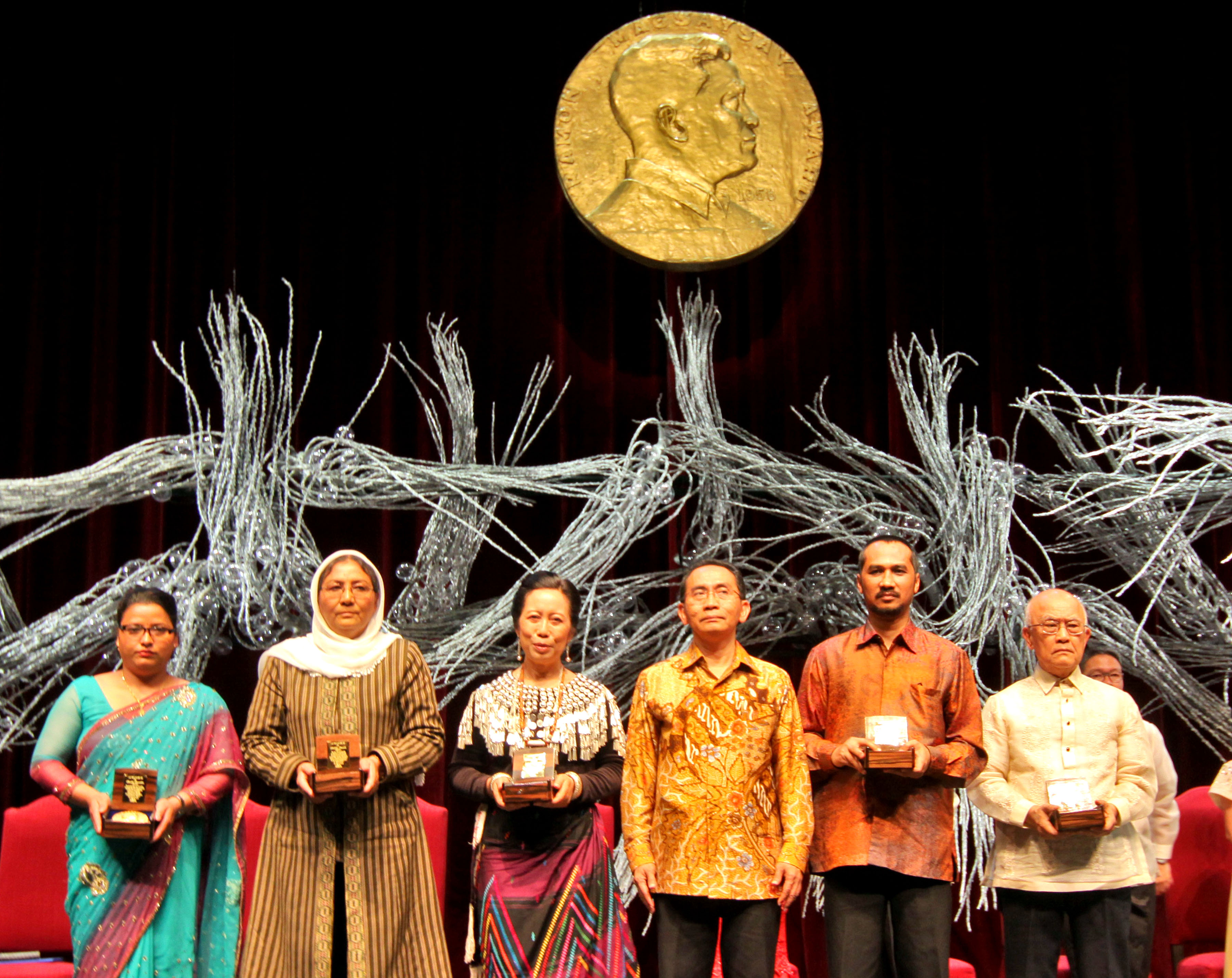
Dr. Ernesto Domingo, a liver diseases specialist and medical researcher, was recognized for his advocacy for universal health care and research on early prevention of hepatitis B for babies.
At a forum Wednesday, Domingo encouraged citizens to bring cases of healthcare rights violations to the Supreme Court so it can issue landmark rulings determining the extent to which Filipinos' right to health should be protected. — DVM, GMA News

