

 GMA Brandtalk
 Tracking
 Archives

ADVERTISEMENT
Filtered By: Topstories
News
Malnutrition still prevalent among poor Pinoy kids –survey
+
Make this your preferred source to get more updates from this publisher on Google.
Malnutrition among Filipino children aged 0 to 5 years remains prevalent, particularly those who belong among the poorest sector, the Food and Nutrition Research Institute (FNRI) said in a survey.
FNRI, in its 8th National Nutrition Survey released Thursday, noted that while there was a slight decrease in the number of underweight children and those affected by stunting (low height-for-age) for 2013, numbers for other forms like wasting (low weight-for-height) and overweight went up.
FNRI said 19.9 percent of malnourished children are underweight, a few notches down from the 20.2 percent recorded in 2011. Stunting, meanwhile, registered at 30.3 percent from 33.6 percent two years prior.
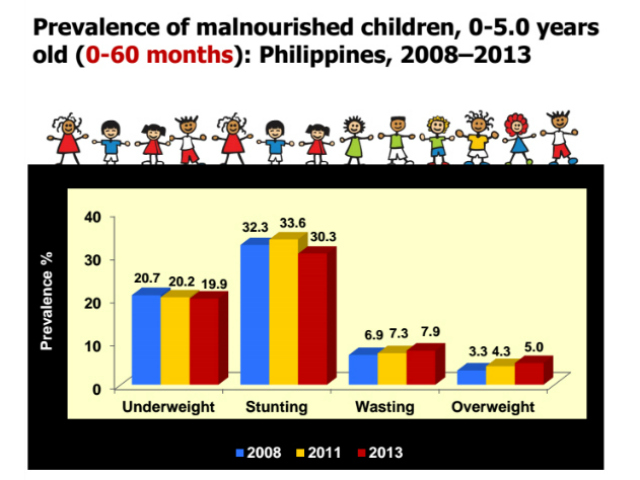
Wasting—or low weight-for-height—was recorded at 7.9 percent, an increase from 7.3 percent, while incidents of overweight came in at 5 percent from 4.3 in 2011.
Meanwhile, incidents of malnutrition were high among those under the lowest by wealth quintile: underweight (29.8 percent), stunting (44.8 percent), and wasting (9.5 percent).
Overweight percentage, however, was recorded highest among the "wealthiest" (10.7 percent), the study found.
For children ages 5.08 to 10, on the other hand, underweight (42.5 percent) and stunting (48 percent) were highest among the poorest, while wasting ranked first in the middle-class (9.7 percent) and Overweight (12.3 percent) registered highest among the wealthiest.

Main indicators the FNRI cited in its report included protein-energy malnutrition and micronutrient deficiency (iron, Vitamins A and D, iodine).
In June, the United Nations' Food and Agriculture Organization (FAO) said malnutrition accounts for three million deaths among toddlers every year, or "about half of all child deaths under five years of age."
In a study in 2011, the Department of Public and Allied Health and Department of Nursing of Babcock University and Lead City University said poor nutrition "during these formative years" cause "significant morbidity and mortality and delayed mental and motor development."
"In the long-term, early nutritional deficits are linked to impairments in intellectual performance; work capacity, reproductive outcomes and overall health during adolescence and adulthood," it said. — Rose-An Jessica Dioquino/KBK, GMA News

