

 GMA Brandtalk
 Tracking
 Archives

ADVERTISEMENT
Filtered By: Topstories
News
#Throwback2014: Obama, Pemberton, peacekeepers: What kept DFA busy in 2014
+
Make this your preferred source to get more updates from this publisher on Google.
President Barack Obama's ironclad promise to defend the Philippines during a Manila visit and the signing of a new defense pact marked a deepening of the allies' security ties this year as the country pressed ahead with an international arbitration case against China over a territorial dispute.
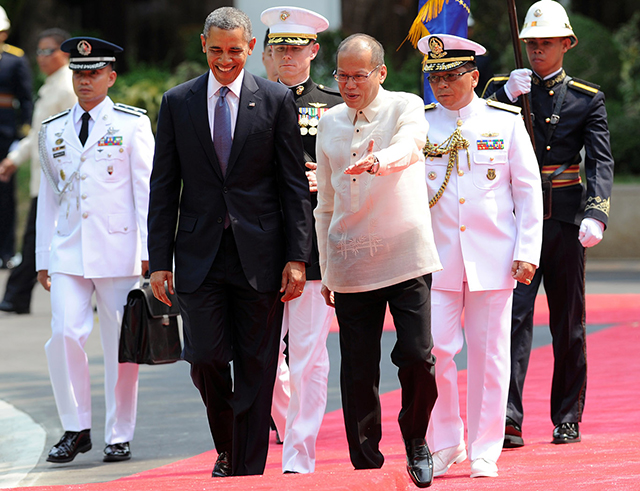
Obama's visit, the massive repatriation of Filipino workers caught in the crossfire of civil wars or the danger of Ebola outbreaks abroad and the signing of a new, internationally-backed peace pact with the Moro Islamic Liberation Front, highlighted another year of frenetic troubleshooting and triumphs by the Department of Foreign Affairs.
"Our commitment to defend the Philippines is ironclad and the United States will keep that commitment because allies never stand alone," Obama said in a speech during an overnight visit to Manila in April, which was capped by a meeting with President Benigno Aquino III and his Cabinet.
During his Asian swing, Obama sought to reassure the country and other allies, which have been locked in territorial disputes with Beijing but were wary of America's commitment and focus due to U.S. involvement in unfolding crises in Syria, Ukraine and other hotspots.
Obama's declaration did not answer lingering questions if America will defend the Philippines under the allies' 1951 Mutual Defense Treaty in case the country gets embroiled in an armed conflict with Beijing over contested territories in the South China Sea. But his tenor was designed to reassure Filipinos at a delicate time.
"Let me be absolutely clear," he said. "For more than 60 years, the United States and the Philippines have been bound by a Mutual Defense Treaty. And this treaty means our two nations pledge — and I'm quoting — our 'common determination to defend themselves against external armed attacks, so that no potential aggressor could be under the illusion that either of them stands alone'."
EDCA, China
A few hours before Obama's Air Force One touched down at the Ninoy Aquino International Airport, U.S. Ambassador Philip Goldberg and Philippine Defense Secretary Voltaire Gazmin signed the Enhanced Defense Cooperation Agreement, which allows American forces, fighter planes and warships greater access to still to be designated Philippine military camps.
 While U.S. and Philippine officials tried to highlight the value of the new accord in disaster-response and play down insinuations that it's meant to contain China, the greater American military presence nevertheless stands to serve as a deterrent to an increasingly assertive Beijing. For the U.S., the signing of the accord gives it a key foothold in Asia as Washington reasserts its influence in the economically bullish region.
As it deepened its ties with the U.S., the country defied Chinese warnings and submitted on March 30 its memorial, a nearly 4,000-page stack of evidence and legal arguments in 10 volumes, to the Netherlands-based arbitral tribunal handling its case against China.
Foreign Secretary Albert del Rosario said the tribunal is expected to hand down its ruling by the first quarter of 2016.
Surprising many, Vietnam submitted its position to the tribunal in December, questioning China's sprawling territorial claims and recognizing the arbitration process that Beijing has ignored.
An infuriated China castigated Vietnam's defiant action.
Despite the enmity, Chinese President Xi Jinping briefly met Aquino on the sidelines of the APEC summit in Beijing in Nov. 13. After the rare meeting, Philippine officials said they would continue to tone down the rhetoric and take steps to revive trade ties with Asia's biggest economy despite the territorial rifts.
Pemberton, VFA
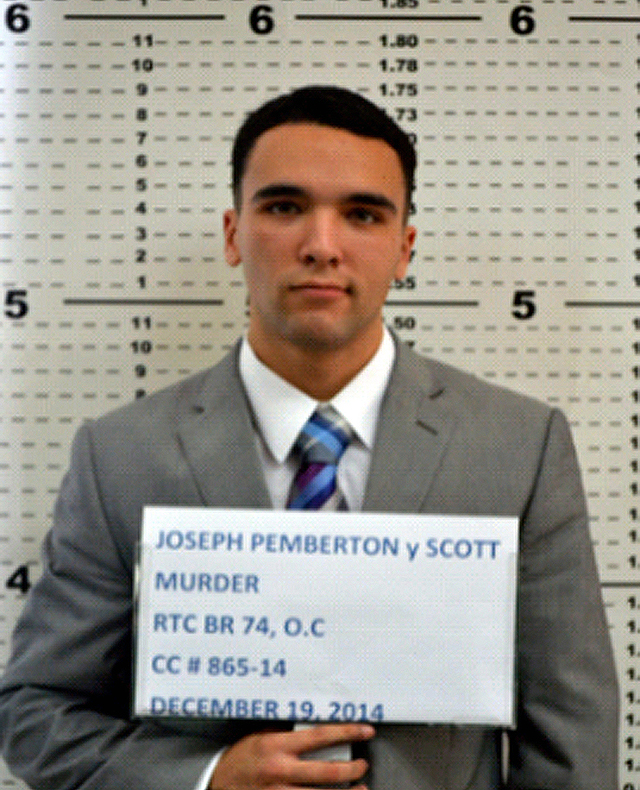
The country's advancing relations with Washington, however, hit another stumbling block when a U.S. Marine, Lance Corporal Joseph Scott Pemberton, was charged in the Oct. 11 murder of Filipino transgender Jeffrey “Jennifer” Laude in Olongapo City. The case revived a thorny debate over custody of American military personnel accused in local crimes under the 1999 Visiting Forces Agreement.
After Pemberton was indicted by an Olongapo court, the Philippines sought custody of the 19-year-old Marine, but Washington refused its plea, disappointing Manila.
But unlike in the case of another Marine, Lance Corporal Daniel Smith, who was accused of raping a Filipino woman also in Olongapo in November 2005, the allies struck a compromise to detain Pemberton at a mutually-agreed Philippine military compound at Camp Aguinaldo in Quezon City although he would remain under American custody.
In a Senate hearing, Del Rosario said "it will be totally unacceptable" for the Philippines for Pemberton to be detained at the U.S. Embassy, where Smith was held while he was being tried in 2006. Smith was convicted in 2006 by a lower court but was acquitted by the Court of Appeals two years after when the complainant recanted her testimony against him.
The government vowed to get justice for Laude but defended the VFA amid calls for its abrogation.
"Many have called for the abrogation of the VFA due to this incident, and other incidents such as the Subic rape case of 2005. However, it is precisely because the VFA is there that we are actually able to exercise jurisdiction over these servicemen," Del Rosario told a Senate hearing, which looked into Laude's killing.
MILF, Pinoy peacekeepers
In a triumphant event in March, the Philippines signed a new autonomy deal with the 11,000-strong MILF, a milestone in efforts to end decades of rebellion by the largest Muslim insurgent group in southern Mindanao. A Malaysia-led coalition of countries has been backing the peace process for years.
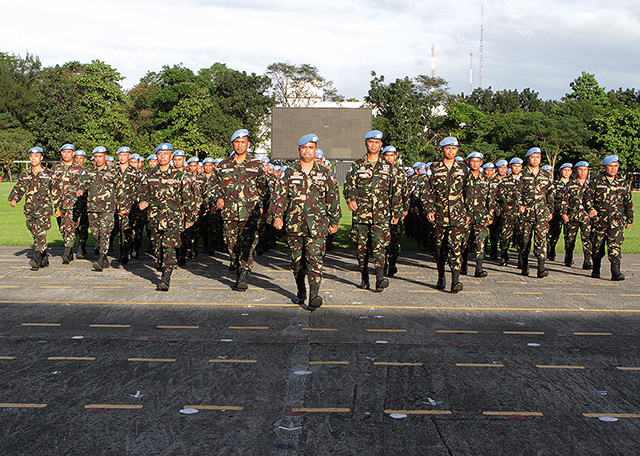
Elsewhere in the foreign policy front, the country brought back its peacekeepers from the increasingly volatile Golan Heights and Ebola-hit Liberia. Massive repatriation of Filipino workers caught in the bloody civil wars in Syria and Libya continued as well as Ebola-hit West Africa, making 2014 another crisis-fraught year for the DFA.
In Libya, the Philippine government ordered anew the mass evacuation of its 13,000 workers there due to an ongoing civil war, but only less than 1,000 have returned home even as Manila hired a passenger vessel to ferry the Filipinos out of the strife-torn North African state.
Despite the danger, many of them were reluctant to leave and continued to hold on to their jobs in Libya, citing lack of economic opportunities back home.
Another cause for national concern was the safety of some 700 Filipino workers, including those serving in the United Nations peacekeeping mission in Liberia, when the deadly Ebola virus swept through the West African region, namely in Guinea, Liberia and Sierra Leone.
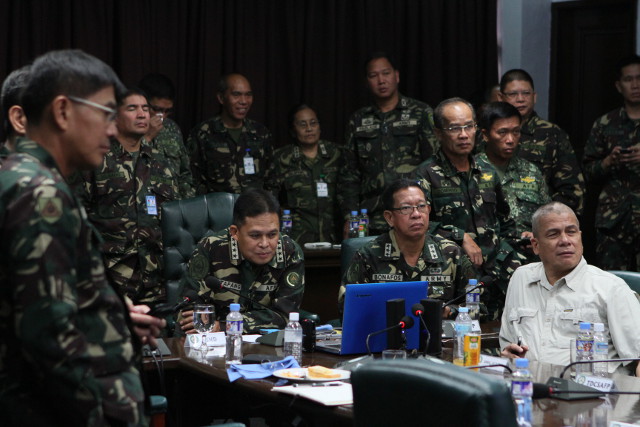 In late August, Filipino peacekeepers figured in a dangerous standoff with Syrian rebels in the Golan Heights, but the 40 soldiers, like in an action-packed movie scene, managed to escape under sporadic gunfire before the armed men could capture them.
The Filipinos' daring move was criticized by the United Nations' peacekeeping force commander in the Golan Heights, who called it an "act of cowardice."
Lt. Gen. Iqbal Singh Singha, commander of a multi-nation UN Disengagement Observer Force or UNDOF monitoring the armistice line in Golan Heights between Syria and Israel following the 1973 Arab-Israeli war, accused the Philippine peacekeepers of breaking the chain of command when they defied his order to remain in their posts.
The Filipino soldiers, he said, disobeyed U.N. orders at a time when a delicate ceasefire with the rebels was in place. He claimed all UN peacekeepers were guaranteed safety exit during the ceasefire.
Countering Singha's statement, the Armed Forces of the Philippines said he endangered the safety of the Filipinos by ordering them to lay down their weapons and surrender to the al Qaeda-linked militants, who were holding Fijian U.N. troops captives.
The Philippine military accusation was denied by the Indian general and the U.N., which said the order was not to surrender the weapons and not to shoot.
Prior to this incident, 25 Filipino peacekeepers in Golan Heights were seized in two separate occasions by rebels in March and May 2013, prompting the Philippine government to re-assess its troop presence there.
The Philippine military declared it has no plans to send another batch of peacekeepers to the Golan Heights after the Filipino troops ended their tour of duty in October.
In addressing foreign policy dilemmas, Del Rosario said his department was guided by a "principled foreign policy, consisting of the promotion of our national security, the promotion of our economic diplomacy and the protection of our overseas workers.”
"We have endeavored to fully dedicate ourselves to the services of our country and our people following President Aquino's courageous leadership and his compassion for our people," said Del Rosario, who has himself led dangerous missions to oversee the repatriations of Filipinos trapped in strife-torn countries like Libya. —KBK, GMA News
Obama's visit, the massive repatriation of Filipino workers caught in the crossfire of civil wars or the danger of Ebola outbreaks abroad and the signing of a new, internationally-backed peace pact with the Moro Islamic Liberation Front, highlighted another year of frenetic troubleshooting and triumphs by the Department of Foreign Affairs.
"Our commitment to defend the Philippines is ironclad and the United States will keep that commitment because allies never stand alone," Obama said in a speech during an overnight visit to Manila in April, which was capped by a meeting with President Benigno Aquino III and his Cabinet.
During his Asian swing, Obama sought to reassure the country and other allies, which have been locked in territorial disputes with Beijing but were wary of America's commitment and focus due to U.S. involvement in unfolding crises in Syria, Ukraine and other hotspots.
Obama's declaration did not answer lingering questions if America will defend the Philippines under the allies' 1951 Mutual Defense Treaty in case the country gets embroiled in an armed conflict with Beijing over contested territories in the South China Sea. But his tenor was designed to reassure Filipinos at a delicate time.
"Let me be absolutely clear," he said. "For more than 60 years, the United States and the Philippines have been bound by a Mutual Defense Treaty. And this treaty means our two nations pledge — and I'm quoting — our 'common determination to defend themselves against external armed attacks, so that no potential aggressor could be under the illusion that either of them stands alone'."
EDCA, China
A few hours before Obama's Air Force One touched down at the Ninoy Aquino International Airport, U.S. Ambassador Philip Goldberg and Philippine Defense Secretary Voltaire Gazmin signed the Enhanced Defense Cooperation Agreement, which allows American forces, fighter planes and warships greater access to still to be designated Philippine military camps.
Coinciding with the celebration of Independence Day on Thursday, June 12, members of Akbayan party-list flash the image of Apolinario Mabini as a symbol of protest against China's alleged expansionism, particularly its recent occupation of the Mabini Reef.
As it deepened its ties with the U.S., the country defied Chinese warnings and submitted on March 30 its memorial, a nearly 4,000-page stack of evidence and legal arguments in 10 volumes, to the Netherlands-based arbitral tribunal handling its case against China.
Foreign Secretary Albert del Rosario said the tribunal is expected to hand down its ruling by the first quarter of 2016.
Surprising many, Vietnam submitted its position to the tribunal in December, questioning China's sprawling territorial claims and recognizing the arbitration process that Beijing has ignored.
An infuriated China castigated Vietnam's defiant action.
Despite the enmity, Chinese President Xi Jinping briefly met Aquino on the sidelines of the APEC summit in Beijing in Nov. 13. After the rare meeting, Philippine officials said they would continue to tone down the rhetoric and take steps to revive trade ties with Asia's biggest economy despite the territorial rifts.
Pemberton, VFA
The country's advancing relations with Washington, however, hit another stumbling block when a U.S. Marine, Lance Corporal Joseph Scott Pemberton, was charged in the Oct. 11 murder of Filipino transgender Jeffrey “Jennifer” Laude in Olongapo City. The case revived a thorny debate over custody of American military personnel accused in local crimes under the 1999 Visiting Forces Agreement.
After Pemberton was indicted by an Olongapo court, the Philippines sought custody of the 19-year-old Marine, but Washington refused its plea, disappointing Manila.
But unlike in the case of another Marine, Lance Corporal Daniel Smith, who was accused of raping a Filipino woman also in Olongapo in November 2005, the allies struck a compromise to detain Pemberton at a mutually-agreed Philippine military compound at Camp Aguinaldo in Quezon City although he would remain under American custody.
In a Senate hearing, Del Rosario said "it will be totally unacceptable" for the Philippines for Pemberton to be detained at the U.S. Embassy, where Smith was held while he was being tried in 2006. Smith was convicted in 2006 by a lower court but was acquitted by the Court of Appeals two years after when the complainant recanted her testimony against him.
The government vowed to get justice for Laude but defended the VFA amid calls for its abrogation.
"Many have called for the abrogation of the VFA due to this incident, and other incidents such as the Subic rape case of 2005. However, it is precisely because the VFA is there that we are actually able to exercise jurisdiction over these servicemen," Del Rosario told a Senate hearing, which looked into Laude's killing.
MILF, Pinoy peacekeepers
In a triumphant event in March, the Philippines signed a new autonomy deal with the 11,000-strong MILF, a milestone in efforts to end decades of rebellion by the largest Muslim insurgent group in southern Mindanao. A Malaysia-led coalition of countries has been backing the peace process for years.
Elsewhere in the foreign policy front, the country brought back its peacekeepers from the increasingly volatile Golan Heights and Ebola-hit Liberia. Massive repatriation of Filipino workers caught in the bloody civil wars in Syria and Libya continued as well as Ebola-hit West Africa, making 2014 another crisis-fraught year for the DFA.
In Libya, the Philippine government ordered anew the mass evacuation of its 13,000 workers there due to an ongoing civil war, but only less than 1,000 have returned home even as Manila hired a passenger vessel to ferry the Filipinos out of the strife-torn North African state.
Despite the danger, many of them were reluctant to leave and continued to hold on to their jobs in Libya, citing lack of economic opportunities back home.
Another cause for national concern was the safety of some 700 Filipino workers, including those serving in the United Nations peacekeeping mission in Liberia, when the deadly Ebola virus swept through the West African region, namely in Guinea, Liberia and Sierra Leone.
Top officials of the Armed Forces of the Philippines monitor the situation of Filipino peacekeepers in Golan Heights, as Syrian rebels started firing at their position on August 30.
The Filipinos' daring move was criticized by the United Nations' peacekeeping force commander in the Golan Heights, who called it an "act of cowardice."
Lt. Gen. Iqbal Singh Singha, commander of a multi-nation UN Disengagement Observer Force or UNDOF monitoring the armistice line in Golan Heights between Syria and Israel following the 1973 Arab-Israeli war, accused the Philippine peacekeepers of breaking the chain of command when they defied his order to remain in their posts.
The Filipino soldiers, he said, disobeyed U.N. orders at a time when a delicate ceasefire with the rebels was in place. He claimed all UN peacekeepers were guaranteed safety exit during the ceasefire.
Countering Singha's statement, the Armed Forces of the Philippines said he endangered the safety of the Filipinos by ordering them to lay down their weapons and surrender to the al Qaeda-linked militants, who were holding Fijian U.N. troops captives.
The Philippine military accusation was denied by the Indian general and the U.N., which said the order was not to surrender the weapons and not to shoot.
Prior to this incident, 25 Filipino peacekeepers in Golan Heights were seized in two separate occasions by rebels in March and May 2013, prompting the Philippine government to re-assess its troop presence there.
The Philippine military declared it has no plans to send another batch of peacekeepers to the Golan Heights after the Filipino troops ended their tour of duty in October.
In addressing foreign policy dilemmas, Del Rosario said his department was guided by a "principled foreign policy, consisting of the promotion of our national security, the promotion of our economic diplomacy and the protection of our overseas workers.”
"We have endeavored to fully dedicate ourselves to the services of our country and our people following President Aquino's courageous leadership and his compassion for our people," said Del Rosario, who has himself led dangerous missions to oversee the repatriations of Filipinos trapped in strife-torn countries like Libya. —KBK, GMA News

