

 GMA Brandtalk
 Tracking
 Archives

Ex-BuCor chief: De Lima didn’t want CIDG in 2014 Bilibid raid
Former Bureau of Corrections director Franklin Jesus Bucayu on Thursday passed the blame to Sen. Leila de Lima on why the Philippine National Police was left out of the controversial raid inside the New Bilibid Prison in December 2014.
In his testimony before the House justice committee, Bucayu said the PNP Criminal Investigation and Detection Group (CIDG) was originally included in a meeting by law enforcement agencies on addressing criminality inside the national penitentiary in "September or October 2014."
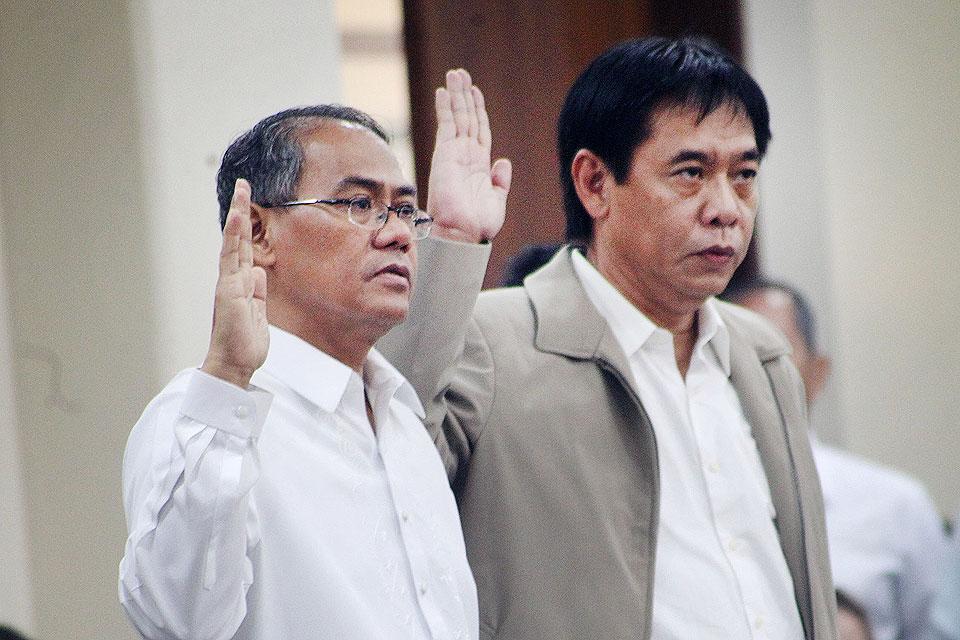
"In September or October 2014, I was directed by the Secretary of Justice (De Lima) to attend a meeting at the Philippine Drug Enforcement Agency attended by the National Bureau of Investigation and the CIDG wherein activities to address criminality inside the NBP were discussed," said Bucayu.
During a subsequent meeting, Bucayu said he noticed that the PNP-CIDG was no longer involved.
"Subsequently, in one of the meeting[s] among heads of the DOJ, BuCor, NBI, and (Presidential Anti-Organized Crime Commission (PAOC)," said Bucayu.
"I asked the former Secretary of Justice if we are going to inform the CIDG on the plan [to raid the NBP] and she said, 'No need,'" he added.
Bucayu said: "It seems that since there was already prior coordination with the NBI that time, there was already no need to bring in another investigative unit into the fold."
In his testimony on September 21, PNP deputy chief for operations Director Benjamin Magalong testified that he was asked by Bucayu not to push through with a proposed raid at the NBP, which they determined to be the source of illegal drugs.
Magalong used to head the PNP CIDG. His team conceptualized a plan dubbed as “Oplan Cronus” for the massive raid in the NBP maximum security compound.
Magalong said their team eventually informed then BuCor director Bucayu about the raid that they wanted to conduct in the NBP.
“Pagka-invite namin kay Bucayu, he manifested kung pwede 'di ituloy ang raid. Sabi niya (Bucayu) mahihirapan kami. Ang dami niyang binanggit na negative. But we prevailed [upon him] at sabi ko ‘Sir itutuloy namin ito’,” Magalong recounted.
Sometime in September 2014, Magalong said Bucayu visited him in his office in the CIDG. Bucayu was accompanied by then Presidential Anti-Organized Crime Commission (PAOCC) executive director General Reginald Villasanta.
“Pinuntahan ako sa office ko sa CIDG. Sabi nila, ‘Benjie kung pwede huwag mo i-raid ang NBP.' Sabi ko sa kanila, ‘Bakit sir, nakita niyo naman ang development sa loob,'” Magalong said.
“Sabi ni Bucayu, ‘Benjie, mamamatay ako, delikado ako diyan,’” Magalong recounted.
Denies claims
In his testimony on Thursday, however, Bucayu denied Magalong's claims. "I would like to dispel insinuations that I prevented or pre-empted Oplan Cronus of the CIDG as testified by Gen. Benjamin Magalong during the early hearing before this august body," Bucayu said.
"I had no authority to prevent it as it [Oplan Cronus] was directly presented to the former head of the DOJ," added Bucayu.
In his testimony, Bucayu also denied receiving drug money from Bilibid inmates, contrary to the allegations made by Bilibid convict-witnesses during the last hearing.
"I hereby categorically deny the claim of convicted inmates of Bilibid that I requested or received monthly payola assistance from them when I served as director of the BuCor," he siad.
"I have never accepted even a single cent nor did I task anyone on my behalf to collect money from any inmate in any prison facility," Bucayu added.
Bucayu said when he assumed his post as BuCor chief, he was "shocked" to discover the extent of the problems plaguing the national penitentiary.
"The NBP is no longer a prison but has turned into a fortress seemingly controlled by inmates, a walled community of convicts. All of this did not happen overnight," he said. —KG, GMA News

