

 GMA Brandtalk
 Tracking
 Archives

UP-DND pact does not hinder law enforcement —IBP president
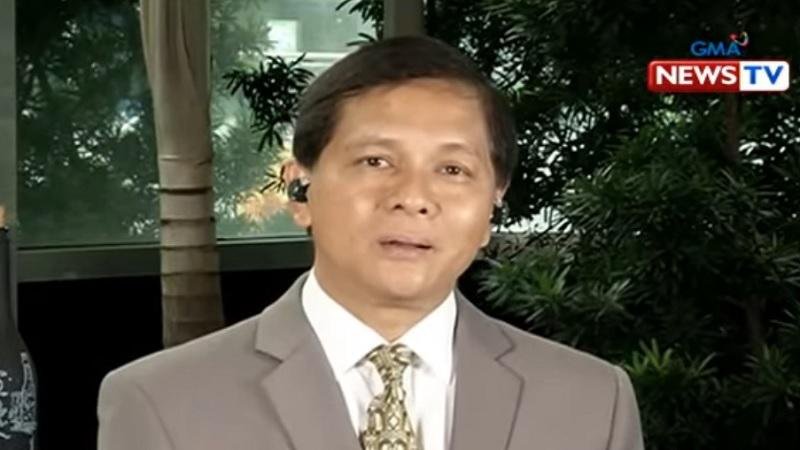
The University of the Philippines' (UP) pact with the Department of National Defense (DND) does not stand in the way of law enforcement, said the president of the Integrated Bar of the Philippines (IBP).
"The U.P.-DND accord does not and should not not hinder legitimate law enforcement and security operations as the agreement specifically provides that 'nothing herein shall be construed as a prohibition against the enforcement of the laws of the land,'" IBP president Domingo Egon Cayosa said in a statement.
He also cited UP's institutional autonomy as a national university under Republic Act 9500 or the UP Charter.
The 1989 UP-DND accord prohibits the unauthorized presence of military and police officers inside UP campuses except in hot pursuit and emergency cases.
Its one-sided termination by Defense Secretary Delfin Lorenzana, supposedly to protect students from alleged communist recruitment, is feared to threaten the freedom that made the university a safe space for protests for decades.
Defending the termination, military spokesman Major General Edgard Arevalo claimed that the pact was contrary to public interest for requiring state forces to notify UP officials before conducting operations in campus, an extra step that he said might make them lose their suspects.
"Paano na lamang po kung mayroong shabu laboratory, for instance, sa loob ng UP community or campus and then meron po tayong valid arrest warrant at search warrant?” Arevalo said Wednesday.
His statement did not sit well with the UP Diliman's Department of Chemical Engineering, which urged the military to "refrain from issuing hypothetical statements absent of any factual basis."
In his statement, Cayosa said it could be argued that the DND could legally terminate the accord but that prior consultation with UP would have been "more ideal."
Challenged before court?
Attorney Romel Bagares, a graduate of UP College of Law, said Lorenzana's termination of the pact could be challenged before the court since the agreement's provisions were inserted in the UP Charter of 2008.
He cited one of the provisions which said no other "issuance" should lessen the privileges given to the University. He also pointed out that a subsequent legislation is needed if there is an intention to modify or abrogate the agreement.
"At the time of the passage of the law, the Accord was already in effect or as the UP Charter states, already 'enjoyed at present' by the state university," Bagares said.
"By legislative fiat, its benefits had been deemed part of the entitlements accorded to UP, and may only be taken away by a subsequent law expressly stating the abrogation of the Accord or otherwise removing the protections it had already extended to the university," he added.
Asked whether he thinks UP could challenge the termination, Cayosa said: "They can go to court but chances are slim," adding that it may "not be practical or wise to force another agency to remain in an agreement" if it no longer wants to.
Despite this, Cayosa said that academic freedom, a right guaranteed by the Constitution, should be enjoyed in UP with or without the agreement with the DND.
"Diverse groups, including those who oppose government, conduct recruitment in U.P. as they do in many other schools. Nevertheless, what truly impels and fuels dissent is not U.P. or its tradition of critical thinking and activism but the injustice, corruption, incompetence, abuse and oppression, poverty or hopelessness that citizens may experience or discern," he said.
"Academic freedom, freedom of expression and association, due process, privacy, and other fundamental rights are guaranteed by the Philippine Constitution. These basic rights cannot be taken away by the unilateral scrapping of an agreement for operational coordination," Cayosa added. —with Anna Felicia Bajo/KBK, GMA News

