

 GMA Brandtalk
 Tracking
 Archives

New Coast Guard law allowing armed response complies with int'l law -Chinese Embassy
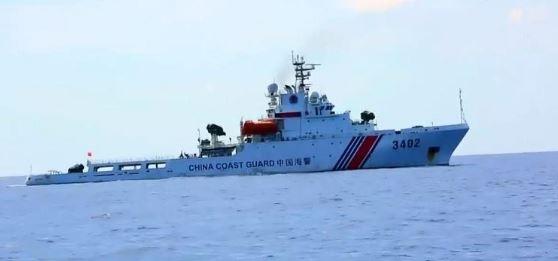
China's new law authorizing its Coast Guard to shoot foreign vessels sailing through its claimed areas in the disputed South China Sea complies with international law, its Embassy in Manila said Monday as it denied reports of harassing Filipino fishermen and intrusion in Philippine waters.
Such law, it stressed, is a sovereign right and similarly enforced by other nations, such as the Philippines.
"The formulation of the Coast Guard Law is a normal domestic legislative activity of China. The content of the law conforms to international conventions and the practices of the international community," a statement by the Chinese Embassy said.
"Enacting such a Coast Guard law is not unique to China, but a sovereign right to all. Many countries have enacted similar legislation."
The Embassy cited a Philippine Coast Guard Law in 2009 that established the PCG as an armed and uniformed service.
"None of these laws have been seen as a threat of war," it said.
The law, according to analysts, could further escalate tensions in the region and is seen as a potential trigger for armed conflict.
China dismissed them as "false accusations" and a "misinterpretation" of a "normal legislation."
"China Coast Guard Law doesn't specifically target any certain country," it said, but noted that it does not indicate a change of its maritime policy.
China, which claims a huge swathe of the South China Sea have reclaimed disputed areas and transformed previously submerged features into artificial islands with multi-level buildings and runways. It has also installed surface-to-air missiles in these areas, triggering concerns from countries, such as the Philippines, US, Japan, and Australia.
The Philippines in 2013 challenged China’s legal basis for its expansive claim before the Permanent Court of Arbitration in The Hague, Netherlands, and won the case in a landmark award in 2016 after the tribunal invalidated Beijing’s assertions.
Rejecting the ruling, China says its claims have historical basis and are “indisputable” despite encroaching on the territories of its smaller neighbors like the Philippines, Vietnam, Malaysia, and Brunei.
China has also claimed and developed some features in parts of the South China Sea, called the West Philippine Sea by Manila.
The Embassy said "some forces in the Philippines either for their own political interests or out of prejudice toward China" are behind the fabricated reports and the spreading of "fake and baseless" news.
It was referring to news reports of Chinese harassment of Filipino fishermen near the Philppines' Pag-Asa Island in the South China Sea and the sighting of China's research vessel in Philippine waters.
The Embassy said the first incident was already denied by the Philippine military while the entry of a scientific survey ship off the coast of Bato, Catanduanes in Jan. 28 was not intentional and was due to bad weather.
According to the Embassy, the vessel merely sought "humanitarian shelter in Philippine waters due to unfavorable weather and sea conditions in the Pacific where they are scheduled to conduct research mission."
The ship, it added, asked for "clearance and humanitarian assistance from the Philippine government and maintained communication with its relevant authorities all the time."
"Under UN Convention on the Law of the Sea (UNCLOS), International Convention for the Safety of Life at Sea (SOLAS) and international customary law, every coastal state is obliged to provide necessary humanitarian assistance to save life at sea," the Embassy said.—AOL, GMA News

