

 GMA Brandtalk
 Tracking
 Archives

Senate panel allots P226 billion for DOH’s budget in 2022 —Angara
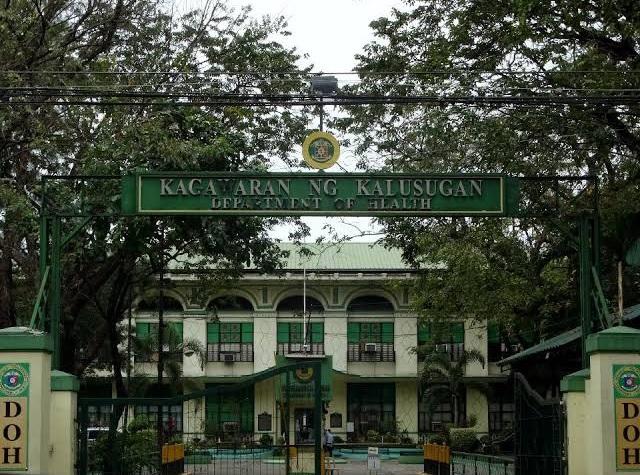
The Senate Finance Committee has allotted P226 billion to the Department of Health (DOH) for 2022, Senator Sonny Angara disclosed on Tuesday.
In a media briefing to reporters, Angara said the Senate panel has added around P91 billion for the DOH as well as the Philippine Health Insurance Corporation, and over P5.6 billion for the specialty hospitals, such as the Philippine Health Center, Lung Center of the Philippines, among others.
With these augmentations, the total budget for the health sector, including PhilHealth and DOH hospitals is now more than P312 billion.
“If you look at the DOH budget, in the Senate committee report, it is now at P226 billion. In 2020, it is P101 billion, more than double actually from 2020 levels,” Angara said.
“The total is about P312 [billion] in the programmed appropriations and close to P400 [billion, including] the unprogrammed,” he added.
The DOH and its attached agencies now rank third in the top 10 agencies which got the most funding under the Senate’s version of the P5-trillion budget measure for 2022.
“Because of this, nag-move up na siya [it moved up] to number 3. Only education and infrastructure are higher than health dati mas mataas pa ang DILG and DND [in the past the DILG and the DND got a bigger budget than the DOH],” he said.
“For [next] year, because of the situation, health talaga ang prioritized dito sa Senate. It’s based on our experience na ayaw natin na we’re caught flat-footed next year just in case, God forbid, magakaroon ng bagong variant, kailangan handa tayo ‘di ba?” he pointed out.
(For next year, because of the situation, the Senate has prioritized the health budget. It's based on our experience. We don't want to be caught flat-footed in case, God forbid, there is a new variant. We should be prepared.)
The over P100-billion realignment made by the Senate panel was “never done in the past years,” but Angara noted that it centered on the funding of the country’s COVID-19 response.
SRA, boosters
According to Angara, they have allotted around P51 billion in programmed funds to the Special Risk Allowance and other health worker benefits.
“There were no funds in the Executive budget or the National Expenditures Program… for the SRA, [the] health allowances for health workers. So we added a total of P51 billion for that,” he said.
Apart from this, the Senate Finance Committee has allotted P61 billion for the procurement of vaccine booster shots.
Of the P61.6 billion, P45.3 billion was lodged under unprogrammed appropriations and P16.245 billion is under the DOH budget.
Budgetary items that fall under unprogrammed appropriations will only be funded if there are excess revenues or government collections, or if the government receives funds from loans or grants.
But Angara expressed confidence that the budget for booster shots that was lodged under unprogrammed items will be funded by the government.
“‘Yung P40 billion is in the unprogrammed [in the original proposal of the Executive Department]…Akala ng iba kasi, hindi napopondohan yung unprogrammed. Look at the P70 billion we put in the 2021 [General Appropriations Act]…napondohan lahat ‘yun. If the executive wants to fund the unprogrammed, they can do it,” he said.
(The P40 billion is in the unprogrammed in the original proposal of the Executive Department...They assume that the unprogrammed funds are not funded but look at the P70 billion we put in the 2021 GAA, those were all funded. If the executive wants to fund the unprogrammed, they can do it.)
The Virology Institute of the Philippines as well as the Philippine Genome Center will get over P1 billion funding under the Senate panel’s version of the 2022 budget.
Agri, transport subsidies
There were also increases in the non-health budgetary items which are still related to the country’s COVID-19 response.
These include the Department of Labor and Employment’s program for temporary employment, the Department of Social Welfare and Development’s assistance to the vulnerable sector, and the Department of Agriculture and Department of Transportation’s subsidy for public utility vehicles and farmers affected by the recent oil price hike.
Moreover, the Senate panel’s version also allocated funds for the Department of Education and the state universities and colleges’ (SUCs) preparation for the face-to face classes.
Angara said this will enable the schools and universities “to retrofit” their campuses, test their staff and procure equipment that would ensure safe reopening of classes.
“It's a COVID recovery budget. I say that because a lot of the interventions were really dictated by COVID,” he said.
“Ang nakikita nating pagbabago for 2022, we have to learn to live with the virus. Rather than umiiwas tayo, we have to learn [to live with it] kasi protektado na tayo by the vaccine. Immunized na tayo so we have to learn to live with it and adjust to it,” he emphasized.
(The difference that we saw in the 2022 budget is that we have to learn to live with the virus. Rather than prevent it, we have to learn [to live with it] because we are already protected by the vaccine. We are already immunized so we have to learn to live with it and adjust to it.)
Moreover, the Senate panel has included a “sweep” provision in the committee report which seeks to revert all unused government funds transferred to the Department of Budget and Management Procurement Service (PS-DBM) by the end of 2023.
“‘Pag all the funds with PS-DBM, pag hindi nila nagastos by the end of 2023, which is the effectivity of the 2022 GAA, Dec, 31, 2023, e babalik na sa national government ‘yun,” Angara said.
(If all the funds are not used up by the end of 2023, which is the effectivity of the 2022 GAA, December 31, 2022, then it will return to the national government.)
“May deadline sila [There will be a deadline]. Basically finished or not finished, pass your paper na 'yon,” he added.
Based on the agreement made by the senators in a caucus on Monday, Angara said, the Senate will start the plenary debates at 10 a.m. on Wednesday and might extend the sessions until Thursday or Friday.
“Approval on third reading November 25, that's a Thursday. We have [bicameral conference] the following week and then hopefully the week after, we can ratify already the bicam report. Second week of December,” he said. — BM, GMA News

