

 GMA Brandtalk
 Tracking
 Archives

Maritime zones law would strengthen PH position on sovereignty in WPS —experts
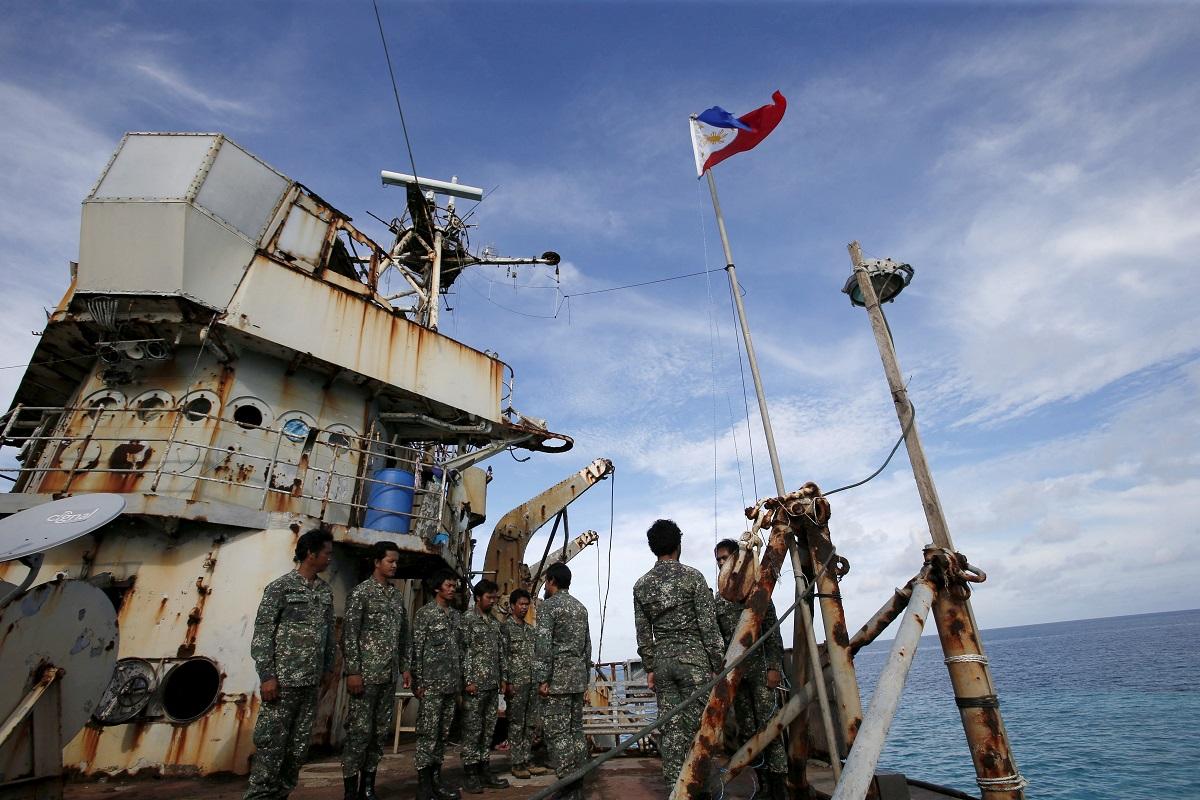
Two experts on Thursday said that enacting a maritime zones law would strengthen the Philippines' position in asserting its sovereignty over the West Philippine Sea (WPS).
Gregory Poling, a senior fellow of the Southeast Asia Program and Asia Maritime Transparency Initiative at the Center for Strategic and International Studies, stressed the importance of such a law, saying any measure based on the UN Convention on the Law of the Seas (UNCLOS) will “shine a greater light on the illegal nature of China’s maritime claims.”
“I would argue that it’s both legally and just importantly diplomatically a feather in the cap of the Philippines because it further gives Manila the moral high ground in these disputes,” he said at a hearing by the Senate Special Committee on Philippine Maritime and Admiralty Zones.
“The Philippines claims are already well fortified under international law. Elaborating that in domestic legislation only further clarifies the issue. It doesn’t change the nature of Philippine claims. The Philippines is entitled to these claims; they are immutable just as they are for every other nation under UNCLOS,” he added.
Lawyer Neil Silmon Silva of the University of the Philippines' Institute for Maritime Affairs and Law of the Sea, also posited that the proposed legislation is needed for legal and political reasons.
Silva said that there are laws before the establishment of UNCLOS that are inconsistent with the currently implemented international law.
“Marami po tayong batas na pwede nating sabihing zombie. Kumbaga patay na, pero naglalakad pa. Nung labo-labo pa po ‘yung mga batas pandaigdigan tungkol sa dagat, lahat ng bayan nag gawa naman sila ng pangsariling rehimen at batas. At ngayon na may UNCLOS na tayo, kinakailangan na pong isang-ayon na natin ang batas natin sa UNCLOS, pero may mga lumang batas na hindi pa natin na-amend. ‘Yung iba naman po na-amend impliedly lang po, hindi expressly,” he said.
(We have many laws that might be described as 'zombies.' Dead but still walking. Before there was a universal law on the sea, countries would make their own laws. Now that we have UNCLOS, we have to align our laws with UNCLOS, but we still have some old laws that we have not yet amended. Others are only implied to have been amended, not expressly.)
Silva said a maritime zones law is also needed because other neighboring countries have pointed out that the Philippines is slow in amending its laws in compliance with UNCLOS.
“May political reason bakit kailangan ang Maritime Zones bill, dahil kung tayo po ay ipapapagtanggol natin ang ating kasarinlan at ia-uphold natin through law enforcement and others, kailangan natin na may kakayahan tayo at pag may limitasyon ang kakayahan natin ay kailangan natin ang support ng international community upang tulungan tayo ng karapatan,” he said.
(There is a political reason why we need a maritime zones bill. If we are going to champion our independence and uphold it through law enforcement and others, we need to have the capability. If there are limits to our capabilities, we need the support of the international community, to help uphold our rights.)
“Kung gusto natin ang suporta ng international community, kailangan ang batas natin tugma sa batas ng international community upang we’re on the same page legally at meron tayong diplomatic basis upang ma-secure ang kanilang support,” he added.
(If we want the support of the international community, we need a law that aligns with the laws of the international community so that we're on the same page legally, and there's a diplomatic basis to securing their support.)
Transport routes
After the enactment of a maritime zones law, Silva said, the Philippines should enact a law on archipelagic sea lanes and air routes.
He said that the Philippines can pass a law that would govern all ships and aircraft passing through its sea lanes and overflight routes, under the UNCLOS.
If the Philippines does not enact such a law, Silva said, ships and aircrafts can use the routes that are normally used for navigation.
“Kung mag-designate tayo at i-negotiate natin sa International Maritime Organization at sa ibang maritime states kung ano ang acceptable designation, puwede nating malimit kung saan pwedeng dumaan sa [archipelagic sea lanes] passage,” he added.
(If we make an acceptable designation and negotiate it with the International Maritime Organization and other maritime states, we would be able to limit where ships can go.)
Response to 10-dash line
Created in July, the special Senate panel discussed the proposed Maritime Zones Act, which will establish the extent of Philippine jurisdiction over its exclusive zones and its continental shelf.
Senator Francis Tolentino, the panel chairman, earlier said the bill will be passed along with another measure that will establish the Philippine Archipelagic Sea Lanes.
Currently, there are seven bills filed on the Philippine Maritime Zones Act while there are four bills on the Philippine Archipelagic Sea Lanes.
Tolentino and Senate President Juan Miguel Zubiri said in August that the Senate will fast-track the passage of the Philippine Maritime Zones bill amid China’s release of the new 10-dash line map which places nearly the entire South China Sea, along with Taiwan and an Indian state, within its national boundaries.
Tolentino said the proposed measure would be “a response to the 10-dash line.” — BM, GMA Integrated News

