

 GMA Brandtalk
 Tracking
 Archives

CHR, NUPL want EJKs as crime separate from murder
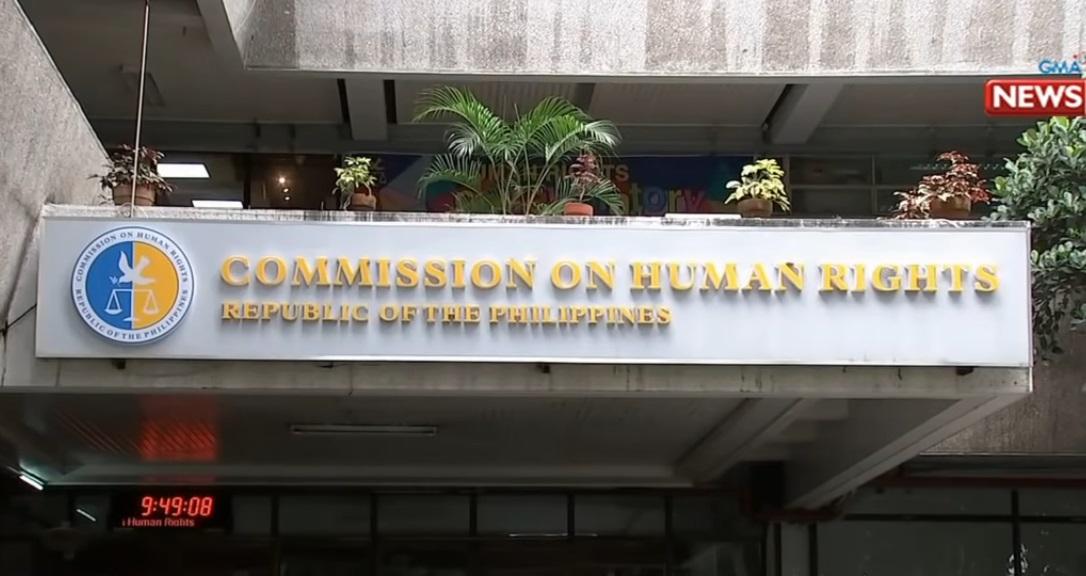
The Commission on Human Rights (CHR) and the National Union of Peoples' Lawyers (NUPL) said Wednesday extrajudicial killings (EJKs) should be a crime that is separate from murder.
"There were proposals to make EJK not as an independent crime but more of as an aggravating or qualifying circumstance. We beg to disagree," Jasmin Navarro-Regino, Director of the CHR Human Rights Protection Office, said during the resumption of the House committee hearing on House Bill 10986.
Navarro-Regino said the involvement of public officials is a defining characteristic in EJKs.
"It is the abuse of state power, the utilization of government policies, machinery, apparatus, and resources that transforms an ordinary murder into an EJK," she said.
"By considering it an aggravating qualifying circumstance, the focus shifts to the individual perpetrator rather than the systemic factors that enable such killings. This approach fails to address the underlying issues of impunity, abusive power, and state sanctioned violence," she added.
Navarro-Regino said classifying EJKs as a separate crime would enhance the effectiveness of investigations and prosecutions, which would hold perpetrators accountable.
House Bill 10986, or the proposed Anti-Extrajudicial Killing Act, seeks to classify EJKs committed by government officials as a heinous crime. If passed into law, this would mean that those who would be found guilty of committing EJKs can be punished by lifetime imprisonment at the maximum without parole.
Meanwhile, NUPL president Ephraim Cortez expressed support for CHR's position that a separate law should be passed for EJKs.
"If we simply amend the Revised Penal Code (RPC) and make it another circumstance from murder, it will make it doubly difficult to prosecute EJK cases," Cortez said.
Aside from this, Cortez said the NUPL is recommending that superiors of officers involved in EJKs should be held criminally liable under the principle of command responsibility, instead of only being held accountable for administrative negligence, among others.
Amending the Revised Penal Code
Meanwhile, Assistant Solicitor General Cielo Se-Rondain said the Office of the Solicitor General (OSG) recommends the amendment of the RPC to include EJK under Title 8-Crimes Against Persons.
She said this seeks to streamline the legislative process to prevent legal fragmentation, to strengthen the prosecution mechanism, and prevent jurisdictional confusion.
"We advocated on this because we saw the advantage of vacating HB 10986 and amend the RPC. The attendant qualifying circumstances of treachery, evident premeditation, and abuse of superior strength among others, which are actually the qualifying circumstances in murder under Article 248 will actually be included as elements of the EJK," she said.
"Should the prosecution fail to prove all the elements of EJK, the accused can still be convicted of murder under Article 248," she said.
Se-Rondain said that should the House bill be enacted into a special law, and the accused is charged under the special law for EJK, the accused can no longer be indicted under the RPC for murder as this would constitute double jeopardy.
Under the rule of double jeopardy, when a person is charged with an offense and the case is terminated either by acquittal or conviction or in any other manner without the consent of the accused, the latter cannot again be charged with the same or identical offense.
Meanwhile, the House Justice committee gave other agencies a one-week deadline for the submission of their position paper on the bill. — VDV, GMA Integrated News

