

 GMA Brandtalk
 Tracking
 Archives

DepEd: 18.9-M ‘functionally illiterate’ not only high school grads
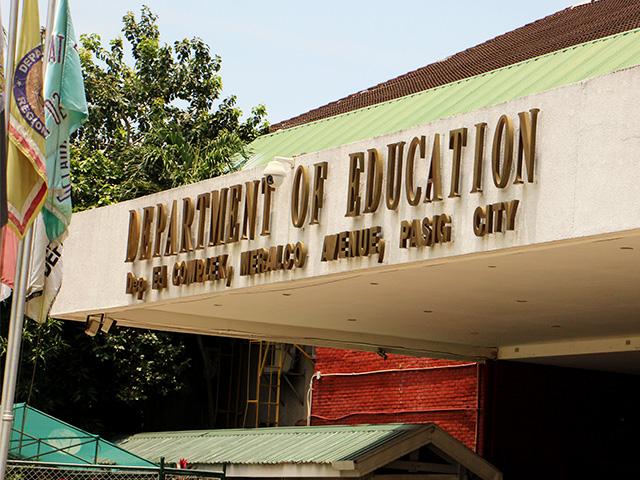
The Department of Education (DepEd) has clarified that the nearly 19 million Filipinos considered as “functionally illiterate” based on a 2024 survey results came from a much broader age group, and were not only high school graduates.
In a position paper, DepEd Undersecretary Ronald Mendoza said the 2024 Functional Literacy, Education, and Mass Media Survey (FLEMMS) data which was presented by the Philippine Statistics Authority (PSA) in a Senate basic education committee last week, actually indicated that 18.9 million Filipinos aged 10 to 64 were classified as functionally illiterate.
This means that these people can read, write, and compute but struggle with comprehension, regardless of their educational attainment.
Mendoza also highlighted that there were only about 11.6 million Junior High School and Senior High School learners for School Year 2024-2025, “making it incorrect to attribute the full 18.9 million figure solely to high school graduates.”
Likewise, he pointed out that the PSA recently revised the definitions of “basic and functional literacy” which also raised the standard on literacy to include high level comprehension skills.
“Previously, individuals aged 5 years old and above were classified as basic literate if they could read and write; and individuals aged 10 to 64 years old as functionally literate if (1) they could read, write, and compute, (2) could read, write, compute and comprehend, or (3) at least high school graduate in the old basic education curriculum or at least junior high school completer in the K to 12 curriculum,” the DepEd official explained.
“The 2024 revision involves more stringent criteria. Basic literates now should be able to read, write with understanding, and compute whereas functional literates should be able to read, write, compute AND comprehend,” he added.
Due to this, Mendoza said that the overall literacy rates in the country have decreased.
Prior to the definitional changes, he emphasized that the basic and functional literacy rates would have been 95.1% and 93.1%, respectively.
But under the revised criteria, these figures have dropped to 90.0% and 70.8%, respectively.
“Using this revised measure, the functional literacy rate is about 70.8%. Simply put, around seven out of ten Filipinos possess high-level comprehension skills to process and apply information effectively in daily life,” Mendoza said.
Following the release of the 2024 FLEMMS, Education Secretary Sonny Angara reaffirmed the DepEd’s commitment to ensuring that every learner in the country is functionally literate.
“Hindi namin hahayaang may batang nahuhuli sa pagbasa at pag-unawa [we will not let any learner fall behind in reading and comprehension]. The recent FLEMMS results on functional literacy highlight what we have long recognized—literacy must be at the heart of our education reforms,” Angara said in a statement.
“Ensuring that every Filipino learner is functionally literate is a commitment we owe to our constituents,” he added.
DepEd Assistant Secretary for Curriculum and Teaching Jerome Buenviaje had also underscored the need to develop learners’ literacy skills as early as kindergarten in a bid to address the alarming state of functional illiteracy among Filipinos.
Despite DepEd’s efforts, Buenviaje also stressed that addressing functional illiteracy could not be done by the agency alone, as this problem was also caused by other factors such as poor nutrition.—AOL, GMA Integrated News

