

 GMA Brandtalk
 Tracking
 Archives

Babe Romualdez: F-16s on Philippines' wishlist but land-based weapons a priority
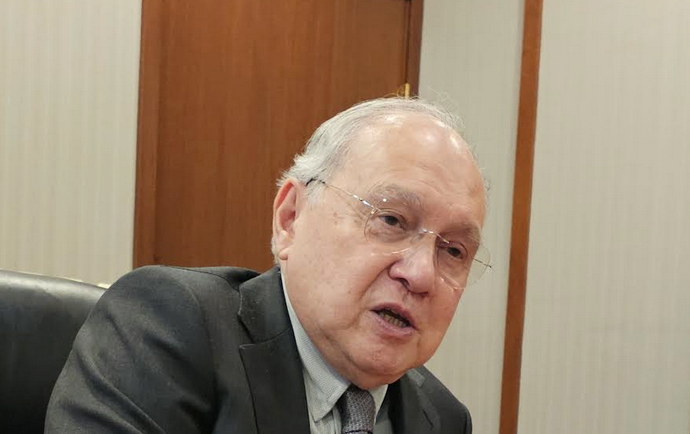
WASHINGTON - The Philippines is hoping to acquire fighter jets like the F-16s being offered by the United States, but will prioritize land-based weapons that are more affordable for its national defense, Philippine Ambassador Jose Manuel Romualdez said Tuesday.
The Philippines is working with the US and Lockheed Martin Corp., the Bethesda, Maryland-based aircraft manufacturer, to determine how it can finance the major F-16 acquisition.
Romualdez, however, said, “We're really looking at other items that are, in view of our national defense strategy, more important than the F-16s.”
“The F-16 will continue to be part of the overall plan, perhaps, in the future. But as of now, as I said, our priority is more on land-based type of defense capabilities,” Romualdez told selected journalists from Japan and the Philippines on a reporting tour of the US funded by the US State Department.
The Philippines is the oldest treaty ally of the United States in Asia and both have boosted defense ties under former President Joe Biden and the current Trump administration in the face of China’s increasing aggressive actions in the disputed West Philippine Sea.
The U.S. has helped in efforts to modernize the Armed Forces of the Philippines for years aside from staging large-scale combat-readiness exercises every year, including the Balikatan military exercises that has increasingly focused on strengthening the Armed Forces of the Philippines’ capability to defend the country’s territorial interests in the disputed waters.
“As I said the F-16, it's an aspiration that we've had for many, many years. There are other offers from other countries like the Gripen, which is actually made in Sweden. But there’s a question of affordability,” Romualdez said.
The US State Department announced Washington's approval of the major F-16s sale following the visit in Manila of Sec. Pete Hegseth, who announced the Trump administration's support to help modernize the AFP’s firepower and military capabilities to help deter China's growing aggression in the South China Sea.
Hegseth also reaffirmed the Trump administration's "iron-clad" commitment to its obligations under the 1951 Mutual Defense Treaty, which obliges the allies to help defend one another in case of an external attack.
Washington’s assistance is crucial to Manila’s efforts to modernize its armed forces, one of Asia’s most underfunded, as it seeks to strengthen its maritime capability amid an increasingly aggressive China, which has repeatedly harassed and threatened Philippine vessels and aircraft in the West Philippine Sea.
“That's the reason why we tell our friends here in the United States that our economic prosperity and our economic security are tied into our defense security,” Romualdez said.
“If we have the wherewithal we will be able to bring our country’s armed forces into being a real partner to the United States, which I think is what the administration of President Trump would like to see - that countries should be able to defend themselves in partnership with the United States,” he said.
Defense Secretary Gilberto Teodoro is conducting an overall study to determine “what is really the best in terms of the capabilities that we need,” Romualdez said.
“At the end of the day, of course, depending on our resources, and the capability to be able to finance these purchases in the long-term, that's what's important,” Romualdez said. –NB, GMA Integrated News

