

 GMA Brandtalk
 Tracking
 Archives

DepEd: 165K classroom shortage could take 55 years to solve
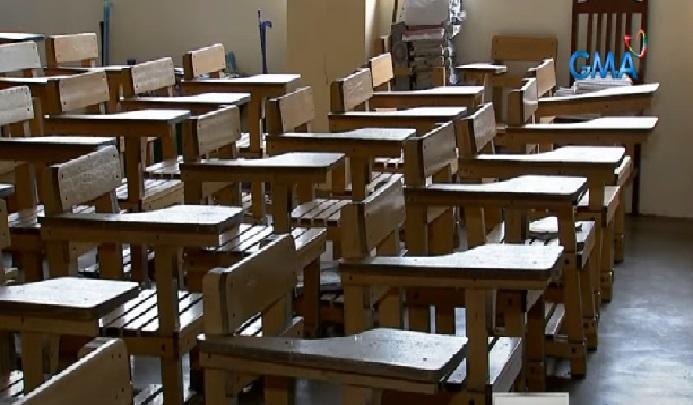
The Philippines is facing a massive classroom backlog of 165,000, a crisis that may take more than half a century to resolve if the government sticks to its current pace of construction, Department of Education (DepEd) Secretary Juan Edgardo “Sonny” Angara warned in a radio interview Friday.
“Sa ganitong budget, aabutin tayo ng 55 taon bago natin matapos ang kakulangan sa mga silid-aralan,” Angara told Super Radyo dzBB.
(At this budget rate, it will take us 55 years to close the classroom gap.)
The shortage stems from a combination of factors: rapid population growth, aging infrastructure, calamities that destroy school buildings, and decades-long underinvestment in basic education facilities.
Angara said the Marcos administration is now pushing to adopt a Public-Private Partnership (PPP) model to fast-track classroom construction — one of the few viable solutions that can scale up infrastructure without overburdening the yearly education budget.
“Ang modelo ay ‘build now, lease to government.’ Ibig sabihin, magtatayo muna ang pribadong sektor, tapos babayaran ito ng gobyerno nang hulugan sa loob ng 10 taon,” paliwanag niya.
(The model is ‘build now, lease to government.’ This means the private sector will build first, then the government pays in installments over 10 years.)
No added costs for students
Angara stressed that this setup will not pass on costs to students or parents.
“Walang bayad ang mga estudyante dito. Gobyerno ang magbabayad sa lease, hindi ang mga magulang o bata,” aniya.
(Students won’t have to pay anything. The government will shoulder the lease, not the parents or children.)
This PPP approach, he added, is already being used in other sectors and offers a faster, scalable, and more flexible solution compared to traditional procurement systems.
DepEd is currently in talks with the Department of Finance, Department of Budget and Management, and PPP Center to refine the structure and pilot implementation of the plan. Once approved, it may open the door for more modern, disaster-resilient classrooms built in bulk.
The department aims to prioritize areas most affected by disasters and overcrowding, particularly in relocation sites and fast-growing communities.
“Kung may partnership na, puwedeng makapagtayo tayo ng 10,000 classrooms sa loob ng isang taon, hindi sampu o dalawampu lang,” sabi ni Angara.
(With the partnership, we might be able to build 10,000 classrooms in just one year—not just ten or twenty.)
He acknowledged that while classroom construction is not as headline-grabbing as free tuition or gadgets, it’s one of the most critical investments in basic education.
“Hindi siya exciting, pero kung wala kang classroom, wala rin talagang matututunan ang bata,” dagdag niya.
(It’s not exciting, but if you don’t have a classroom, the child really can’t learn.)
Urgency amid learning crisis
The classroom shortage remains one of the key bottlenecks in the country’s recovery from the pandemic-era learning crisis. Many schools continue to implement double or triple shifts, while others hold classes in makeshift or open-air rooms.
Angara said DepEd is taking a multi-pronged approach: addressing teacher shortages, revising curriculum, and now—fixing the physical foundations of learning.
“Kung gusto natin ng dekalidad na edukasyon, kailangan ding dekalidad ang pasilidad,” aniya.
(If we want quality education, we also need quality facilities.)
Hybrid learning
Meanwhile, the Education Department is also considering the limited use of hybrid learning to help ease overcrowding in classrooms — especially in areas experiencing rapid population growth or relocation.
Angara confirmed that while face-to-face classes remain the standard, DepEd is exploring hybrid learning as a targeted solution for schools that are bursting at the seams.
“Well, hindi naman as a general rule. Sa isolated cases lang. Siguro sa senior high school… kasi independent learners na sila,” Angara said.
(Well, not as a general rule. Only in isolated cases. Perhaps in senior high school… because they are already independent learners.)
He pointed to examples abroad, particularly Singapore, where senior high school students participate in distance learning once or twice a week. The approach, he explained, would not only ease congestion but also accommodate students undergoing on-the-job training.
In the Philippines, a growing number of schools are facing extreme overcrowding due to relocation sites and rapid urban development. One example is in Naic, Cavite, where the student population in a public school surged by 900% within a year or two following a mass relocation.
Angara clarified that this will not be a blanket policy across all grade levels. The setup will be limited to specific cases where in-person learning is impractical or physically unsafe due to classroom shortages.
DepEd is also mindful of the challenges associated with hybrid learning, especially after the pandemic. He said the model will work only if students have the ability to learn independently and access the required technology.
“Kailangan kasi, ‘pag hybrid, may disiplina at may access ang bata sa learning materials,” he said.
(For hybrid to work, the student must have discipline and access to learning materials.)
To support the potential rollout, DepEd is coordinating with local government units to ensure that students have the necessary tools and infrastructure for limited remote learning. — RSJ, GMA Integrated News

