

 GMA Brandtalk
 Tracking
 Archives

EU poll observers: Almost 50% of PH Election Code outdated
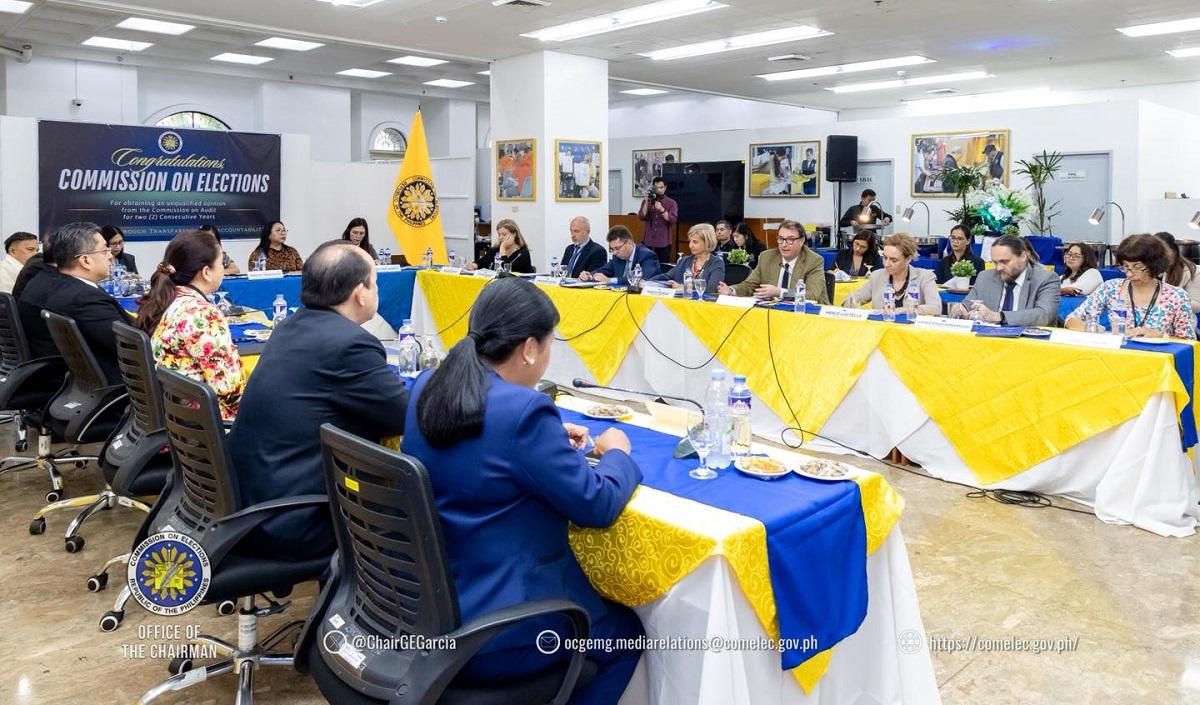
Nearly half of the provisions of the Omnibus Election Code, including those for campaign finance and election offenses, are already outdated, the European Union (EU) Election Observation Mission reported Thursday.
The EU poll observers, led by its chief Marta Temido, highlighted this in their report following the conduct of the May 12, 2025 midterm polls.
"Although the election code remains the main source of electoral legislation, it is estimated that nearly half of its provisions are outdated, having been superseded by the Constitution, enacted two years after, and by numerous subsequent laws and regulations," the report read.
"Specific provisions and entire sections of the electoral code that are no longer valid refer, for example, to the registration of voters and candidates, the campaign and campaign finance, voting and counting procedures, election observation and electoral offenses," the report read.
Further, the poll observers' report stated, the election code has not been updated, as articles that are no longer applicable have not been repealed yet remain in place.
"This [situation] is making it difficult to determine which provisions are still in force and which have been rendered inoperative by more recent legal acts," the report said.
The Omnibus Election Code of the Philippines, or Batas Pambansa 881, was enacted in December 1985 during the administration of Ferdinand Marcos Sr.
Fact-checking 'uncommon'
The country's social media environment, the report added, is divided along political dynasties and the supporters, while the digital literacy of the Filipino population was deemed low to moderate.
"While there are several fact-checking initiatives, the EU poll observers said verifying online news remains relatively uncommon among Filipinos," the report said.
While articles and videos generally maintained a high level of discussion, the EU poll observers said the authenticity could not be said for comments sections and reactions.
"EU EOM interlocutors noted that troll farms have become harder to detect due to their decentralised operations, unlike past tactics using identical messages and hashtags," the report pointed out.
"The DICT reported several cases to Meta when coordinated narratives stemmed from a foreign source or when mass messages were identical, while TikTok removed three troll farms. Despite broad agreement on the issue's scale, some groups... were seen as both trolling and expressing authentic political views," the report read.
Temido, for her part, said that while boosting followers is not exactly illegal, it can affect the judgment of the voters for the wrong reasons.
“Any individual with an online presence has a pool of followers, and we saw that under certain circumstances, this pool may grow rapidly, a viral effect. However, if the number of followers increases by tens or even hundreds of followers overnight without any visible cause, it could be considered a suspicious attempt to boost a campaign,” she said.
“In the final report we highlighted cases where this practice was evident. This is not illegal but can mislead potential voters, undermining their ability to make informed choices,” Temido added.
To address these problems, the EU poll observers called for a sustainable support system for independent media and investigative journalism and fact checking.
"Fact checking should be further strengthened and maintained, alongside continued expansion of media and digital literacy programmes for all strata of society," the report added.
The EU poll observers, however, could not say if the arrest of former President Rodrigo Duterte last March 11 on alleged crimes against humanity en route to detention in The Netherlands was a game changer in the 2025 elections, given that it happened in the thick of the election campaign period.
“We don't make assumptions of why the voters voted what they voted. That's something for political scientists, or sociologists. This is not the work of an election observation mission to assume or to make such assumptions,” EU poll observers team deputy chief Manuel Sanchez de Nogues said.
“Our work is to know and to assess whether voters voted with free [will]...that the will of the voters was clearly expressed and whether they voted without intimidation, pressure or coercion. That is our job,” Nogues added.
GMA News Online has requested comment from the Comelec regarding the findings of the EU Election Observation Mission. — VDV/BM, GMA Integrated News
For more Eleksyon 2025 related content and updates, visit GMA News Online's Eleksyon 2025 microsite.

