

 GMA Brandtalk
 Tracking
 Archives

PH renews call for China to comply with arbitral ruling on WPS
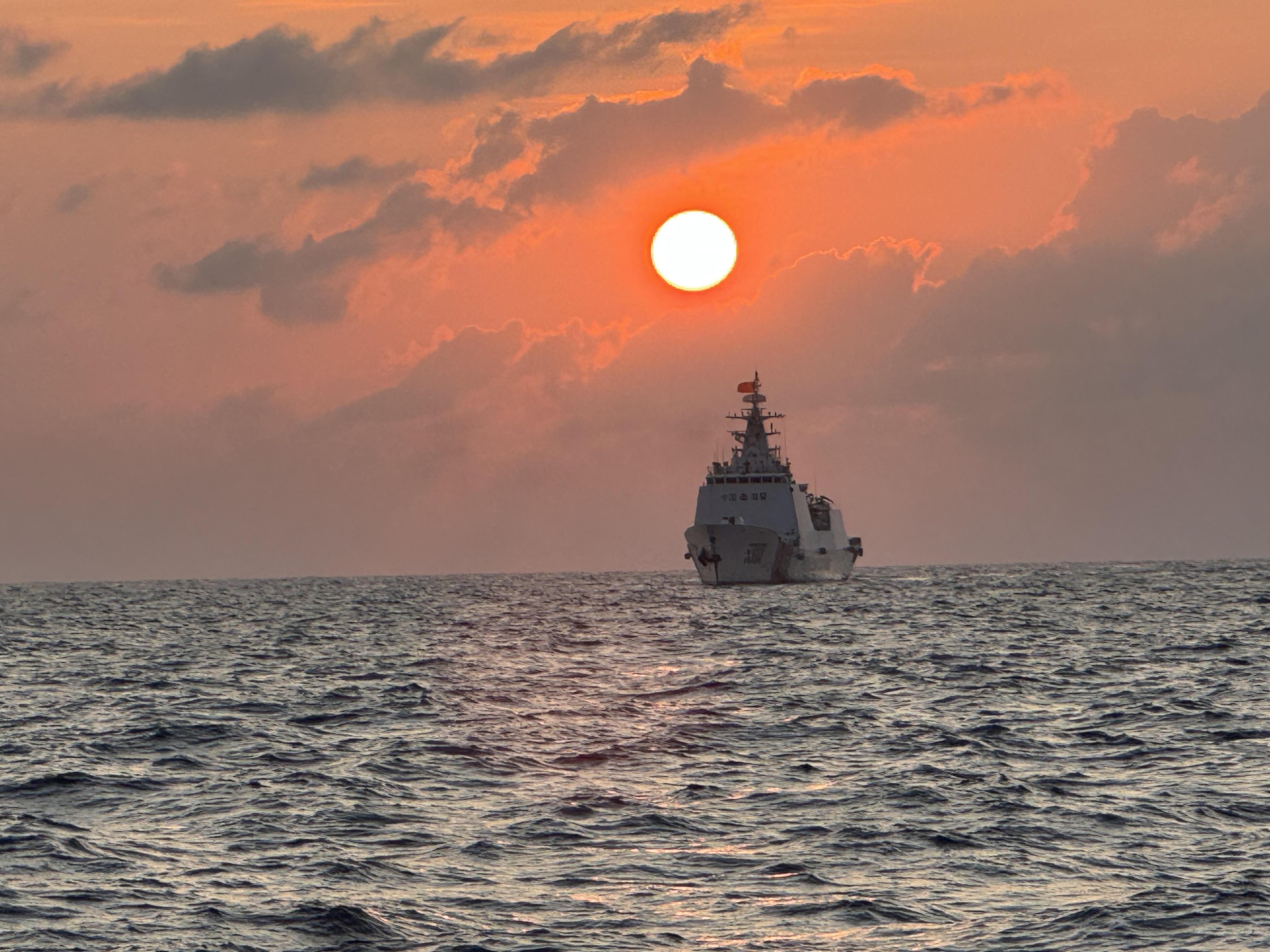
The Philippines on Friday renewed its call to China to comply with the nine-year-old arbitration ruling that nullified Beijing’s sweeping claims in the South China Sea, saying all countries, “regardless of size, might, or capacity must meet their duties and obligations” under international law.
Foreign Secretary Theresa Lazaro made the call a day before the anniversary of the July 12, 2016 ruling by The Hague tribunal that she said “sets reason and right in the South China Sea.”
“Nine years hence, its legitimacy continues to be tested, challenged, and subverted, putting not only the Philippines’ maritime interests in peril, but also the regional stability and prosperity we are all working so hard to achieve,” Lazaro said in a recorded video message at a forum commemorating the tribunal ruling hosted by Stratbase ADR Institute.
Lazaro, who assumed the role of Manila’s top diplomat on July 1, called the ruling “a cornerstone of Philippine maritime policy” along with the 1982 UN Convention on the Law of the Sea (UNCLOS) and vowed that it “will remain so under my watch.”
Diplomacy
Lazaro also outlined “four dynamics” that will guide Philippine maritime statecraft, which includes building alliances with like-minded states and keeping lines of communication “open bilaterally, both with China and with other ASEAN claimant states.”
“Galvanizing the rules-based order and promoting the arbitral award rests equally, if not primarily, with diplomacy,” Lazaro said.
“Deterrence is not only a military concept, but one that indispensably involves guarantees secured by diplomacy to assure peace and stability.”
The tribunal award is a “shining affirmations of the compulsory dispute resolution mechanisms” of UNCLOS, Lazaro said, noting that it’s an “unassailable part of the corpus of international law.”
“It is worrisome that China has continued to reject the binding Arbitral Award and persists with illegal, coercive, and aggressive actions under cover of a revisionist, self-serving interpretation and application of international law, particularly UNCLOS,” Lazaro said.
The UNCLOS is regarded as the global constitution for the seas, signed by 162 nations, including the Philippines and China.
China did not participate in The Hague proceedings initiated by the Philippines and ignored the decision.
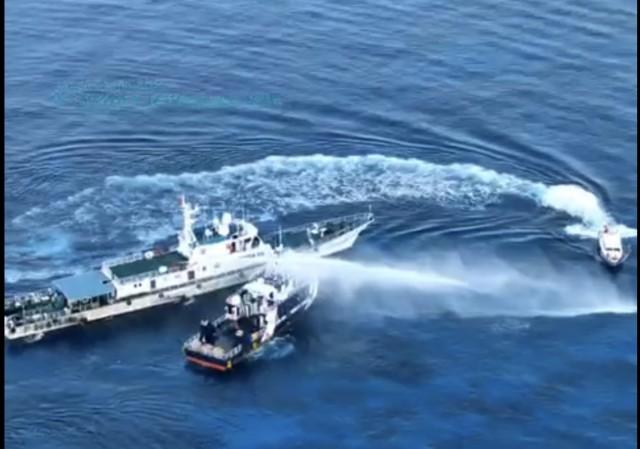
It has defied the ruling with aggressive actions, using high-pressure water cannons and dangerous maritime maneuvers on Philippine ships or vessels China has accused of entering its territorial waters illegally.
Vietnam, Malaysia, Brunei - three of the 10 members of the ASEAN - and Taiwan have also laid claims to the South China Sea, where rich oil and mineral deposits have been discovered.
Dialogue
Lazaro said it is a “strategic consideration” that the Philippines continue the dialogue and consultation with China despite tensions that severely impact the bilateral relationship.
Using “effective diplomacy” on China, she said, has resulted in “several pragmatic solutions and positive outcomes,” such as the provisional agreement for the Philippine delivery of supplies to Filipino forces at Ayungin Shoal (Second Thomas Shoal) to prevent a repeat of past confrontations. Since the forging of the agreement, succeeding resupply missions to the shoal have been peaceful with Chinese ships keeping watch at a distance.
“Our two countries have long-standing history and deeply ingrained cultural ties. Thus, our diplomacy will continue to firmly protest and disagree where it is right, but also collaborate where it is practical and beneficial for the country,” she said.
Manila, she added, will use current mechanisms with China “to maintain dialogue and diplomacy at the appropriate official levels” that is “in good faith, has a proper and conducive environment, and can enable the constructive management of differences without prejudicing our national position.”
The Philippines’ dynamic engagement with other claimants, on the other hand, propelled talks forward for an “effective and substantive” regional code of conduct in the South China Sea, which the Philippines aspires to complete when it assumes the rotating chairmanship of ASEAN next year, she said.
“The challenges are clear and the uncertainties remain in the maritime domain, but the Philippines will not waver in firmly rejecting attempts to undermine the award and international law,” added Lazaro.
“Being on the right side of the rules-based order and international law makes it easier for others to join us in taking a stand and forming a tight bond that can withstand illegal and unfounded claims and aggressive actions at sea.”
'Political circus'
In a statement, the spokesperson of the Chinese Embassy in Manila claimed that the UNCLOS ruling as a "political circus dressed up as a legal action."
“The Philippines breached the common understandings with China on resolving the disputes in the South China Sea through consultation and negotiation, violated the article of the Declaration on the Conduct of Parties in the South China Sea (DOC) which stipulates parties concerned undertake to resolve their territorial and jurisdictional disputes by peaceful means,” it said.
The Chinese Embassy also claimed that the UNCLOS exercised its jurisdiction “ultra vires” and that the award rendered to the Philippines is “illegal, null and void.”
“China does not accept or recognize it, and will never accept any claim or action thereon,” it said. —with reports from Jamil Santos/ VAL, GMA Integrated News

