

 GMA Brandtalk
 Tracking
 Archives

PH allies pledge more defense, security support amid China aggression
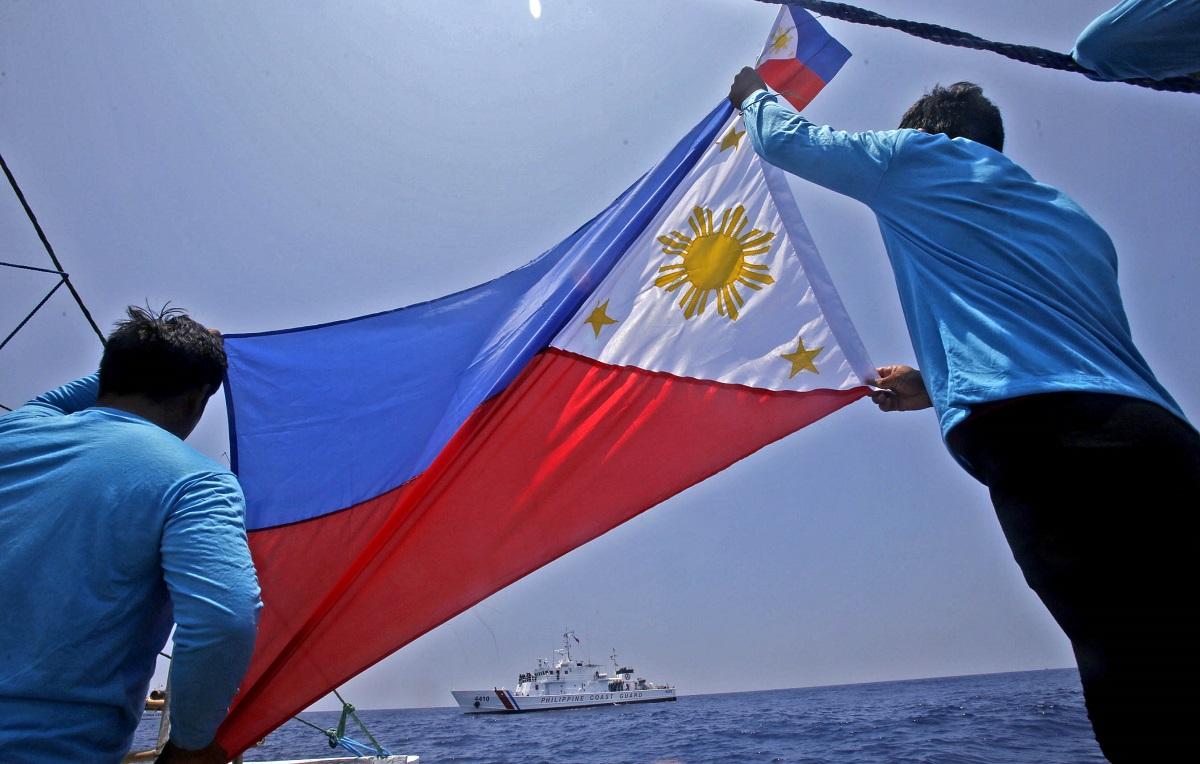
Several countries, led by the United States and other key regional allies, on Friday pledged support for the Philippines' external defense as they shared concerns over China's increasingly aggressive behavior in the South China Sea.
On the eve of the ninth anniversary of the arbitral tribunal's landmark decision that invalidated China's massive claim in the disputed waters, the US, Japan, Australia, Canada, United Kingdom, India, New Zealand, Germany, France, Vietnam and the European Union declared its commitment to ensure a "rules-based and "free and open" Indo-Pacific.
They also announced additional funding and agreements that will help modernize the Philippine military and coast guard, and boost the country's capacity to guard its waters in the West Philippine Sea, which is being claimed by China as its own.
"A growing coalition of partners, such as the claimant states, as well as countries around the world… all share a commitment to a free and open Indo-Pacific. Together, we champion respect for the international law of the sea, including freedom of navigation and the peaceful resolution of disputes," said US Ambassador MaryKay Carlson, one of envoys who spoke at a forum hosted by Stratbase ADR Institute to mark the anniversary of the ruling.
Carlson highlighted the importance of joint defense exercises with the Philippines and multilateral maritime cooperative activities, along with a pledge to bolster investments in Philippine infrastructure and military modernization.
"We are investing in tools that empower the Philippines to protect its waters and secure its future. This strategic deterrence is rooted in unity not just between our two nations, but with like-minded partners in the Indo-Pacific and beyond. Together, we send a clear message but coercive actions have no place in international law," she said.
Carlson also renewed a US government warning that Washington will defend Manila from any armed attack under a 73-year-old Mutual Defense Treaty.
"Our commitment to the Philippines is unwavering rooted in a 1951 mutual defense treaty, which extends to armed attacks on Philippine forces, vessels or aircraft, including those of the coast guard, anywhere in the South China Sea," Carlson said.
Foreign funding
Australian Ambassador HK Yu, at the same forum, announced a A$3-million (P110 million) funding over the next two years for the Philippine Coast Guard, providing them with drones, training and other equipment. The drones are on top of the 20 that Australia gifted to the PCG last April.
"This capability uplift is another example of Australia's ongoing commitment to provide tangible assistance to the Philippines to boost its maritime domain awareness," Yu said.
She called out China for its "destabilizing conduct" in the South China Sea as well as its "excessive maritime claims."
As hostilities between Philippine and Chinese forces flared in recent years in the South China Sea, Manila has adopted a strategy of publicly releasing videos and photos of Chinese harassment in the waters.
The transparency initiative by the Philippines has gained international attention, prompting many countries to denounce Beijing's assertive actions.
'Worrisome'
Foreign Affairs Secretary Theresa Lazaro said she finds "worrisome" that China continues to reject "the binding" arbitral award and "persists with illegal, coercive, and aggressive actions under cover of a revisionist, self-serving interpretation and application of international law, particularly UNCLOS (United Nations Convention on the Law of the Sea)."
The Chinese Embassy in Manila responded by posting its foreign ministry statement dated July 12, 2016–the day the Netherlands-based court handed down its ruling–accusing the Philippine government of reneging on a "bilateral agreement" to resolve disputes bilaterally.
"China's territorial sovereignty and maritime rights and interests in the South China Sea shall under no circumstances be affected by the Arbitral Tribunal awards," it said, adding it "opposes and will never accept" the ruling.
The Philippines under President Ferdinand "Bongbong" Marcos Jr. has sought to expand its alliances and upgrade its defense capabilities in the face of Chinese aggression in the waters. The years-long disputes also involve Vietnam, Malaysia, Brunei and Taiwan.
"Canada remains deeply concerned by China's continued disregard for the ruling," Canada's ambassador David Hartman said.
To preserve the legacy of the tribunal decision, he said the international community "must look beyond commemoration and instead, commit ourselves to action."
VFA with Canada
Hartman said Canada was looking forward to the signing of a visiting forces agreement with the Philippine so both countries can unlock the potential of "closer cooperation, operational interoperability, and readiness."
"It provides the foundation for training, logistics, intelligence sharing, and more frequent, flexible military engagement," he said.
Japanese Ambassador Endo Kazuya, in his speech, expressed Japan's opposition to "unilateral attempts to change the status quo by force or coercion" in the South China Sea.
Endo said he anticipates a more robust and dynamic security cooperation with Manila once the status of forces agreement between the Japan and the Philippines comes into force.
"Japan will continue working in coordination with Association of South East Asian Nations and other countries concerned to maintain and strengthen the maritime order based on the rule of law and to realize a free and open Indo-Pacific," he said.
Circle of friends
UK Ambassador Laure Beaufils said Britain will uphold the rules-based international system by promoting its strength abroad.
As a "key partner for the UK in the Indo-Pacific," Beaufils said the Philippines could expect more bilateral engagement across the air, land and maritime domains, with periodic visits by Royal Navy ships, visits and engagements by defense leaders and specialist training teams.
"I'm pleased that the Philippines' circle of friends is growing," she said. "These are key to supporting peace and stability throughout the region."
"Collectively, we are helping to challenge excessive Chinese maritime claims and dangerous activity that raise the risk of escalation," Beaufils said.
'Political circus'
In a statement, the spokesperson of the Chinese Embassy in Manila claimed that the UNCLOS ruling as a "political circus dressed up as a legal action."
“The Philippines breached the common understandings with China on resolving the disputes in the South China Sea through consultation and negotiation, violated the article of the Declaration on the Conduct of Parties in the South China Sea (DOC) which stipulates parties concerned undertake to resolve their territorial and jurisdictional disputes by peaceful means,” it said.
The Chinese Embassy also claimed that the UNCLOS exercised its jurisdiction “ultra vires” and that the award rendered to the Philippines is “illegal, null and void.”
“China does not accept or recognize it and will never accept any claim or action thereon,” it said. —with reports from Jamil Santos/ VDV/ VAL, GMA Integrated News

